The short version
- The UN General Assembly passed a resolution ensuring island nations retain political status and exclusive economic zones despite rising seas.
- The agreement marks a significant exception to recent US isolationism on climate issues, with Washington abstaining from blocking the measure.
- While the declaration solidifies legal protections for statehood, it does not guarantee new funding for adaptation or relocation efforts.
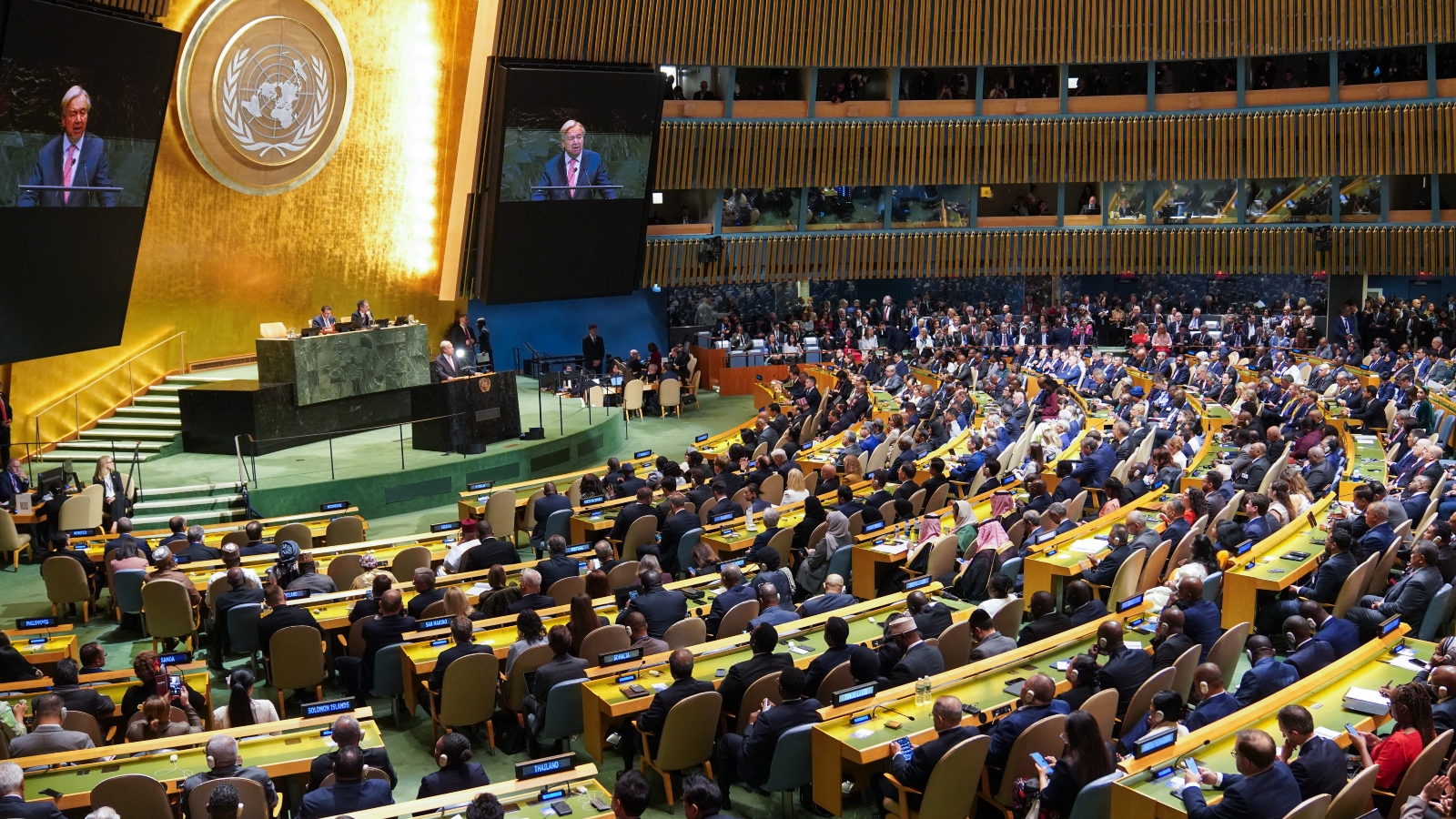
World leaders at the United Nations General Assembly have approved a historic resolution addressing the existential threat of sea level rise to small island states. The unanimous vote represents a notable shift in international diplomacy, particularly because the United States did not obstruct the measure despite its recent withdrawal from major climate accords and aggressive trade policies targeting environmental initiatives. This agreement establishes that nations will maintain their sovereignty and control over maritime borders even if their physical territory is completely submerged by rising ocean levels.
The declaration resolves a long-standing legal ambiguity regarding the status of countries like Tuvalu and the Marshall Islands, which face near-total inundation over the coming century as global temperatures melt ice sheets and glaciers. Under international law, it was previously unclear whether a state would cease to exist if its land disappeared. The new resolution affirms that these nations will continue to function as political actors with recognized rights, preserving their ability to engage in diplomacy, trade, and governance regardless of physical changes to their geography.
Crucially, the agreement protects the exclusive economic zones of these island states. These maritime borders extend from coastlines and grant countries exclusive rights to fishing, energy development, and other military or economic activities within those waters. For nations such as the Bahamas, whose economy relies heavily on tourism and pristine ocean territories, maintaining control over these zones is vital. The protections help safeguard against external claims by industries like deep-sea mining, ensuring that vulnerable states are not stripped of their resources simply because their landmasses shrink or vanish.
This diplomatic achievement stems from a sustained campaign by the Alliance of Small Island States, a bloc representing low-lying nations most at risk from climate change. The resolution echoes a landmark ruling from the International Court of Justice issued last year, which determined that the disappearance of a state’s constituent elements does not necessarily entail the loss of its statehood. By endorsing this principle through consensus, world leaders have transformed what was previously a legal presumption into an affirmed international standard, signaling broad acceptance of these protections in a year marked by diplomatic fragmentation.
The passage of the declaration is particularly striking given the current political climate under President Donald Trump’s second term. The administration has actively dismantled global cooperation on climate change, withdrawing from the Paris Agreement and threatening tariffs against nations vocal about environmental issues. Yet, the US did not block this specific resolution, which includes references to climate change and aid for developing countries. This rare instance of multilateral success suggests that even amidst broader geopolitical tensions, there remains a baseline of agreement on protecting the fundamental rights of sovereign states facing physical erasure.
Philip Davis, Prime Minister of the Bahamas, emphasized the practical importance of this legal framework. With much of his nation’s landmass sitting less than three meters above sea level and already experiencing coastal erosion, Davis noted that global efforts to reduce carbon emissions have stalled. He expressed hope that the declaration would accelerate action by providing a stable legal foundation for island states. The affirmation of statehood ensures that these countries can continue to advocate for themselves and manage their resources without fear of losing their international standing due to environmental factors beyond their control.
Despite the legal victories, the resolution does not directly address the financial challenges facing vulnerable nations. The document recognizes an urgent obligation for developed countries and historic emitters to provide expanded access to adaptation funds. These resources are critical for building sea walls, restoring mangrove forests, or relocating populations from flood-prone areas. However, current funding levels remain insufficient. Wealthy nations currently provide approximately $130 billion annually in grants and low-interest loans, a figure well below the $300 billion target agreed upon in 2024 for 2035.
The gap between promised aid and actual delivery remains a significant hurdle. Much of the available finance comes in the form of loans, which are difficult for heavily indebted island states to afford. The Bahamas, for example, carries billions of dollars in debt, largely stemming from damages caused by Hurricane Dorian in 2019. While the declaration strengthens the legal position of these nations, it does not create new money or enforce repayment terms. The success of this agreement will ultimately depend on whether wealthy nations follow through with increased financial support to help island states adapt to the physical realities of a warming planet.
Looking ahead, the resolution sets a precedent for how international law handles environmental displacement and territorial loss. It provides a framework for preserving national identity and economic rights in the face of irreversible climate impacts. However, without corresponding increases in adaptation funding and concrete emissions reductions, the legal protections may offer limited practical relief. The coming years will test whether this diplomatic consensus can translate into tangible support for the communities most directly threatened by rising seas.
Sources behind this briefing
Go to the original reporting
- Grist↗UN passes first declaration on sea level rise, protecting island nations’ sovereignty