The short version
- Russia released American citizen Stephen Hubbard unilaterally following a direct request from President Trump, marking a departure from previous prisoner exchange norms.
- Envoy Steve Witkoff praised Vladimir Putin as a humanitarian during talks in St Petersburg, contrasting sharply with recent US criticism of Ukrainian leadership.
- Disputes over Starshield access and intelligence sharing persist between Washington and Kyiv, with conflicting accounts regarding whether the White House or Elon Musk ordered restrictions.
Vladimir Putin has ordered the release of Stephen Hubbard, a seventy-four-year-old American former teacher who had been detained in Russia for more than four years on charges of mercenary activity. The decision came as Donald Trump’s special envoy, Steve Witkoff, met with Russian leadership in St Petersburg to discuss potential pathways to ending the war in Ukraine. Unlike previous instances where American detainees were freed through complex prisoner swaps, this release was unilateral, requiring no reciprocal concessions from Washington.
President Trump announced on social media that the freedom of Hubbard followed a direct request he made to Putin just one week prior. He characterized the move as unprecedented, noting that the United States was not required to provide anything in return for the detainee’s liberty. This development appears designed to offer a diplomatic victory ahead of upcoming midterm elections while simultaneously drawing the Trump administration closer to Moscow’s strategic positions regarding the ongoing conflict.
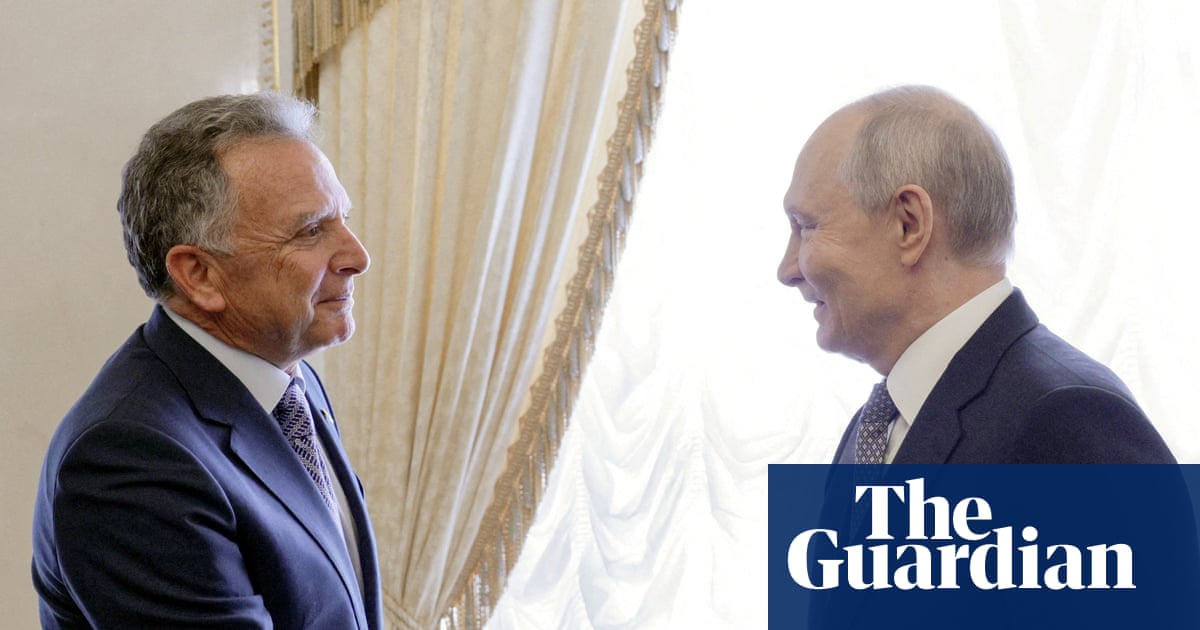
During their meeting at the Constantine Palace, Witkoff offered effusive praise for Putin, describing the Russian president as a humanitarian and expressing gratitude for a recent agreement to resume Russian diesel exports to the United States. These remarks stand in stark contrast to the increasingly hostile rhetoric directed by senior US officials toward Ukrainian President Volodymyr Zelenskyy. Trump has recently called for Zelenskyy’s resignation, portraying him as a primary obstacle to achieving peace, while Witkoff’s tone suggested a warming of relations between Washington and Moscow.
Witkoff traveled to Russia from Oslo, where he had previously met with Zelenskyy and European leaders in an attempt to inject momentum into stalled negotiations. He described his discussions with Putin as constructive but acknowledged that significant work remains. The envoy stated that trilateral talks involving the US, Russia, and Ukraine would follow at a technical level, focusing on security guarantees for both nations once hostilities cease. The Kremlin indicated it had agreed in principle to these future discussions.
Tensions between Washington and Kyiv have escalated following Trump’s decision to lift sanctions on Russian diesel and his subsequent calls for leadership changes in Ukraine after Kyiv refused to halt strikes on Russian oil refineries. Ukraine has reported disruptions to US intelligence sharing and restrictions on its access to Starshield, the military-grade version of Elon Musk’s Starlink satellite network. While Zelenskyy stated that advance warnings of missile attacks had resumed after his meeting with Witkoff, access to critical satellite infrastructure remains limited.
Conflicting reports have emerged regarding the origin of the restrictions on Starshield services. The Wall Street Journal reported that Musk personally ordered the slowdown, while Reuters cited sources indicating the directive came from within the White House. US Secretary of State Marco Rubio stated that he was unaware of the decision beforehand but emphasized that the usage terms are governed by a private commercial contract between Ukraine and the company. This ambiguity highlights the complex interplay between government policy and private corporate interests in supporting Ukrainian defense capabilities.
Despite these diplomatic maneuvers, there are few indications of an imminent breakthrough in ending the war. Moscow has shown little willingness to halt its bombardment of Ukrainian energy infrastructure as winter approaches, seemingly confident that continued pressure will yield favorable outcomes. The UN reports that more than 17,500 civilians have been confirmed killed since Russia launched its full-scale invasion in February 2022, with the true toll likely significantly higher. Putin thanked Trump and his wife for their attention to peace efforts, yet the gap between diplomatic gestures and battlefield realities remains wide.
The release of Hubbard and Witkoff’s praise for Putin underscore a notable shift in US foreign policy dynamics. By bypassing traditional prisoner exchange mechanisms and engaging warmly with Russian leadership, the Trump administration is signaling a prioritization of direct negotiation with Moscow over unconditional support for Kyiv. This approach raises questions about the future of US-Ukraine relations and the extent to which American leverage will be used to secure concessions from either side in the protracted conflict.
Sources behind this briefing
Go to the original reporting
- The Guardian US Politics↗Putin orders release of jailed American as he meets Trump envoy for Ukraine talks