The short version
- Two farms in Kingston and Plymouth are the first known sites globally to harvest cranberries under operating solar installations.
- The projects address a state-wide tension between the need for renewable energy expansion and the desire to protect agricultural wetlands from development.
- Engineering challenges required deep pilings and overhead wiring to accommodate bog conditions while allowing harvesting equipment access.
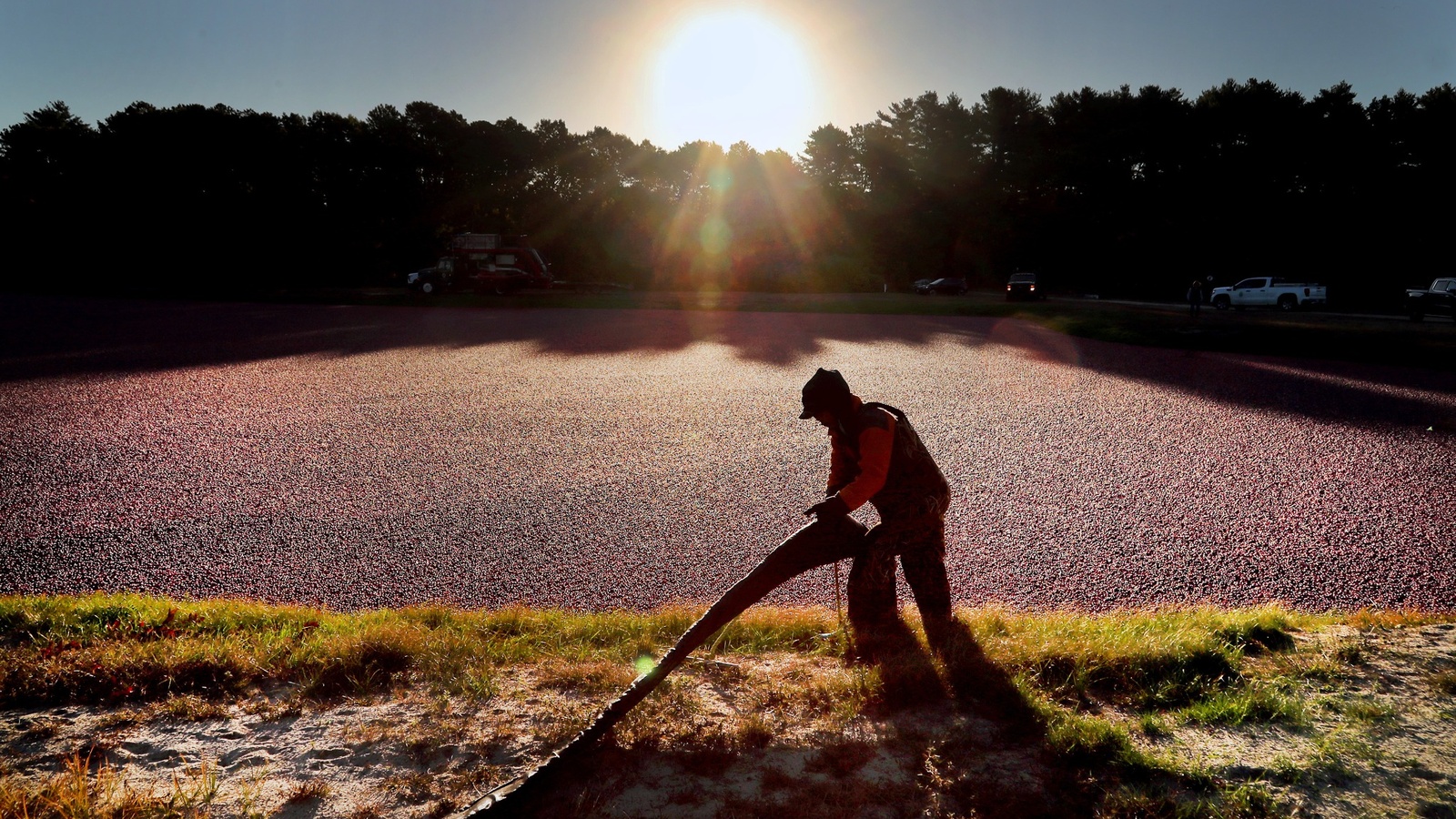
Harvesting operations in southeastern Massachusetts have taken on a new visual character this season, with pickers navigating machinery around metal poles situated beneath solar panels. Two cranberry bogs in the region are currently producing fruit under active photovoltaic arrays, marking the second season of such dual-use agriculture. These sites represent the first known instances in the country, and potentially the world, where cranberries are being cultivated beneath an operating solar installation. The initiative serves as a practical test case for agrivoltaics, a strategy that combines energy generation with active farming.
The push for these hybrid systems stems from a broader policy challenge in Massachusetts. The state has set ambitious targets to reach net-zero carbon emissions by 2050, with solar development playing a central role in that plan. Financial incentives for solar projects have been in place since the early 2000s and have expanded over time to encourage greater deployment. However, finding suitable land for these arrays has become a significant point of contention. The state is densely populated and heavily wooded, limiting options for rooftop or parking lot installations which often carry higher costs and lower capacity.
Proposals to place solar arrays on previously undeveloped land frequently encounter resistance from local residents concerned about community character and environmental groups wary of ecosystem disruption. Conversely, using pre-cleared farmland raises alarms among advocates who fear the permanent loss of agricultural production. These dynamics are not unique to Massachusetts but reflect a national struggle to balance energy infrastructure with land conservation. Agrivoltaics offers a potential middle ground by allowing farmland to generate electricity while maintaining its agricultural function, whether through livestock grazing or crop cultivation.
To encourage this dual-use model, Massachusetts became the first state in 2018 to offer specific financial boosts for agrivoltaic projects. The state’s solar incentive program provides a base rate for electricity generation, with additional premiums for arrays that support agricultural activity. For systems with capacities between one and five megawatts, the base rate is currently set at 23.17 cents per kilowatt-hour, with an extra nine cents added for agrivoltaic configurations. These incentives are designed to attract developers who might otherwise lease or buy land solely for energy production, ensuring that agricultural use remains a priority.
The two pilot projects in Kingston and Plymouth were developed by Greenbacker Renewables, which purchased the land from farmers looking to exit the business. The company partnered with Distributed Energy Infrastructure to construct the arrays and hired Iain Ward, a solar consultant and experienced cranberry farmer, to manage the agricultural operations. The Kingston site features a 4.4-megawatt array paired with a 13.5-megawatt-hour battery, while the Plymouth location includes a one-megawatt array. Both operate under a community solar model, selling power to customers seeking lower prices and environmental benefits.
Cranberry farming presents unique opportunities and constraints for such projects. Massachusetts is the second-largest producer of cranberries in the United States, trailing only Wisconsin. Unlike sheep farms or cornfields, which can often be sold for housing or commercial development, cranberry bogs are protected wetlands. Even if they cease production, these areas cannot be built upon due to their ecological status. For bogs that are well-positioned to connect to the electrical grid, solar panels offer a financial lifeline that helps maintain the land’s viability without converting it to non-agricultural uses.
Implementing solar infrastructure over cranberry bogs required solving several engineering puzzles. Standard solar foundations typically extend eight to ten feet into the ground, but bog conditions necessitate pilings driven much deeper to reach stable soil capable of supporting the structures. Developers had to experiment with different machinery to achieve the necessary depth. Additionally, wiring could not be buried in the saturated ground and was instead suspended overhead. The panels are mounted ten feet above the ground on an axis that allows them to tilt throughout the day to track the sun.
The design also prioritized agricultural functionality by spacing the pilings farther apart than usual. This wider spacing ensures that harvesting equipment can move freely through the bogs without obstruction. Prateek Tare, co-founder of Distributed Energy Infrastructure, emphasized that the design process involved close collaboration with farming experts to ensure the technology did not hinder traditional practices. The goal is to demonstrate that energy production and cranberry cultivation can coexist effectively, providing a template for other regions facing similar land-use dilemmas.
As these projects enter their second harvest season, they serve as proof of concept for a model that could expand nationwide. The success or failure of these specific installations will inform future decisions regarding agrivoltaic incentives and engineering standards. For now, the bogs in Kingston and Plymouth stand as early examples of how renewable energy infrastructure can be integrated into protected agricultural landscapes without displacing food production.
The broader implications of this approach extend beyond Massachusetts. As other states grapple with their own clean energy targets and land conservation goals, the data gathered from these cranberry bogs could influence policy decisions elsewhere. The combination of financial incentives, engineering innovation, and agricultural expertise offers a pathway to reduce carbon emissions while preserving valuable wetlands. Whether this model can be replicated on a larger scale remains to be seen, but the initial results suggest that dual-use solar is a viable option for certain types of farmland.
Sources behind this briefing
Go to the original reporting
- Grist↗These cranberry bogs come with a side of solar