The short version
- A catastrophic flood event in the Himalayas has resulted in over 160 confirmed deaths and left hundreds missing, including many international tourists.
- Satellite data suggests a large section of glacier collapsed into a valley, generating a seismic event and transforming ice into a destructive wall of water.
- Scientists warn that warming temperatures are destabilizing mountain ice through thinning, retreat, and permafrost thaw, increasing the frequency of such disasters.
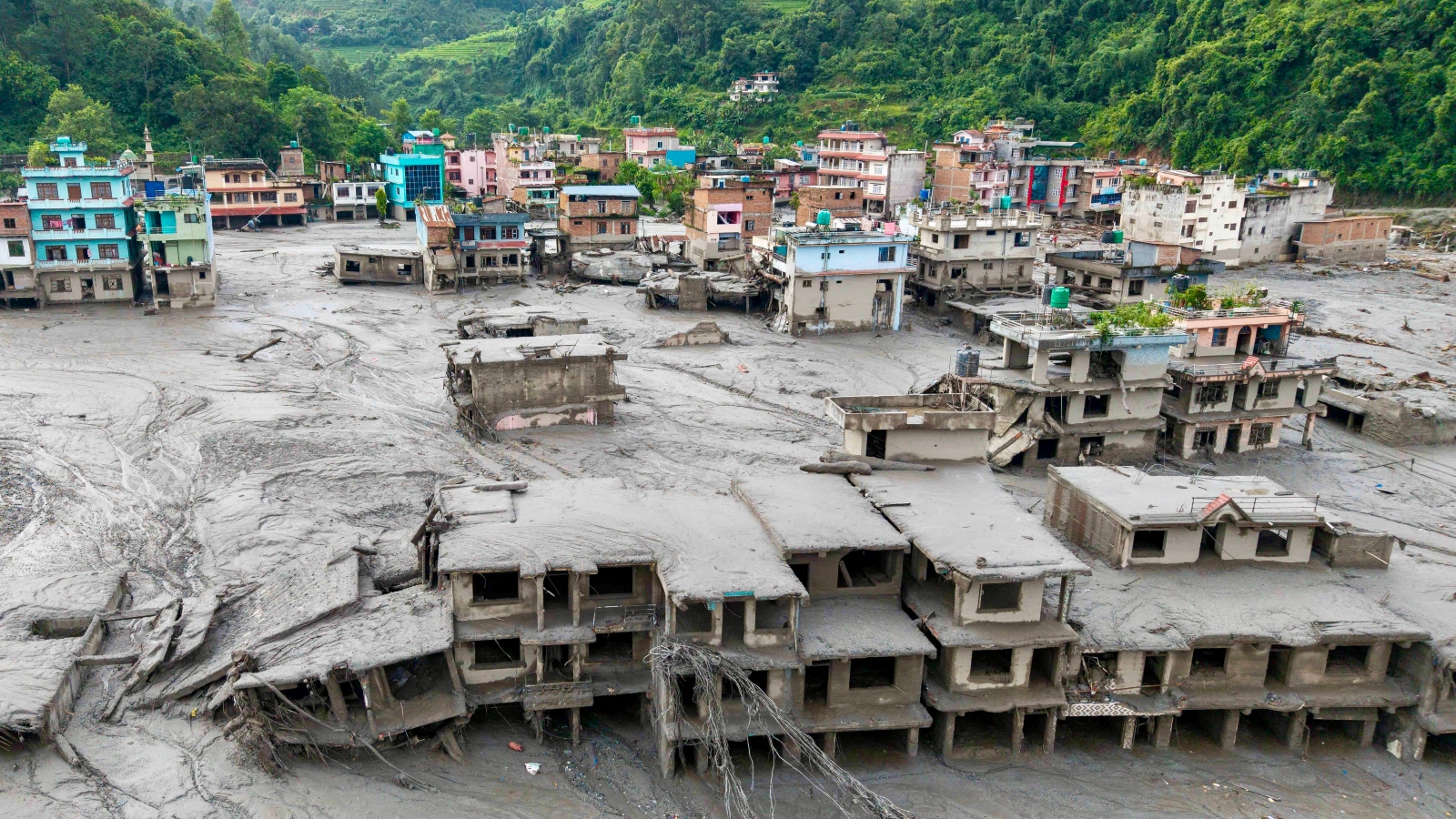
A devastating flood struck the mountainous border region between Nepal and Tibet on Wednesday, resulting in a significant loss of life and widespread destruction. Initial reports confirm that at least 160 people have died, while hundreds more remain missing. The casualty list includes dozens of international tourists who were visiting the area when the disaster unfolded. Video footage circulating online depicts the sheer force of the event, showing a towering wall of water sweeping through settlements and obliterating buildings and vehicles in its path.
Preliminary investigations by the Nepalese government and analysis of satellite imagery point to a specific geological trigger for the catastrophe. The flooding appears to have been caused by a massive landslide that occurred after a substantial portion of a glacier detached and fell hundreds of feet. This collapse generated enough force to register as a magnitude 5.2 seismic event, according to data from the U.S. Geological Survey. The impact pulverized the ice upon hitting the valley floor, instantly converting solid mass into a high-velocity flood that surged downstream.
Geologists are still working to establish a definitive timeline of events, but early assessments suggest a piece of ice approximately 2,000 feet wide fell nearly 4,000 feet. Daniel Shugar, a geologist at the University of Calgary, noted that while it is too early for conclusive statements, warm temperatures earlier in the week likely contributed to melting snow on the glacier surface. This meltwater may have lubricated the ice, facilitating the sudden collapse. The event differs from typical glacial lake outburst floods, which involve dammed lakes overflowing; instead, this was a direct structural failure of the glacier itself.
The disaster underscores broader trends in Himalayan glaciology driven by climate change. Joseph Shea, an associate professor of geography at the University of Northern British Columbia, emphasized that glaciers in the region are actively retreating and thinning. This physical transformation reduces their stability. As glaciers shrink, they lose their ability to hold back sediment, which can trigger landslides. Additionally, retreating ice often leaves behind high-elevation lakes that are prone to catastrophic dam failures if debris flows into them.
Historical data illustrates the severity of ice loss in Nepal. Between 1970 and 2010, glaciers in the country lost nearly a quarter of their total area. Research indicates that more than 160 smaller glaciers have vanished entirely during this period. Globally, world glaciers have shed five percent of their ice since the year 2000. A recent study projects that if global warming exceeds 1.5 degrees Celsius above pre-industrial levels, forty percent of the world’s glacial ice could disappear. These statistics highlight the accelerating pace of change in high-altitude environments.
The mechanisms destabilizing these glaciers are multifaceted and interconnected. Shea pointed out that summer warming leads to increased melt and higher water volumes around the ice. Simultaneously, alpine permafrost is thawing as ground temperatures rise. This process turns previously frozen blocks of earth and rock into mobile hazards. The combination of melting ice, unstable sediment, and thawed permafrost creates a volatile environment where large-scale collapses become more probable.
This event in Nepal is not an isolated incident but part of a growing pattern of glacier-related disasters linked to rising temperatures. In Switzerland, a glacier collapse last year buried a town, while a similar event in Italy in 2022 killed eleven mountaineers. Both incidents were connected to warming conditions. The frequency and severity of these events suggest that mountain communities and tourism industries in the Himalayas face escalating risks as the climate continues to warm.
The immediate aftermath involves search and rescue operations for the hundreds of missing individuals, many of whom are foreign nationals. Authorities are assessing the extent of infrastructure damage in the remote region. Long-term implications include a heightened awareness of glacial hazards in warming climates. Experts warn that without significant reductions in global greenhouse gas emissions, the instability of mountain ice will likely persist, posing ongoing threats to populations living in the valleys below.
Sources behind this briefing
Go to the original reporting
- Grist↗How rising temperatures likely contributed to Nepal’s deadly flood