The short version
- US District Judge Kathleen Cardone issued a ruling that temporarily stops Customs and Border Protection from building walls or disturbing ground in the Big Bend sector.
- The decision challenges Department of Homeland Security waivers that allowed the agency to bypass numerous environmental, historical, and cultural protection laws.
- Opponents argue the rugged terrain already deters unauthorized crossings, while the administration maintains it has the authority to secure the border despite the injunction.
A federal judge in Texas has issued a temporary order halting the construction of border security infrastructure across the Big Bend region, marking a significant legal setback for the Trump administration’s efforts to expand physical barriers along the southern border. The ruling by US District Judge Kathleen Cardone blocks Customs and Border Protection from proceeding with plans that include vehicle barriers, roads, and surveillance technology in an area that encompasses Big Bend National Park and extends roughly 500 miles along the Rio Grande.
The injunction comes after a hearing in El Paso where plaintiffs argued that the Department of Homeland Security improperly suspended dozens of federal laws designed to protect the environment, historical sites, and archaeological resources. Cardone determined that the challengers were likely to succeed on at least one of their claims and would suffer irreparable harm if construction continued without adhering to standard legal requirements. The order effectively requires the agency to comply with the very regulations it had previously waived to accelerate its building timeline.
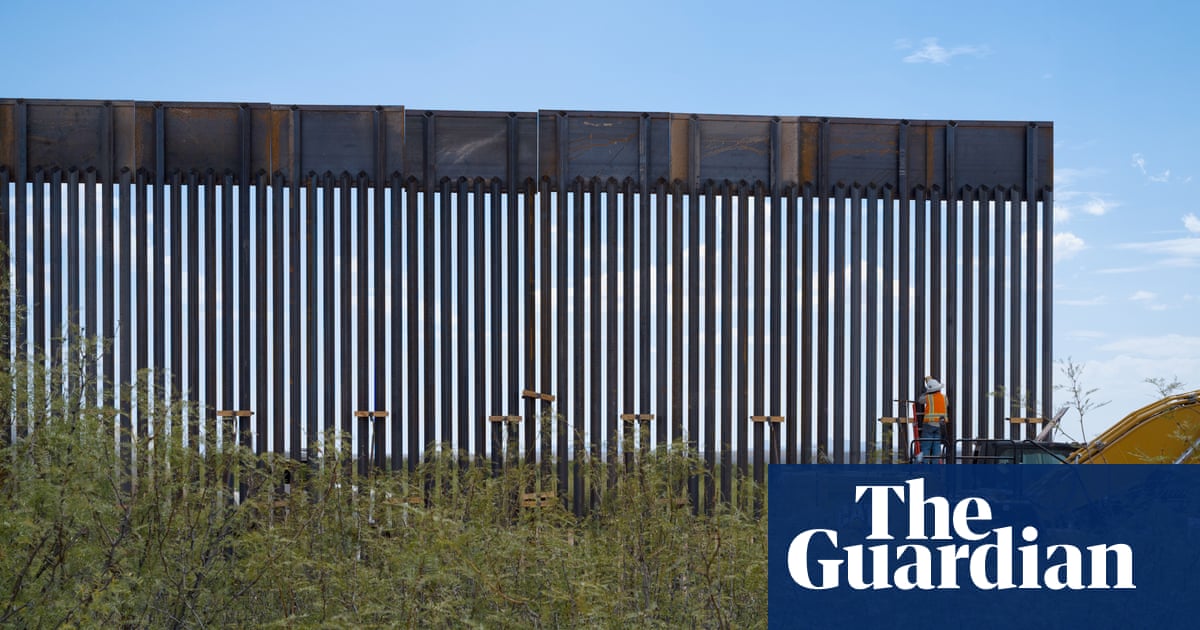
The dispute centers on a massive $46.5 billion appropriation included in last year’s spending legislation, which has enabled the administration to pursue an aggressive expansion of border fortifications. In the Big Bend sector alone, Customs and Border Protection has awarded contracts totaling more than $6 billion for what it describes as a smart wall system combining 30-foot steel bollards with advanced monitoring technology. This region represents one of the longest unwalled stretches of the US-Mexico border, making it a focal point for current construction efforts.
Opposition to the project has united a diverse coalition including environmental groups, local business owners, landowners, and politicians from both major parties. Critics contend that the remote nature of west Texas, characterized by steep cliffs and a lack of nearby urban centers on the Mexican side, already serves as a natural deterrent to unauthorized crossings. They argue that the government’s push to install barriers ignores the unique ecological and cultural value of the landscape while violating statutory protections meant to preserve it.
Tensions escalated earlier this year when images emerged of bulldozers clearing land within Big Bend National Park in August, sparking widespread outrage and prompting a temporary pause by CBP Commissioner Rodney Scott. Although construction resumed in September after the initial halt expired, the renewed activity intensified legal challenges. The lawsuit was filed by organizations including the Center for Biological Diversity, advocates for the historic Ruidosa church, and local river guide Billy Miller, all seeking to overturn the waivers that facilitated the rapid deployment of infrastructure.
Judge Cardone’s decision extends beyond the boundaries of the national park to cover the entire Big Bend sector, which accounts for approximately a quarter of the total southern border length. The ruling prohibits any ground disturbance or construction of security infrastructure unless it fully complies with federal laws regarding environmental and historical preservation. This broad scope impacts not only public lands but also private properties where the agency had been seeking permission to survey and build, with some cases potentially moving toward eminent domain proceedings if agreements cannot be reached.
Supporters of the border wall project maintain that securing the nation’s borders is a paramount responsibility and that the administration possesses the legal authority to act swiftly. A spokesperson for Customs and Border Protection stated that the agency stands by its assessment and remains confident in its ability to balance security needs with landscape preservation. The department is currently working with the Justice Department to determine next steps following the injunction, though no immediate comment was provided regarding specific plans for appeal or modification.
Advocates for the region view the ruling as a critical victory but emphasize that the struggle is not yet over. Laiken Jordahl of the Center for Biological Diversity described the decision as historic for protecting wild areas from political theater, while noting that full restoration of environmental protections remains necessary. Other groups, including the National Parks Conservation Association, are calling on the administration to repair existing damage, engage with local communities, and develop alternative solutions that respect the integrity of Big Bend’s renowned natural features.
The legal battle highlights the ongoing tension between executive branch priorities for border security and judicial oversight of regulatory compliance. As the administration navigates this setback, the focus shifts to how it will address the injunction while continuing its broader agenda funded by substantial congressional appropriations. The outcome of this case could set important precedents for future infrastructure projects in sensitive ecological areas across the country.
With construction currently frozen, attention turns to the potential for further litigation and administrative adjustments. The administration has indicated it is reevaluating plans specifically within the national park, though details remain unclear. Meanwhile, local stakeholders await clarity on whether the government will pursue alternative routes or methods that satisfy both security objectives and legal mandates, ensuring that the unique character of west Texas remains intact.
Sources behind this briefing
Go to the original reporting
- The Guardian US Politics↗Federal judge halts Big Bend border wall construction in blow to Trump agenda
- PBS NewsHour↗Judge halts border wall construction in Texas' Big Bend region for now