The short version
- Masked Israeli settlers attacked a convoy of European diplomats and clergy in the West Bank village of Taybeh, injuring three individuals and damaging a Belgian consular vehicle.
- The assault occurred during the annual olive harvest, a period marked by over 170 settler attacks that have resulted in four deaths and more than 100 injuries among Palestinians.
- While Israeli officials condemned the violence, Prime Minister Benjamin Netanyahu’s office questioned the narrative, suggesting the incident was part of a smear campaign ahead of national elections.
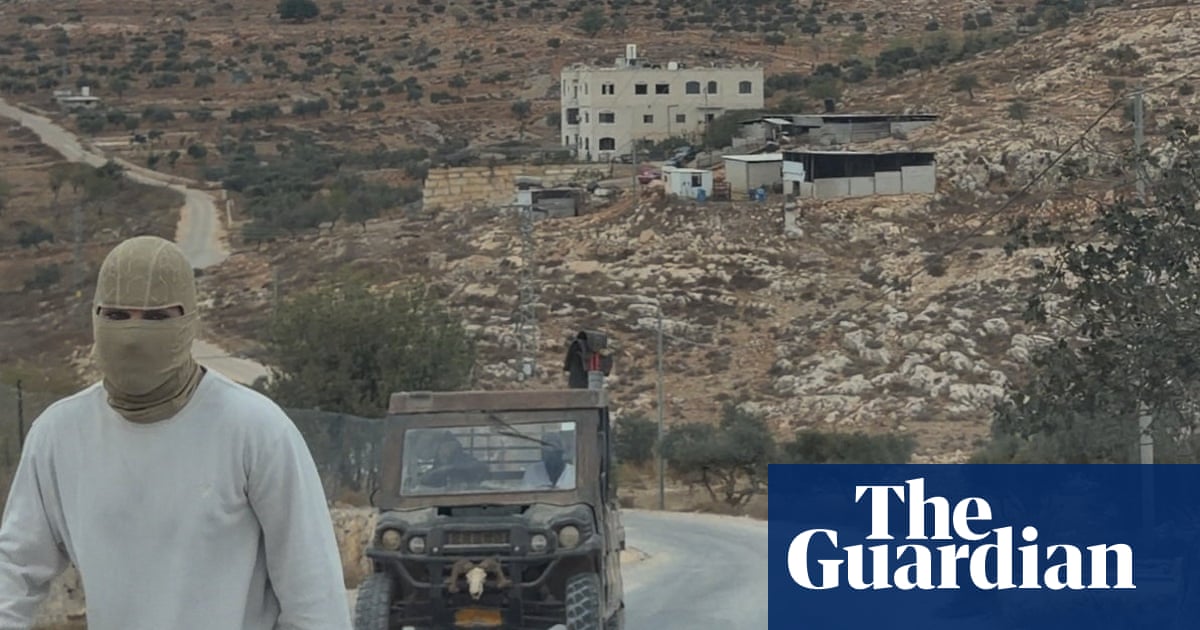
Violence in the occupied West Bank escalated sharply on Saturday when masked Israeli settlers attacked a group of European diplomats, clergy, and a French mayor in the Christian village of Taybeh. The assault, which injured three people and damaged a vehicle belonging to the Belgian mission, represents a significant breach of security for foreign officials operating in the region. Bernard Baudoux, the mayor of Aulnoye-Aymeries in northern France, was wearing his official tricolor sash when he was knocked to the ground by militants who shouted slogans as they launched the attack. His wife and Vincent Dollmann, the archbishop of Cambrai, were also threatened by a group of seven men, some armed with clubs.
The diplomats had traveled to Taybeh to witness the annual olive harvest, an event that has become increasingly dangerous for Palestinian residents. The group included Belgium’s consul general, along with envoys from France and Poland, who joined local farmers in an effort to document the conditions on the ground. Video footage from the scene shows masked men confronting the convoy, throwing stones, and smashing the window of an armored car. One activist at the scene reported that the attackers threatened to kill them, while others were seen demanding identification documents before advancing with sticks.
This incident follows a separate attack the previous day in the village of Abu Falah, where Washington Post photographer Heidi Levine was severely injured. Levine, who has covered the region for decades, required surgery and described the current state of the country as unprecedented in her experience. The cumulative toll of the harvest season is severe: since late September, Palestinian authorities report that at least four people have been killed and more than 100 injured. Israeli rights group Yesh Din notes that settlers have launched more than 170 attacks during this period, damaging thousands of olive trees and stealing crops.
International reaction has been swift and critical. Maxime Prévot, Belgium’s deputy prime minister and foreign affairs minister, condemned the violence in strong terms, linking it directly to what he described as Israel’s illegal settlement policy. He emphasized that harvesting olives or performing diplomatic duties should never expose individuals to physical risk. Prévot stated that Belgium would continue to push for European Union sanctions against settlers responsible for such violence, arguing that impunity must end. The Belgian government reiterated its stance that the occupying power bears responsibility for protecting both Palestinians and foreign diplomats in the territory.
Israeli authorities have offered a mixed response. Foreign Minister Gideon Sa’ar condemned the acts of violence by what he termed Israeli rioters and confirmed that police had opened an investigation. However, he also noted that the diplomatic visit had not been coordinated with the Israel Defense Forces in advance, suggesting such coordination could have safeguarded the visitors. The IDF stated that no soldiers were present at the scene during the attack. This position has drawn criticism from Western diplomatic sources, who argue that requiring advance notification violates international law and diplomatic conventions, given that Israel controls security in most of the West Bank.
The political implications of the violence are significant as Israel approaches closely contested national elections. Prime Minister Benjamin Netanyahu’s office urged caution before drawing conclusions from social media reports, suggesting the incident was part of a coordinated campaign to smear Israel and its Jewish residents. This narrative contrasts sharply with statements from opposition figures. Gadi Eisenkot, a former general and political rival of Netanyahu, described the attacks as Jewish terror that harms the settlement enterprise and national security. He argued that a handful of criminals are destroying the state’s legitimacy.
Local religious leaders in Taybeh express deep concern about the trajectory of settler violence. Father Bashar Fawadleh, the town’s parish priest, noted that while residents have endured escalating attacks for years, targeting foreign diplomats is a disturbing new escalation. He questioned what protection remains for local families when international witnesses are absent. The presence of activists, journalists, and clergy no longer serves as a deterrent against extreme violence, according to community leaders who fear the safety of farmers on their own land.
The broader context includes longstanding international criticism of Israeli settlement expansion in the West Bank, which the United Nations and much of the global community consider illegal. Israel captured the territory in 1967, and it remains under military rule. Recent diplomatic pressure has intensified, with China’s foreign minister urging Israel to revoke acts of forcibly establishing settlements. As the election cycle nears, the violence underscores deep divisions within Israeli society regarding security, settlement policy, and the treatment of Palestinians in the occupied territories.
Investigations into the Taybeh attack are ongoing, with Israeli police vowing to bring those responsible to justice. However, the incident highlights the challenges faced by international observers and local communities alike. The combination of restricted access to agricultural land in Area C and unchecked settler violence has created a volatile environment. With no immediate resolution in sight, the olive harvest continues to serve as a flashpoint for broader geopolitical tensions and human rights concerns.
The coming weeks will likely see increased scrutiny of Israel’s security apparatus and its handling of settler violence. European nations are expected to maintain pressure on Israeli authorities to ensure accountability. Meanwhile, Palestinian residents face the dual burden of economic loss from damaged crops and physical danger during a culturally vital season. The attack on diplomats signals that the conflict is no longer confined to local disputes but increasingly involves international actors and diplomatic immunity.
Sources behind this briefing
Go to the original reporting
- The Guardian World↗Israeli settlers attack European diplomats in West Bank
- BBC News↗European diplomats attacked by Israeli settlers in West Bank
- The Guardian US↗Masked settlers attack European diplomats in occupied West Bank
- PBS NewsHour↗Masked settlers attack European diplomats in the occupied West Bank