The short version
- Israeli settlers launched coordinated attacks on Palestinian villages during the olive harvest, resulting in injuries to residents and a Washington Post photographer.
- Rights groups and international officials accuse Israeli authorities of failing to protect Palestinians and sometimes aiding settler violence, which has surged this year.
- The escalation occurs weeks before Israel's national election, with political outcomes potentially influencing the trajectory of settler activity and government policy.
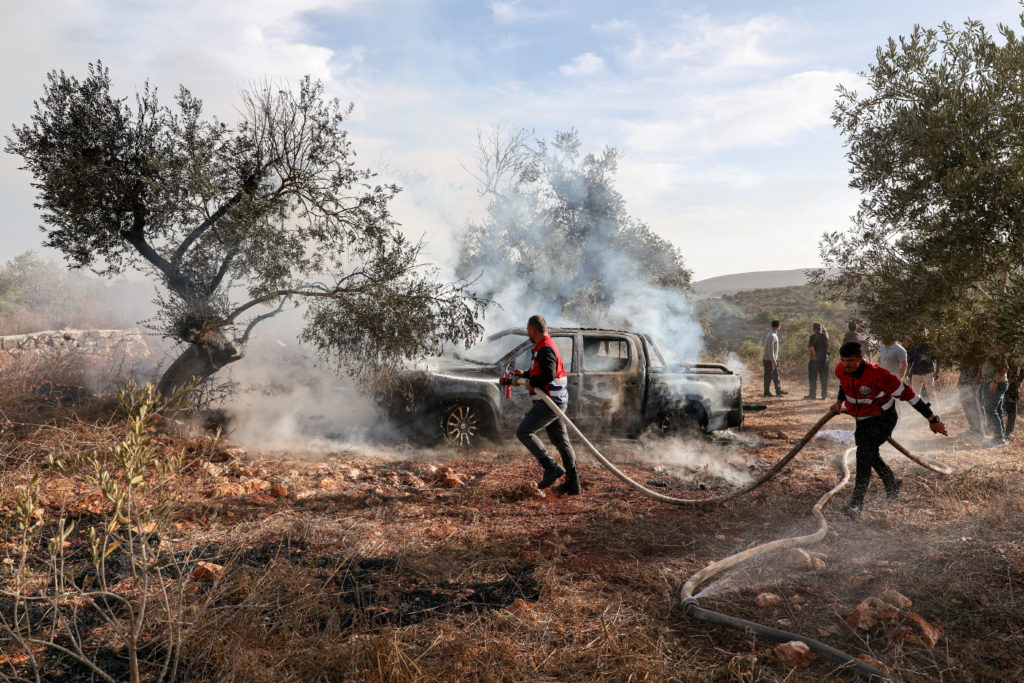
Violence erupted across the occupied West Bank on Friday as Israeli settlers targeted Palestinian communities during the annual olive harvest. The attacks, which spanned at least eight villages in the northern region, involved arson, physical assaults, and property destruction. Local officials and humanitarian organizations reported that residents were beaten while attempting to collect olives, a critical economic activity for tens of thousands of families who rely on the crop for their livelihood.
Among those injured was Heidi Levine, a photojournalist for The Washington Post, who was attacked by masked individuals armed with bottles and slingshots in the village of Abu Falah. Levine reported being kicked for approximately ten minutes while trying to protect her equipment. Her protective gear, including a helmet and vest marked with press identification, likely prevented more severe harm. She was hospitalized following the incident, drawing condemnation from The Washington Post and the Foreign Press Association, which called for accountability from Israeli authorities.
The U.S. State Department issued a statement condemning criminal violence by any party in the West Bank and expressed support for appropriate investigations and legal accountability. Officials noted that they had reached out to The Washington Post to offer consular assistance to Levine. This incident adds to a growing list of attacks against journalists and civilians in the region, with international press organizations criticizing Israeli authorities for ignoring repeated calls to address lawlessness.
Israeli military forces responded to the unrest by arriving in Abu Falah after dispersing crowds in the olive groves. A dispute emerged regarding the use of live ammunition by soldiers against Abdel Jaber Hassan, a village council member. The military stated that troops fired because an individual was running toward them with a sharp object. However, Nazem Saleh Shoman, another council member, disputed this account, asserting that Hassan was shot at close range while carrying only olive harvesting tools and was unarmed.
Humanitarian costs of the violence are mounting. The Palestine Red Crescent Society reported treating fourteen wounded individuals across six locations, while local officials noted additional injuries in two other villages. The Palestinian Health Ministry indicated that at least four Palestinians had been killed and more than one hundred injured since the harvest season began earlier in the month. In Turmus Ayya, a village northeast of Ramallah, Mayor Nawaf Zghoul described settlers lying in wait for farmers, burning cars, and leaving nothing intact in the surrounding groves.
Rights organizations have documented a significant surge in settler violence throughout 2026, with incidents spiking further in the weeks leading up to Israel's election on October 27. Yesh Din, an Israeli human rights group, stated that it had already recorded hundreds of incidents directly related to this year's harvest. The organization and others argue that Israeli authorities rarely arrest or indict perpetrators, suggesting a pattern of impunity. Ziv Stahl, executive director of Yesh Din, claimed that soldiers are not stopping the violence and are sometimes assisting settlers in their attacks.
International criticism has intensified, with the British government accusing Israel of turning a blind eye to what it described as a campaign of ethnic cleansing. The United Nations Office for the Coordination of Humanitarian Affairs reported over 1,600 attacks across the West Bank between January and August of this year. The territory remains under Israeli military rule since the 1967 Middle East war, home to approximately three million Palestinians and more than 500,000 Israeli settlers.
The political context of these events is significant as Israel approaches its national election. The current far-right government has been credited by critics with emboldening settler activities. The outcome of the vote could determine whether this administration remains in power or is replaced, potentially altering the dynamic of security enforcement and settler relations in the West Bank. For now, residents and rights groups continue to demand greater protection and accountability for the escalating violence.
Sources behind this briefing
Go to the original reporting
- PBS NewsHour↗Israeli settlers attack Palestinians during West Bank olive harvest and beat U.S. photojournalist