The short version
- The Justice Department issued a formal warning that California officials processing ballots from suspected noncitizens risk becoming aiders and abettors to federal crimes.
- This threat follows a lawsuit filed by the Trump administration seeking to block the counting of mail ballots sent to people the federal government has flagged as likely noncitizens.
- Election experts and state officials criticize the move as an unreasonable escalation that lacks evidence, noting previous federal claims about noncitizen voting have proven inaccurate.
The Trump administration has intensified its legal confrontation with California by warning local election officials that they face potential criminal prosecution if they process ballots from individuals suspected of being noncitizens. A letter obtained by the Associated Press, sent Friday by Trent McCotter, the acting deputy attorney general, explicitly states that facilitating or ignoring such conduct carries significant legal consequences. The correspondence asserts that voting in federal elections as a noncitizen is a federal crime and that knowingly tabulating ballots cast by these individuals makes election workers accomplices to that offense.
This directive arrives less than three weeks before the November 3 midterm election, adding urgency to an ongoing dispute between the federal government and the heavily Democratic state. The letter was addressed to the Los Angeles County Counsel’s office and copied to California Secretary of State Shirley Weber and Los Angeles County Registrar Dean Logan, effectively placing the entire state on notice regarding these allegations. Neither the county offices nor the state attorney general’s office immediately responded to requests for comment following the release of the document.
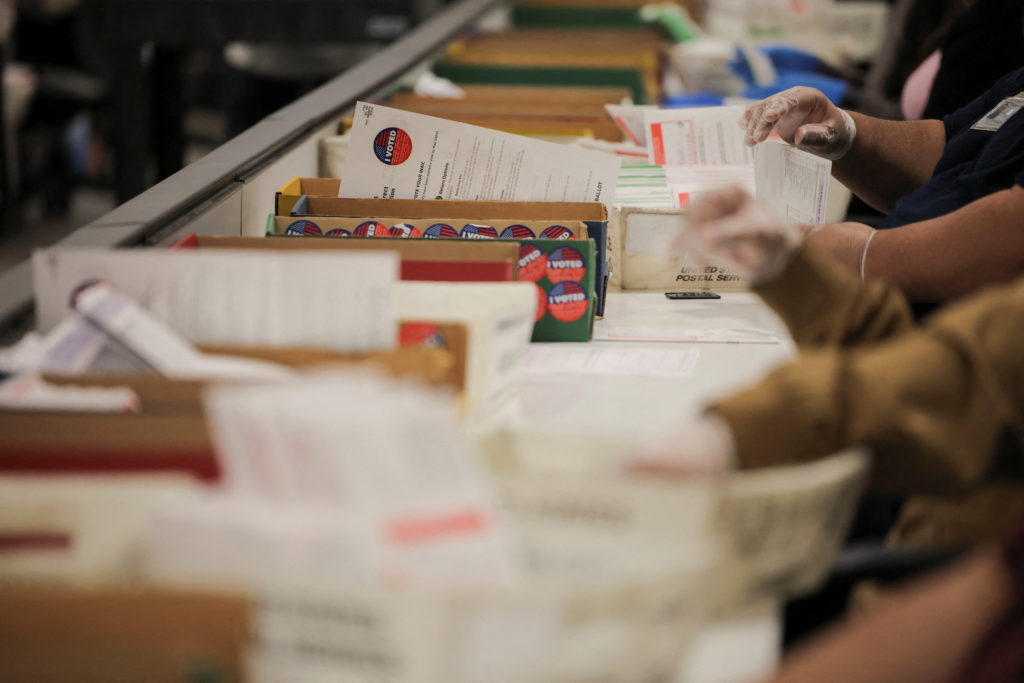
The warning follows closely on the heels of a lawsuit filed by the Justice Department seeking to prevent California from counting mail ballots sent to people identified by federal agencies as likely noncitizens until their immigration status can be verified. The federal complaint was submitted after state officials failed to meet a 48-hour deadline to review a password-protected thumb drive containing a list of 20,000 names. The administration claims these individuals are likely noncitizens who received ballots for the upcoming election, although Secretary Weber has stated that the federal government has provided no evidence to substantiate these assertions.
California officials have expressed skepticism regarding the federal government’s claims about noncitizen voting. In July, Homeland Security Secretary Markwayne Mullin sent letters to California, Nevada, New Jersey, and Pennsylvania, alleging that up to 250,000 noncitizens were registered to vote in those states. Election administrators in these jurisdictions questioned the validity of these figures. Similarly, when the administration previously claimed that Nevada had 1,500 noncitizen voters on its rolls, a subsequent review revealed that zero actual registered noncitizens existed among those identified.
The Justice Department has made the issue of noncitizen voting a priority this year, demanding detailed voter information from states, including dates of birth, addresses, driver’s license numbers, and partial Social Security numbers. So far this year, the department has charged approximately 90 people for various types of election misconduct, including 50 individuals alleged to have voted as noncitizens. These figures are often cited by administration officials to justify their aggressive stance, despite the vast number of registered voters in the United States.
Legal experts view the latest letter as a significant escalation in the conflict. Rick Hasen, a law professor at UCLA, described the move as deplorable, arguing that the federal government is making unreasonable demands and escalating threats beyond its authority during an active election cycle. He noted that rather than cooperating to assist states with their administrative responsibilities, the administration is choosing a confrontational approach that risks undermining confidence in the electoral process.
The practical implications of this dispute extend beyond legal theory, as any federal criminal cases arising from these allegations in the Los Angeles area would be handled by Bill Essayli, the region’s top federal prosecutor. Essayli was among the officials who filed the federal complaint against California. It remains unclear how many individuals the Justice Department intends to investigate or charge based on these warnings, but the threat of prosecution adds a layer of complexity and tension to the administration of the upcoming election.
With over 23 million people registered to vote statewide, the outcome of competitive congressional races in California could determine which party controls the U.S. House for the final two years of President Donald Trump’s term. The dispute highlights broader tensions over voter rolls and election security, reflecting a political environment where allegations of fraud are being leveraged as tools in partisan battles. As the election approaches, the focus remains on whether these legal maneuvers will impact the actual administration of voting or serve primarily as political signaling.
The administration’s strategy appears designed to cast doubt on the integrity of the electoral process in key states. By threatening criminal liability for local officials, the Justice Department aims to pressure state governments into adopting stricter verification measures. However, without concrete evidence linking specific ballots to noncitizen voters, critics argue that these actions are more likely to confuse voters and strain resources than to uncover actual wrongdoing. The coming weeks will reveal whether this legal pressure yields any substantive changes in how California handles its election logistics.
As the midterm election draws near, the intersection of federal law enforcement and local election administration remains a flashpoint. The lack of cooperation between the Trump administration and California officials underscores a deep divide over the role of the federal government in overseeing state-run elections. While the Justice Department insists it is protecting the integrity of federal elections, opponents view these actions as an overreach that threatens to destabilize the democratic process without addressing any proven instances of widespread fraud.
Sources behind this briefing
Go to the original reporting
- PBS NewsHour↗DOJ says California officials who process ballots from suspected noncitizens risk prosecution