The short version
- Forecasts indicate a potential shortfall of up to £580 million in overseas aid spending by the end of 2027, failing to meet the government's revised target.
- The gap is attributed to higher-than-expected inflation and policy adjustments made to the Foreign, Commonwealth and Development Office budget in 2025.
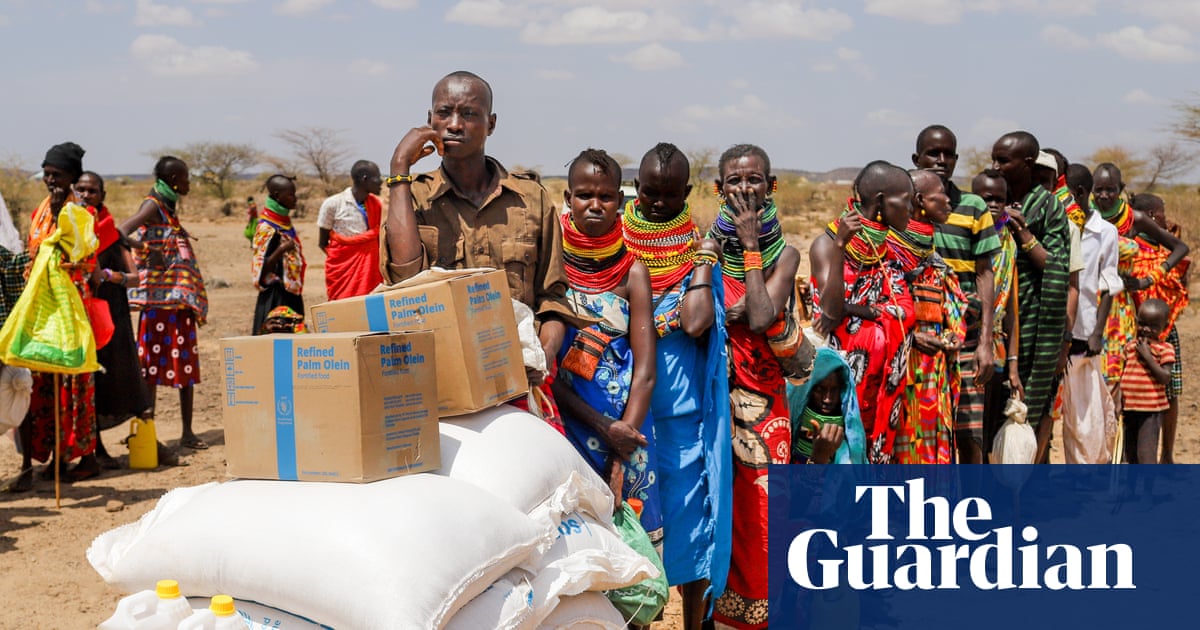
- Critics warn that missing these targets will exacerbate cuts to programs in Africa, affecting clean water access, education, and disease prevention efforts.
The United Kingdom is projected to fall short of its official international aid spending target by a significant margin by the end of next year, according to new calculations from independent experts. The Center for Global Development estimates that the government will miss its goal of allocating 0.3 percent of national income to official development assistance. This shortfall represents a deviation from the commitments made during recent budgetary reviews and highlights ongoing tensions between fiscal constraints and foreign policy obligations.
Researchers at the Center for Global Development analyzed Treasury forecasts and determined that aid spending could be approximately £410 million less than anticipated. This figure would result in aid levels reaching only 0.29 percent of national income. However, the analysis suggests that a larger gap is highly plausible, with estimates pointing toward a £580 million deficit that would push spending down to just 0.28 percent. Even under the most conservative assumptions, the data indicates a minimum shortfall of £250 million.
Ian Mitchell, a senior fellow at the Center for Global Development, characterized these discrepancies as material reductions in the purchasing power of British aid. He noted that closing even the smaller projected gap would be sufficient to mitigate severe cuts to programs in Africa. These reductions are expected to have tangible human costs, potentially leading to increased mortality rates and forcing the United Kingdom into a de facto withdrawal from key regions in southern and eastern Africa.
The primary drivers of this financial divergence appear to be macroeconomic factors and administrative policy shifts. Higher-than-expected inflation has caused national income figures to rise above initial projections made during the spending review. Additionally, a policy change implemented in 2025 regarding the budget for the Foreign, Commonwealth and Development Office has contributed to the reduced allocation. These elements combined have created a scenario where the fixed budget framework struggles to accommodate rising economic indicators.
The current target of 0.3 percent is notably lower than the 0.7 percent commitment outlined in the Labour Party’s election manifesto. Prime Minister Keir Starmer previously downgraded this objective to free up resources for defense spending. Despite this adjustment, experts argue that failing to meet the revised benchmark undermines the government’s credibility. They have urged ministers to consider allocating additional funds in the upcoming budget to avoid political embarrassment and criticism from international partners.
Fleur Anderson, a former minister and member of the foreign affairs select committee, emphasized that missing these targets is not merely an accounting exercise. She highlighted the real-world consequences for communities lacking clean water, girls being removed from schools, and vaccines failing to reach their destinations. Anderson called on the Treasury to use the upcoming budget as an opportunity to demonstrate that Britain’s stated global role is supported by concrete financial action.
Recent data released by the Foreign, Commonwealth and Development Office in September revealed that aid cuts have disproportionately affected the world’s poorest nations. Funding for least-developed and low-income countries decreased by 6.7 percent, amounting to a reduction of £118 million. In contrast, the share of aid directed toward higher-income countries increased. The overall official development assistance budget fell from 0.5 percent of gross national income in 2024 to 0.44 percent in 2025, representing a drop of nearly £1 billion.
The government has defended its strategy by prioritizing spending through multilateral agencies such as the World Bank’s International Development Association and the global vaccines initiative Gavi. An official spokesperson stated that moving to a fixed budget reduces volatility and provides stability for high-impact programs. However, opposition parties including the Conservative Party and Reform UK have pledged to slash aid even further, proposing reductions from approximately £9 billion to £1 billion annually.
Such drastic cuts proposed by opposition groups would leave the United Kingdom unable to cover its existing contributions to major international bodies like the UN and World Bank. Charities have repeatedly warned that deep reductions in aid will negatively impact children’s education and increase the risk of disease and death in vulnerable regions. As the budget deadline approaches, the pressure mounts on ministers to reconcile fiscal realities with humanitarian commitments.
The debate over aid spending reflects broader challenges in balancing domestic priorities with international responsibilities. While the government argues that a fixed budget ensures predictability, critics contend that it fails to account for inflationary pressures and urgent global needs. The outcome of this week’s budget decisions will signal whether the United Kingdom intends to maintain its current trajectory or attempt to bridge the widening gap between promised support and actual delivery.
Sources behind this briefing
Go to the original reporting
- The Guardian World↗Labour urged to plug predicted £400m shortfall in overseas aid funding in 2027