The short version
- Luiz Inácio Lula da Silva won the presidential runoff with 51.79% of the vote, reversing a significant first-round deficit against his far-right opponent.
- Senator Flávio Bolsonaro has refused to concede the election results, citing procedural concerns despite both parties requesting extended voting hours.
- The victory ensures the continuation of policies that have significantly reduced Amazon deforestation and strengthened democratic norms since Lula's previous terms.
Luiz Inácio Lula da Silva has secured a fourth nonconsecutive term as president of Brazil, completing a dramatic political reversal after trailing in the initial round of voting. The veteran leftist leader captured 51.79% of the vote in the runoff, defeating Senator Flávio Bolsonaro by a margin of approximately 4.3 million votes. This outcome marks a decisive moment for Brazilian democracy, halting the momentum of the far-right movement that had surged earlier in the election cycle. For Lula, who turns 81 shortly after the results were declared, the victory serves as a consolidation of the democratic resurgence observed since his return to office four years ago.
The path to this result was unprecedented in modern Brazilian political history. In early October, Flávio Bolsonaro, the son of former president Jair Bolsonaro, led the first round with 47.03% of the vote compared to Lula’s 45.16%. This lead placed the younger Bolsonaro in a strong position, as no candidate who finished second in the first round since the restoration of democracy in 1985 had ever managed to win the subsequent ballot. However, polling data indicated a tightening race in the weeks leading up to the runoff, with the gap narrowing to mere fractions of a percentage point before Lula ultimately pulled ahead.
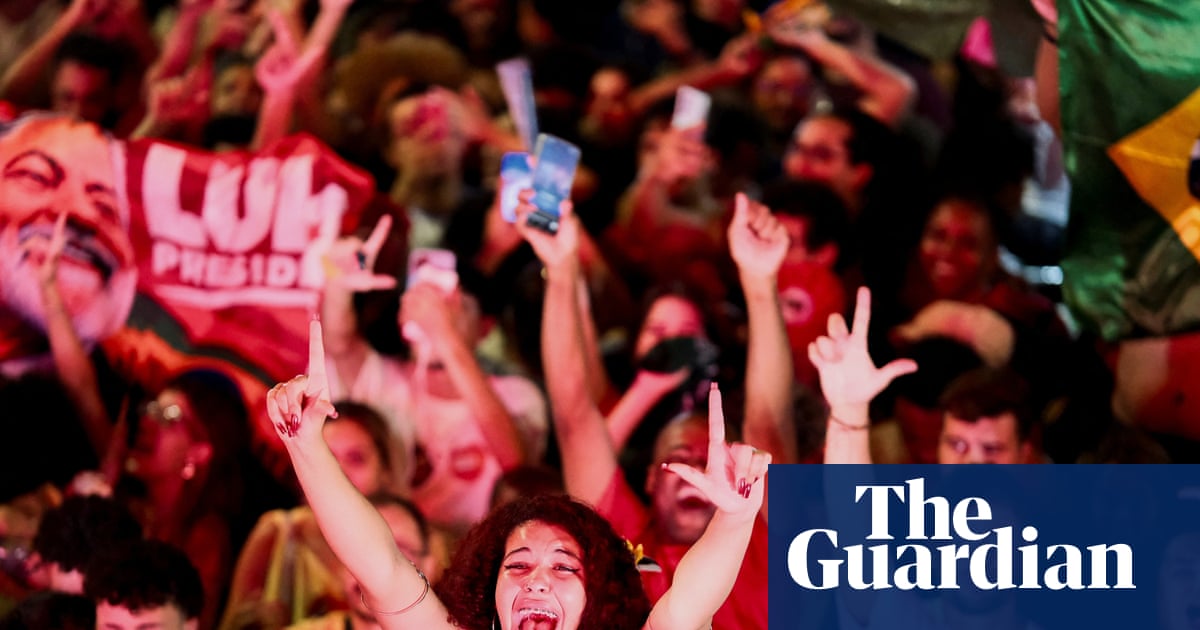
Despite the clear numerical victory, the transition remains fraught with tension. Senator Bolsonaro has publicly refused to concede, expressing anger over the outcome. He has pointed to the decision to extend voting hours by two as a justification for his dissatisfaction, although both campaigns had requested this extension for their own strategic reasons. The refusal to accept the result underscores the deep polarization that continues to characterize Brazilian politics, even as Lula supporters celebrated with fireworks and cheers in cities like São Paulo.
The implications of this election extend beyond domestic politics to global environmental concerns. During his previous tenure and current term, Lula has prioritized the protection of the Amazon rainforest. Reports indicate that deforestation rates have dropped by more than 70% under his administration, alongside increased support for Indigenous communities and stricter enforcement against illegal mining operations. Analysts suggest that a continued Lula presidency will likely maintain these environmental safeguards, offering stability to international partners concerned about climate change and biodiversity loss.
The political landscape in Brazil remains complex, with the far-right ideology known as Bolsonarismo retaining significant influence. This movement has established deep roots in society, fueled by the expansion of evangelical Christianity and social conservatism. Church leaders have increasingly aligned themselves with policies favored by the Bolsonaro family, contributing to a shift in voter demographics. Additionally, Senator Flávio Bolsonaro successfully tapped into public frustration regarding urban crime and violence, positioning himself as a tough-on-crime alternative despite his long-standing presence in politics.
Jair Bolsonaro, the former president and father of the defeated candidate, is currently serving a 27-year prison sentence for plotting a coup following his loss in the 2022 election. His incarceration has not diminished the political brand associated with his name, as Flávio continues to spearhead the radical populist movement built by his father. The contrast between the two candidates highlights the generational and ideological divide within Brazil’s right-wing coalition, even as they share a common base of support.
Lula’s career spans five decades, beginning in rural poverty before he rose to become a union leader and eventually the first elected working-class president of Brazil. His earlier terms were characterized by economic growth driven by a commodities boom, which helped lift millions out of poverty. This historical context provides a backdrop for his current victory, framing it as the culmination of a long political journey that has seen him navigate both prosperity and crisis.
Looking ahead, the immediate challenge for Lula’s administration will be managing the fallout from Bolsonaro’s refusal to concede. While the election result is legally clear, the potential for unrest or legal challenges cannot be ignored. The stability of Brazil’s democratic institutions will be tested in the coming months as the new term begins. International observers are watching closely to see how the country handles this transition and whether the gains made in environmental protection and social policy can be sustained.
The election also reflects broader trends in Latin America, where progressive movements have seen a resurgence in recent years. Lula’s victory is part of a larger regional shift that emphasizes democratic governance and social welfare. However, the persistence of far-right sentiments indicates that these gains are not irreversible. The coming years will be critical in determining whether Brazil can consolidate its democratic future or if it will face continued political volatility.
As the dust settles on this historic election, the focus shifts to policy implementation. Lula’s administration has already demonstrated a commitment to reducing inequality and protecting natural resources. The continuation of these efforts depends on maintaining political stability and addressing the underlying social issues that fueled the rise of Bolsonarismo. The world will be watching to see if Brazil can serve as a model for democratic resilience in an increasingly polarized global landscape.
Sources behind this briefing
Go to the original reporting
- The Guardian World↗Brazil keeps left: what Lula’s victory means for his country and beyond