The short version
- Sir Keir Starmer asserts that the reduction in American financial support for European defense is a lasting structural change rather than a temporary political fluctuation.
- He advocates for a pan-European security architecture centered on the United Kingdom, arguing that current national efforts are insufficient to address emerging threats.
- Despite previous tensions regarding military cooperation, Starmer maintains that the bilateral intelligence and security alliance between London and Washington remains robust.
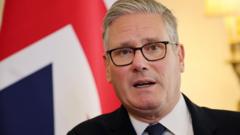
Sir Keir Starmer has issued a stark warning to European leaders, stating that the continent can no longer depend on the United States to fund its defense capabilities. Speaking at an event in Dublin, the former British prime minister characterized this shift not as a temporary deviation caused by specific political administrations but as a permanent alteration in the geopolitical landscape. He emphasized that European nations must accept this new reality and begin taking significantly greater responsibility for their own security infrastructure.
The remarks were delivered during a dinner hosted by the British Irish Chamber of Commerce, where Starmer was being honored with an honorary life membership. In his address, he argued that Europe requires a common security framework with the same level of integration and importance as its existing common market. He positioned the United Kingdom as a central pillar in this proposed structure, suggesting that London is well-placed to help coordinate these efforts across the continent.
Starmer identified two critical moments that exposed European vulnerabilities. The first was Russia’s invasion of Ukraine, which revealed long-standing deficiencies in regional defense preparedness. The second was the clear signal from President Donald Trump that Washington would no longer subsidize European security. According to Starmer, these events demonstrated that Europe had been caught off guard by predictable developments, failing to anticipate the need for greater self-reliance.
He stressed that the challenge extends beyond merely increasing defense budgets. While higher spending is a necessary component, the core issue involves building deeper cooperation and coordination among European nations. Starmer noted that the European Union is already adapting to these pressures, but he cautioned that the EU cannot act alone. He argued that Europe’s periphery is integral to its overall defense strategy, implying that broader continental inclusion is essential for any effective security framework.
Despite his warnings about reduced American financial support, Starmer was careful to clarify that the relationship between the UK and the US remains vital. He described the military, security, and intelligence alliance between the two nations as too strong to be diminished by changes in defense funding models. This distinction highlights a nuanced view of transatlantic ties, separating economic contributions from strategic partnerships.
The former prime minister’s comments come amid a complex history of interactions with President Trump. During their time in office, Starmer and Trump developed what his team described as a positive working relationship. However, tensions emerged later, particularly regarding the use of UK bases for US-Israeli strikes on Iran. Trump publicly criticized Starmer, comparing him unfavorably to Winston Churchill, and expressed dissatisfaction with the UK’s response to the conflict.
Even after leaving Downing Street, Starmer indicated that he intends to maintain contact with President Trump. When asked if Trump had wished him well upon his departure from office, Starmer confirmed that he had. This personal continuity suggests an ongoing dialogue between the two leaders, despite public disagreements and shifting policy landscapes.
The broader context includes recent developments in NATO defense spending commitments. Reports indicate that Trump has viewed new pledges to increase defense expenditures as significant achievements. Meanwhile, the US has approved substantial arms sales to Ukraine, including Patriot missile systems, signaling continued military support for Kyiv even as it recalibrates its relationship with European allies.
Starmer’s call for a unified European security approach reflects growing concerns about strategic autonomy. As traditional alliances evolve, European nations face pressure to develop independent capabilities while maintaining strong transatlantic bonds. The former prime minister’s vision places the UK at the heart of this transition, leveraging its historical ties and current geopolitical position.
Looking ahead, the implementation of such a framework will require significant political will and resource allocation. Starmer’s remarks serve as both a warning and a roadmap, urging European leaders to act decisively before further vulnerabilities emerge. The success of this endeavor will depend on how effectively nations can coordinate their efforts while navigating complex diplomatic relationships.
Sources behind this briefing
Go to the original reporting
- BBC News↗Europe can no longer rely on US to 'bankroll' its defence, Starmer says