The short version
- Andrew Mountbatten-Windsor is seeking a judicial review to quash search warrants used in his February arrest for suspected misconduct in public office.
- King Charles has clarified that the private allowance he provides to his brother cannot be utilized for these specific legal proceedings against the police and courts.
- Legal experts note that even if the warrants are overturned, authorities may still retain seized evidence if they can justify immediate re-seizure under different grounds.
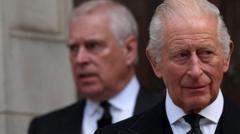
Andrew Mountbatten-Windsor has initiated a formal legal challenge against Thames Valley Police and the Central Criminal Court, contesting the validity of search warrants that preceded his arrest earlier this year. The judicial review seeks to determine whether the warrants issued for searches at his Sandringham estate and former residence at Royal Lodge were lawful. This move marks a significant escalation in the ongoing fallout from revelations contained within the Jeffrey Epstein files, which have reignited scrutiny over Mountbatten-Windsor’s past associations with the convicted sex offender.
In a clear delineation of royal support, King Charles has directed that the private financial allowance he provides to his brother must not be used to fund this legal action. The King supports Mountbatten-Windsor through his own private funds, which include income from the Duchy of Lancaster and personal investments, rather than public money from the Sovereign Grant. This funding arrangement was established when Mountbatten-Windsor relocated from Royal Lodge to Sandringham. However, royal sources have emphasized that this support is strictly for accommodation and living expenses, explicitly excluding costs associated with challenging law enforcement procedures.
The legal proceedings stem from Mountbatten-Windsor’s arrest on February 19, his 66th birthday, on suspicion of misconduct in public office. The investigation was prompted by documents released by the US Department Justice, including emails suggesting that Mountbatten-Windsor shared official documents with Epstein while serving as the UK’s international trade envoy. These revelations contradicted previous statements that he had severed ties with Epstein years prior. Consequently, King Charles stripped him of his titles as Prince and Duke of York late last year, citing the continued nature of these links.
A private hearing before Mr Justice Hilliard is scheduled to address whether documents related to the judicial review can be made public. Thames Valley Police and the Central Criminal Court are opposing the challenge. The police force has confirmed it is engaged in legal proceedings regarding the warrants but declined further comment due to the ongoing nature of the case. This situation represents a rare instance of a royal family member directly challenging the lawfulness of criminal investigations against them, with reports suggesting it may be the first such occurrence since the trial of Charles I in 1649.
Legal analysts suggest that the outcome of this judicial review may not result in the dismissal of the underlying investigation. Nick Vamos, a criminal lawyer and former head of special crime at the Crown Prosecution Service, noted that disputes over warrant legality are common but often technical. Even if Mountbatten-Windsor succeeds in having the warrants quashed, police could potentially apply to retain seized material if they have grounds to seize it again immediately. A fundamental flaw in the granting of the warrants would be required for authorities to be compelled to return all obtained evidence.
The charge of misconduct in public office encompasses a broad range of behaviors, including corruption, conflict of interest, dishonesty, and improper interference. In this case, allegations focus on the sharing of sensitive information during his tenure as trade envoy. Mountbatten-Windsor has consistently denied any wrongdoing related to his association with Epstein. After his arrest, he was interviewed under caution at Aylsham police station and released under investigation, a process that lasted approximately 11 hours.
Buckingham Palace has maintained a distance from the legal battle, noting that Mountbatten-Windsor is no longer a working royal and therefore does not receive official representation. At the time of his arrest, the King stated that the law must take its course, a stance that continues to inform the institution’s approach. The separation between the monarch’s private familial support and the legal independence of the accused underscores the complex position of the royal family as it navigates modern legal scrutiny.
The upcoming court hearing will focus on the procedural aspects of the search warrants rather than the substantive evidence gathered. If the judge rules in favor of Mountbatten-Windsor, it could set a precedent for how historical warrants are reviewed in light of new information. However, the police maintain that their investigation into misconduct continues regardless of the warrant challenge. The case highlights the tension between individual rights to legal recourse and the state’s authority to investigate potential crimes involving high-profile figures.
As the judicial review proceeds, public attention remains fixed on the intersection of royal privilege and legal accountability. The Epstein files have provided new material for investigators, shifting the narrative from past controversies to specific allegations of official misconduct. Mountbatten-Windsor’s decision to challenge the warrants signals a robust defense strategy, aiming to undermine the foundation of the evidence collected during the February raids. The resolution of this legal dispute will likely influence the trajectory of the broader investigation into his conduct.
The situation remains fluid as legal arguments are presented in closed sessions. While the King’s financial boundaries have been clearly defined, the ultimate cost and outcome of the judicial review remain uncertain. The case serves as a focal point for discussions on transparency, accountability, and the limits of royal immunity in contemporary Britain. As proceedings continue, the focus will shift from the legality of the search to the merits of the misconduct allegations themselves.
Sources behind this briefing
Go to the original reporting
- BBC News↗King's funding for Andrew not to be used for legal action against police
- The Guardian World↗Andrew Mountbatten-Windsor takes legal action against police and Old Bailey over Epstein raids