The short version
- Luiz Inácio Lula da Silva secured a fourth term as president, defeating Flávio Bolsonaro in the runoff election by approximately 4.4 million votes.
- Despite the executive victory, the Liberal Party and broader right-wing factions gained significant control in Congress, creating legislative obstacles for environmental policies.
- Indigenous organizations view the result as a necessary reprieve from potential rights violations but emphasize that structural conflicts over land and development remain unresolved.
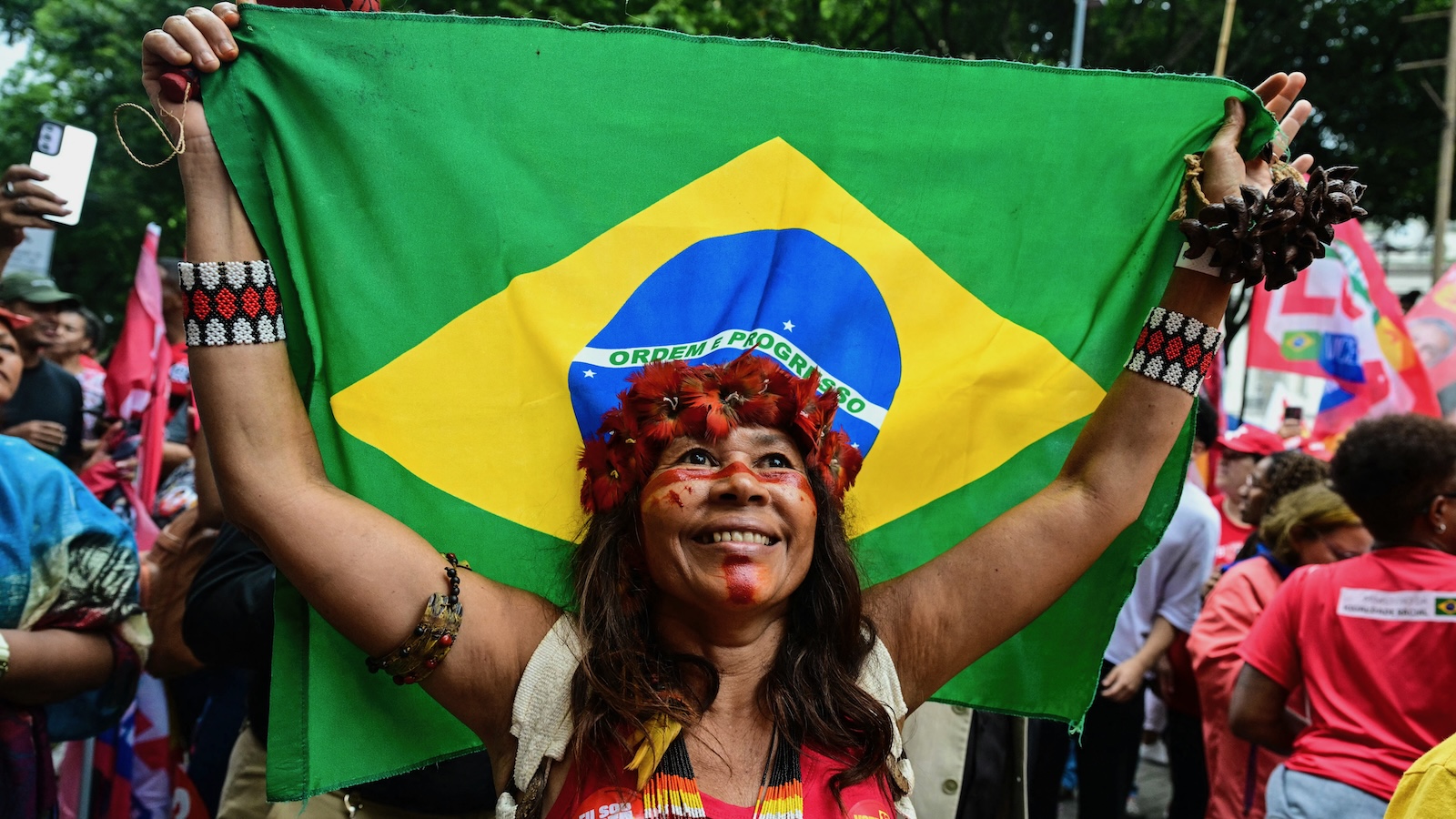
The reelection of Luiz Inácio Lula da Silva as president of Brazil has provided Indigenous communities with a measure of relief, though leaders caution that the outcome does not resolve deep-seated conflicts regarding land rights and environmental protection. Lula secured his fourth nonconsecutive term by defeating Flávio Bolsonaro in the Sunday runoff by roughly 4.4 million votes. This victory follows a first round earlier in the month where Bolsonaro led by more than two million votes, failing to secure the fifty percent threshold required for an outright win. The initial result had sparked significant anxiety among Indigenous advocates and environmental groups, who feared that a Bolsonaro presidency would reverse recent gains in forest conservation and Indigenous rights.
The stakes were particularly high given the platform of Lula’s opponent. Flávio Bolsonaro campaigned on promises to halt the recognition of new Indigenous territories and to expand mining and development projects. These positions align with those of his father, Jair Bolsonaro, whose administration from 2019 to 2023 saw a marked increase in deforestation, land grabs, and attacks on Indigenous rights. Amazon deforestation reached record levels in 2022 during the elder Bolsonaro’s tenure, and Indigenous leaders reported enduring unchecked violence from illegal mining operations throughout that period. For many communities, the election was viewed as a critical defense against a return to those policies.
However, the political landscape has shifted significantly in the legislature. While Lula won the presidency, the election strengthened the movement associated with Flávio Bolsonaro in Congress. His Liberal Party won the largest number of seats in both houses, and the broader right secured a majority in the Senate. According to the Climate Observatory, a nonprofit coalition comprising 172 organizations, seventy percent of the incoming lawmakers oppose the current climate and environmental agenda. This legislative composition presents a formidable challenge for Lula’s administration, potentially opening Indigenous territories to mining interests and weakening environmental protections despite executive intentions.
Indigenous leaders have expressed cautious optimism tempered by realistic concerns about governance. Edson Krenak, an Indigenous leader of the Krenak people, described the reelection not as a definitive victory but as a possibility to dream and fight without the immediate fear of death. He noted that the costs of negotiating with the new Congress and Senate will be very high, if successful at all. The shift in legislative power means that advancing Indigenous and environmental agendas will require intense political maneuvering, potentially diluting or delaying key initiatives.
The previous three years of Lula’s administration were largely focused on rebuilding institutions damaged during the Bolsonaro era. In 2023, his government established the Ministry of Indigenous Peoples, led by Sônia Guajajara, and revitalized FUNAI, the federal agency for Indigenous affairs, which had previously been used to support agribusiness interests against Indigenous resistance. These efforts contributed to a significant decline in Amazon deforestation, which fell to its lowest level since recordkeeping began in 1988 just before the election. Toya Manchineri, general coordinator of the Coordination of Indigenous Organizations of the Brazilian Amazon, noted that resources were only beginning to return to communities during this period.
Despite these administrative improvements, structural issues remain unresolved. Alessandra Korap Munduruku, coordinator of the Munduruku Pariri Indigenous Association, stated that while Lula’s victory prevents a president hostile to land demarcation from taking office, Indigenous territories are far from safe. She emphasized the need for the government to respect Indigenous decisions and listen to communities before advancing projects that affect rivers and forests. The danger posed by the new Congress necessitates continued organization and vigilance among Indigenous groups, as the struggle extends beyond electoral outcomes.
The election also highlighted ongoing challenges in ensuring Indigenous participation in the democratic process. Many Indigenous voters faced difficulties accessing polling stations, with a court recently denying a request for transportation assistance for communities in the Javari Valley in northern Brazil. Conversely, other legal efforts succeeded in securing government transportation for voters in remote areas. Indigenous communities across the Amazon organized extensively to increase turnout, demonstrating resilience despite systemic barriers. The disparity in access underscores the uneven nature of political engagement and the persistent logistical hurdles faced by marginalized populations.
Looking ahead, the tension between executive ambition and legislative resistance will define the early months of Lula’s term. The presence of a right-wing majority in Congress suggests that environmental protections and Indigenous land rights may face intense scrutiny and potential rollback attempts. Indigenous organizations remain focused on maintaining pressure on lawmakers to uphold commitments made during the campaign. The coming period will test whether administrative reforms can withstand legislative opposition, determining the long-term trajectory of Brazil’s approach to its rainforest and its Indigenous inhabitants.
Sources behind this briefing
Go to the original reporting
- Grist↗For Indigenous peoples in Brazil, the election results offer a reprieve — not a resolution