The short version
- Russian forces have intensified attacks on Kyiv, striking critical infrastructure including bridges, schools, and energy plants, marking a significant escalation in aerial warfare against the capital.
- Ukrainian leaders describe a tactical shift by Moscow to abandon traditional rules of engagement, aiming to force civilian displacement and undermine national stability through sustained pressure on urban areas.
- Defense analysts note a growing disparity between slow ground advances and rapid aerial degradation, highlighting urgent needs for advanced air defense systems to counter new jet-powered drones.
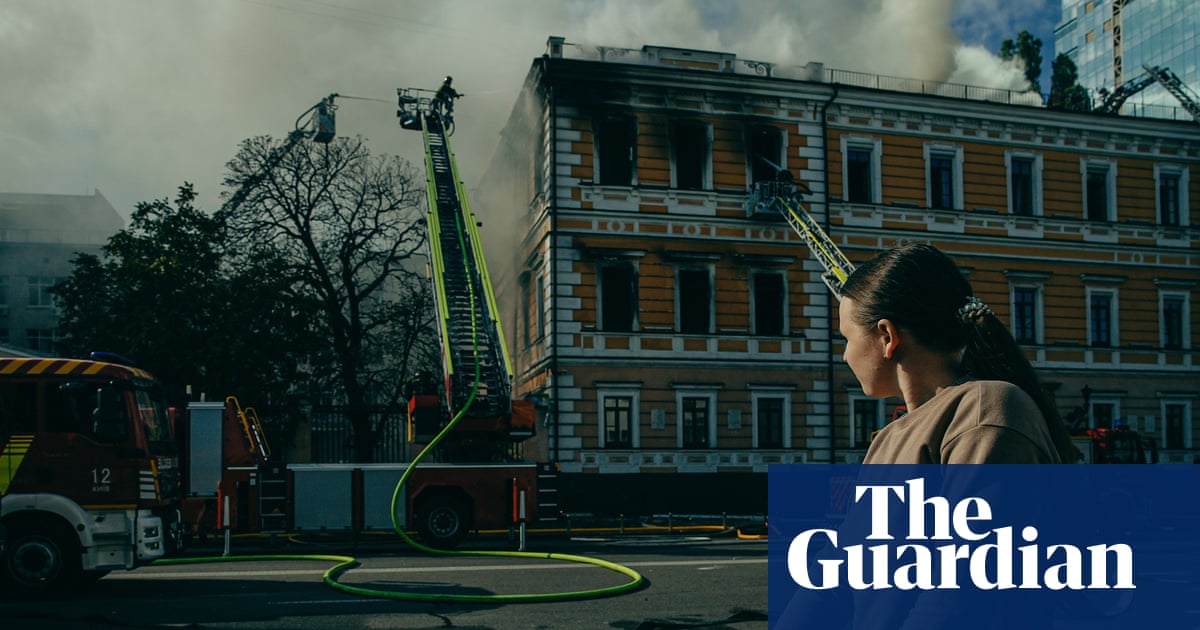
The rhythm of daily life in Kyiv has fractured under a renewed wave of Russian aerial assaults that target both military infrastructure and civilian spaces. Mayor Vitali Klitschko declared that residents can no longer maintain the illusion of peacetime, citing strikes on schools, hospitals, and major bridges as evidence that the enemy is systematically dismantling the city’s functionality. This escalation marks a distinct departure from earlier phases of the conflict, where the capital retained a semblance of normalcy while frontline cities absorbed the brunt of missile and drone barrages.
Residents describe a pervasive atmosphere of uncertainty and fear. Valeriya Tkachenko, a lawyer, recounted spending hours in a shelter after an air raid alert sounded during her son’s school drop-off, noting that she can no longer plan her day due to the constant threat of attack. Similarly, Artem Marchenko, an IT worker, was forced to abandon his vehicle and walk across the Southern Bridge after repeated strikes damaged the crossing. These incidents illustrate how the conflict has moved from distant battlefields into the immediate personal spaces of Kyiv’s three million inhabitants.
The physical toll on the city’s infrastructure is becoming increasingly apparent. In a single week, Russian missiles and drones struck offices, data centers, a school, a hospital, and two major bridges connecting the halves of the city divided by the Dnipro River. The damage to the Northern Bridge temporarily halted traffic, raising concerns among residents that further attacks could paralyze movement across the capital. Simultaneously, strikes on energy facilities, including a thermal power plant, have left several neighborhoods without power and water, bringing forward the hardships many had braced for during the coming winter.
Ukrainian President Volodymyr Zelenskyy characterized this intensification as a deliberate abandonment of the rules of war by Russian commanders. He suggested that Moscow’s objective is to drive Ukrainians out of the capital, thereby demonstrating that without Kyiv, the country effectively ceases to exist. This strategy appears designed to exploit vulnerabilities in the rear areas, contrasting sharply with the relatively slow and costly advances Russia has made on the ground. Military analyst Konrad Muzyka noted that while Moscow captured approximately 361 square kilometers in September, this pace remains insufficient to seize the rest of the Donbas before winter conditions hinder offensive operations.
Meanwhile, Ukrainian forces have conducted counteroffensives under the codename Vivaldi, reclaiming about 126 square kilometers in the east. However, military experts warn that success on the ground does not mitigate the severe risks posed by aerial vulnerability. Mykola Bielieskov of the National Institute for Strategic Studies emphasized that an opponent will inevitably exploit weaknesses in air defense, particularly in rear areas. The current situation highlights a broader shift in the war’s dynamics, where pressure on major cities is becoming as critical as territorial gains on the front lines.
A significant challenge for Ukrainian defenses is the combination of an acute shortage of Patriot interceptors for ballistic missiles and the emergence of faster, jet-powered Russian drones that are more difficult to shoot down. Kyiv is attempting to fast-track the deployment of a new generation of interceptor drones capable of countering these threats. While some of these systems are already in use, defense industry sources indicate that achieving a scale sufficient to provide meaningful protection for the capital could take weeks or months.
Ukrainian officials have briefed European counterparts on the looming threat, including an intercepted Russian plan to deploy up to 1,000 missiles, drones, and bombs against Ukraine’s energy system. The targets include electrical substations, hydroelectric and thermal power plants, and boiler houses. This coordinated effort appears aimed at plunging Ukrainian cities into darkness and cold, exacerbating the humanitarian crisis and testing the resilience of both infrastructure and civilian morale.
As the conflict enters this new phase, the contrast between the slow grind of ground combat and the rapid degradation of urban life underscores the evolving nature of the war. The intensification of attacks on Kyiv signals a strategic pivot by Russia to target the heart of Ukrainian society, aiming to break the will of the population through sustained pressure on essential services and public safety. The coming months will likely test the effectiveness of new defensive technologies and the ability of international partners to supply critical air defense systems.
Sources behind this briefing
Go to the original reporting
- The Guardian World↗‘The enemy is tearing our city apart’: terror in Kyiv as Russia ramps up attacks