The short version
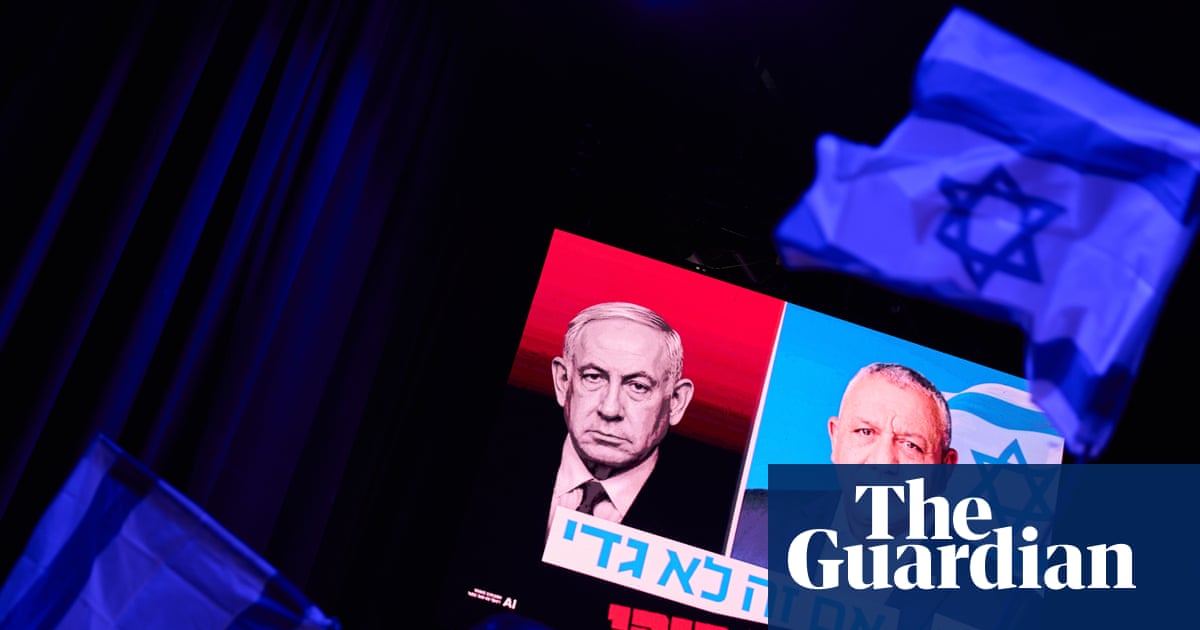
- Voters are deciding between incumbent Prime Minister Benjamin Netanyahu and challenger Gadi Eisenkot in an election defined by security concerns and democratic erosion.
- Polls indicate a majority against the current coalition, but fragmented opposition parties may struggle to form a stable government without support from Palestinian citizen representatives.
- The final outcome could hinge on two minor parties hovering near the electoral threshold, potentially prolonging coalition negotiations for days.
Israel is holding its first national election since the Hamas attacks of October 7, 2023, an event that killed approximately 1,200 people and fundamentally altered the country’s political landscape. The vote takes place against a backdrop of ongoing military operations in Gaza, two inconclusive conflicts with Iran, and intensified campaigns in the occupied West Bank. Many citizens view this contest as the most consequential in modern Israeli history, driven by deep divisions over national security, democratic norms, and the direction of the state.
Prime Minister Benjamin Netanyahu, who has led the country for 19 of the last 30 years, is seeking a renewed mandate while facing corruption charges. His position is precarious; losing power could increase his risk of imprisonment. Netanyahu campaigns on his experience and international connections, arguing he is uniquely qualified to ensure national safety. He has attempted to shift blame for the October attacks onto the security establishment and recently used social media to depict a nuclear strike on Tel Aviv, warning voters that choosing the opposition endangers their physical existence.
His primary challenger is Gadi Eisenkot, a former head of the military and relative political newcomer. The son of Moroccan immigrants, Eisenkot rose through the ranks to become a central figure in Israel’s establishment. His campaign is deeply personal; his son and two nephews were killed in combat in Gaza during 2024. Eisenkot lacks Netanyahu’s charisma but leverages this trait to position himself as a contrast to the current leader. He founded a new party named Yashar, which translates to Honesty, emphasizing integrity and a break from the current administration’s style.
Security remains the dominant issue, overshadowing economic concerns such as soaring living costs. Critics of the Netanyahu government point to the failure on October 7, the erosion of democratic institutions including the Supreme Court, and the rise of religious extremism. They also highlight the human cost of open-ended wars on multiple fronts. Opponents have promised a state commission of inquiry into the attacks and pledged to end draft exemptions for ultra-Orthodox men, addressing a source of significant resentment among families who have lost loved ones in service.
International isolation is another growing concern for voters. Sanctions related to settlement expansion are broadening, and there is an accelerating brain drain among elite professionals. Netanyahu’s far-right coalition partners have advocated for the ethnic cleansing of Gaza and the West Bank, alongside further settlement expansion. Meanwhile, his ultra-Orthodox allies seek to preserve decades-old conscription exemptions and subsidies for religious study, policies that many secular Israelis view as unfair.
Polling data suggests a clear majority against Netanyahu, with his Likud party and coalition partners losing their majority support over the past two years. However, the opposition is divided. Jewish Israeli parties, led by Eisenkot’s Yashar, are unlikely to secure a majority on their own. Most of these parties have ruled out forming a coalition with representatives of Palestinian citizens of Israel. Conversely, Palestinian politicians have indicated they might support a minority government led by Jewish Israeli parties to unseat Netanyahu’s far-right alliance.
The mechanics of Israel’s proportional representation system mean no single party has ever won the 61 seats needed for a majority in the 120-seat Knesset. The president will invite the largest party to attempt coalition building. Exit polls are expected at 10 p.m. local time, but full results may take longer. The outcome could depend on two small parties: Amcha Yisrael, led by former general Ofer Winter, which pledges support for Netanyahu if it crosses the threshold; and Reservists, a right-wing Zionist party focused on universal conscription that has ruled out joining governments supported by either ultra-Orthodox or Palestinian parties.
Both minor parties are polling near the 3.25% threshold required to win seats. If they cross this line, each would gain four seats, significantly impacting coalition options. This uncertainty means counting could extend beyond a single day, leaving the nation in suspense as lawmakers negotiate the next government. The election ultimately reflects a society grappling with trauma, security fears, and deep ideological rifts, with no clear path to immediate stability regardless of the winner.
Sources behind this briefing
Go to the original reporting
- The Guardian US↗What you need to know about the most consequential election in Israel’s history