The short version
- Aleksandar Vucic conceded defeat to a student-led opposition movement following a parliamentary election that ended his party's dominance.
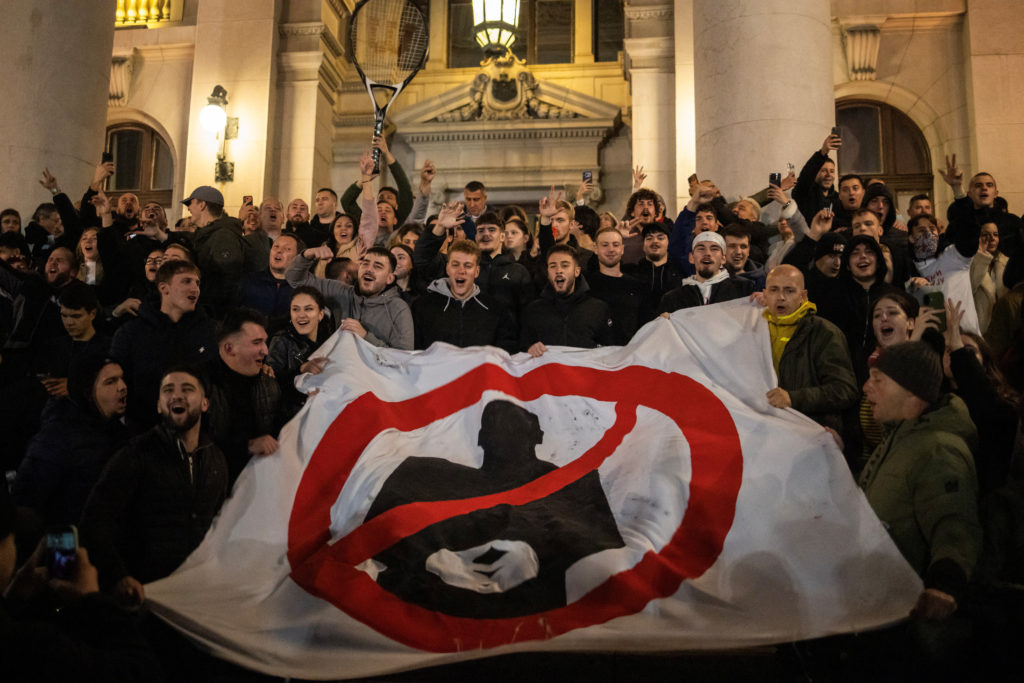
- The victory follows nearly two years of protests sparked by a fatal infrastructure collapse and fueled by widespread anger over corruption and cronyism.
- Vucic attributed the loss to foreign interference, while Russian officials expressed hope for continued friendly relations with Belgrade despite the leadership change.
Aleksandar Vucic, the populist leader who has dominated Serbian politics for fourteen years, conceded defeat on Sunday in a parliamentary election that marked a historic transfer of power. His right-wing Serbian Progressive Party was unseated by a grassroots movement composed largely of university students. This outcome represents a decisive break from the status quo, ending a period defined by Vucic’s consolidation of authority and his party’s control over state institutions.
The student-led opposition had organized sustained protests for almost two years prior to the vote. The demonstrations initially erupted in 2024 after a canopy collapse at a renovated train station in northern Serbia killed sixteen people. Critics argued that graft-fueled negligence and poor construction standards were responsible for the tragedy. Over time, the movement broadened its focus, channeling public frustration over rampant corruption, cronyism, and the influence of organized crime under Vucic’s administration.
Vucic attempted to secure re-election through a strategy that mirrored tactics used by his ally, Russian President Vladimir Putin. He resigned from the presidency to run for prime minister, a move designed to centralize executive power. His campaign relied heavily on favorable coverage in state media, which provided around-the-clock support while attacking political opponents. Vucic also distributed cash to voters and promised improvements in pensions, infrastructure, and healthcare costs.
Despite these efforts, the student movement’s message resonated more strongly with the electorate. Voters appeared motivated by a desire for accountability and an end to the systemic issues that had characterized Vucic’s tenure. The diverse youth coalition successfully mobilized support across different demographics, overcoming the established political machine that had previously outmaneuvered traditional opponents.
Following the results, Vucic rejected the notion of a domestic mandate shift, instead blaming foreign interference for his defeat. He claimed the election outcome was the result of a revolution supported by European countries and what he termed the deep American state, which he described as being opposed to U.S. President Donald Trump. This assertion highlights the ongoing tension between Serbia’s internal political dynamics and its complex geopolitical positioning.
Vucic’s political trajectory has been marked by significant shifts in ideology and allegiance. During the 1990s, he was a radical nationalist who supported the creation of a Greater Serbia and advocated for aggressive policies against non-Serbs in the former Yugoslavia. As information minister, he oversaw the suppression of media critical of then-President Slobodan Milosevic. He later pivoted to a pro-European Union stance, which helped his party win power in 2012.
In recent years, Vucic had moved away from his earlier pro-EU rhetoric, re-embracing hard-right positions and strengthening ties with Moscow. He allowed a hero’s funeral for Ratko Mladic, a former Bosnian Serb army commander convicted of genocide, defying European Union pressure. Vucic also refused to join EU sanctions against Russia regarding the war in Ukraine, despite Serbia formally seeking membership in the bloc.
Reactions from Moscow were mixed but generally cautious. Kremlin spokesman Dmitry Peskov expressed hope that the new government would maintain friendly relations with Russia, noting that bilateral ties require mutual effort. However, some Russian figures viewed Vucic’s defeat as a positive development. Konstantin Malofeyev, a nationalist tycoon, welcomed the change, criticizing Vucic for his perceived duplicity in balancing relations between Russia and the West.
The election results signal a potential realignment in Serbia’s foreign policy and domestic governance. With Vucic no longer at the helm, the new administration will face pressure to address the corruption and institutional weaknesses that fueled the student protests. The transition also raises questions about Serbia’s future alignment with European institutions versus its historical ties to Russia.
As the country moves forward, the focus will shift to how the student-led coalition translates its protest momentum into effective governance. The historic nature of this change underscores a growing demand for transparency and accountability in Serbian politics. The coming months will be critical in determining whether this new leadership can deliver on its promises and stabilize the nation’s political landscape.
Sources behind this briefing
Go to the original reporting
- PBS NewsHour↗Serbia's populist strongman Vucic outplayed all his opponents. Then the students came