The short version
- The High Court permitted a developer to build homes on a floodplain after failing a key safety assessment, citing wider benefits over strict sequential testing.
- Government officials and local authorities are launching a campaign to amend national planning laws to prevent this ruling from becoming a standard practice across England and Wales.
- Residents near the approved site report severe anxiety regarding property values and insurance availability, fearing their homes may become unmortgageable or unsellable due to increased flood risks.
A recent High Court judgment has established that residential construction can proceed on floodplains even when projects fail critical safety assessments, a ruling that legal experts describe as having profound implications for development across England and Wales. The decision specifically clears the path for a controversial project involving 190 new homes in North Somerset, located in an area classified as Flood Zone 3a. This designation represents the highest level of flood risk before land is categorized as a functional floodplain, making the approval particularly significant for future planning inquiries.
The core legal conflict centered on the sequential test, a fundamental component of UK planning policy designed to prevent development in high-risk areas by requiring builders to prove that no safer alternatives exist. In this case, an inspector identified twelve alternative sites with lower flood risks, meaning the developer, Persimmon Homes, technically failed this primary barrier. However, the court ruled that the inspector was justified in weighing the broader benefits of the housing project against the flood risks, determining that the development could be made safe for its operational lifetime despite the initial test failure.
Legal representatives for the developer acknowledged the national significance of the outcome, noting that the decision would attract intense interest from the planning and construction sectors. Charles Banner KC, who represented Persimmon Homes during the challenge brought by the local council, agreed that the ruling marked a pivotal moment for industry standards. His chambers described the result as hugely important, suggesting that developers may increasingly rely on this interpretation to bypass strict sequential testing in future applications.
In response to the judgment, government ministers and policy experts have expressed deep concern, convening at a flood resilience conference to coordinate a campaign for legislative change. Tessa Munt, chair of the all-party parliamentary group on flooding and flooded communities, characterized the ruling as a dangerous exploitation of planning loopholes. She emphasized that while the specific battle in North Somerset was lost, there is an urgent need to modify the National Planning Policy Framework to prevent similar speculative applications from succeeding elsewhere.
Munt argued that the court’s decision contradicts the efforts of various national bodies, including insurers, lenders, the Environment Agency, and the Department for Environment, Food and Rural Affairs. These organizations have worked to establish robust policies against building in high-risk zones, yet the judgment allows local environmental protections to be overridden. Munt plans to meet with Matthew Pennycook, the housing and planning minister, to demand changes that would stop this precedent from undermining national flood resilience strategies.
Local opposition to the development has been fierce, with North Somerset Council accusing the developer of exploiting legal ambiguities. Annemieke Waite, a cabinet member for planning and environment, stated that while the council accepts the need for new housing, it rejects the establishment of a precedent that allows vital environmental safeguards to be bypassed. The Environment Agency had formally objected to the project on flood risk grounds, but the High Court sided with the inspector’s broader assessment of the site’s viability.
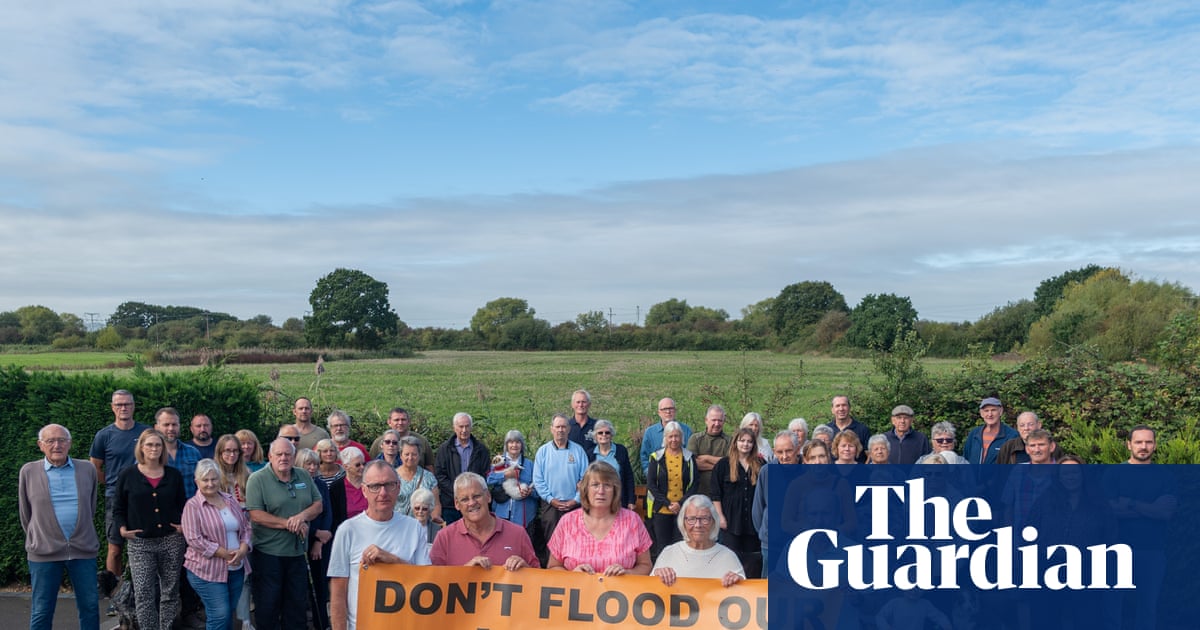
For residents living adjacent to the proposed construction, the ruling has triggered significant distress and financial anxiety. Dozens of locals gathered at the site to express their fears, with some leaving work early or traveling from hospital beds to voice their concerns. Sue Gardiner, whose home overlooks the development area, reported that three major insurance companies had already refused coverage for her property due to the increased flood risk associated with the plans. She warned that without insurance, homes could become unmortgageable and ultimately unsellable.
The personal impact extends beyond immediate safety concerns to long-term financial security. Richard Croucher, another local resident, highlighted that his home was intended to fund his care in old age. He expressed terror at the prospect of losing this asset’s value due to the development’s influence on flood risk assessments. While Persimmon Homes maintains that flood risks were thoroughly scrutinized during the public inquiry and that permission was granted by an independent inspector, the disconnect between official approvals and resident experiences remains stark.
As the campaign for legal reform gains momentum, the focus shifts to whether policymakers can close the loophole identified in this case. The tension between housing demand and environmental safety is now at the forefront of national planning debates. If the law remains unchanged, developers may routinely challenge sequential test failures by arguing for wider societal benefits, potentially reshaping how flood risks are managed across the country. The outcome of these legislative efforts will determine whether this Somerset ruling becomes a one-off exception or a new standard for development in vulnerable areas.
Sources behind this briefing
Go to the original reporting
- The Guardian World↗Houses can be built on floodplains despite failing safety test, says high court