The short version
- The French interior minister conceded that police lost control during violent weekend protests due to inadequate preparation and intelligence failures.
- Prime Minister Sébastien Lecornu has requested regional authorities implement partial curfews in affected cities while rejecting a nationwide emergency declaration.
- Over half a million people participated in demonstrations focused on the cost of living, resulting in widespread looting, injuries, and thousands of arrests.
The French government has formally acknowledged that its security forces failed to contain violent unrest across several major cities during a weekend of widespread protests. Interior Minister Laurent Nuñez stated that police had lost control in locations including Paris, Lyon, and Marseille, admitting that the state was caught off guard by the scale and intensity of the demonstrations. This admission follows an emergency cabinet meeting where officials agreed that a lack of anticipation regarding the number of participants left law enforcement agencies ill-equipped to manage the situation.
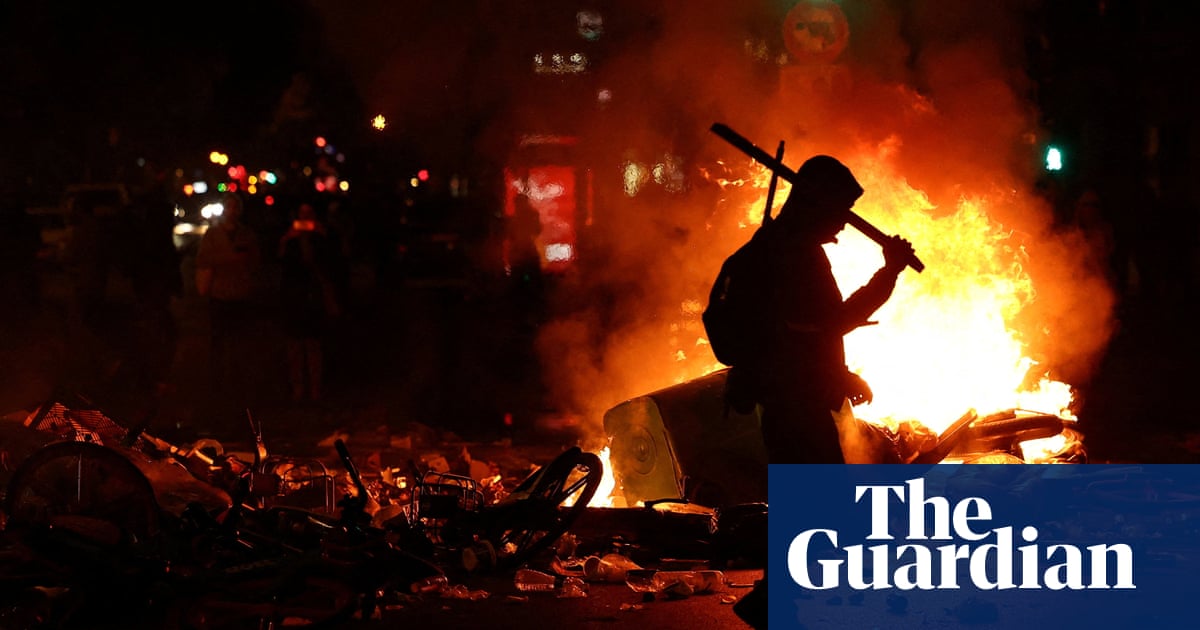
Intelligence estimates had predicted approximately 200,000 demonstrators nationwide, but actual turnout exceeded 500,000 people. The peaceful nature of many gatherings deteriorated as organized groups engaged in rioting and looting, transforming the events into one of the most volatile periods of civil unrest in recent French history. Nuñez tendered his resignation to President Emmanuel Macron, accepting responsibility for the security breakdown, though the president refused the gesture. Instead, Macron tasked the minister with ensuring transparency regarding planning errors and implementing new operational strategies for security forces.
In response to the escalating violence, Prime Minister Sébastien Lecornu announced that regional authorities would be empowered to impose partial curfews in specific areas if necessary. He emphasized that there was no intention to declare a full state of emergency or impose blanket curfews on entire cities such as Paris. The government aims to restore public order through targeted measures rather than sweeping restrictions, although details regarding which municipalities might face curfews and the specific duration of these measures remain unclear.
The human and material toll of the weekend’s events has been significant. Authorities reported that nearly 2,400 individuals were arrested, with adults comprising 70% of those detained. Approximately 1,000 police officers and gendarmes sustained injuries during clashes with rioters. An estimated 2,000 shops were ransacked or looted, and public buildings, including a town hall, were attacked and set on fire. Justice Minister Gérald Darmanin highlighted that many of those arrested had prior criminal records, noting that about 80% of detainees are currently facing prosecution.
Local political leaders have expressed frustration with the federal government’s handling of the crisis. Emmanuel Grégoire, the mayor of Paris, stated that the state bore responsibility for failing to maintain order and criticized the lack of a constructive political path forward for the social movement. He noted that protests continued into Sunday, with dozens of shops targeted in the capital and hundreds more arrests made overnight. Benoît Payan, mayor of Marseille, described the situation as nearly insurrectional, arguing that the foundations of the Republic were being undermined by what he characterized as petty political maneuvering from the central government.
The unrest is rooted in broader economic anxieties, particularly regarding the high cost of living, which has sparked demonstrations across Europe, including in Italy, Belgium, and Albania. In France, the protests have evolved from initial high school student demonstrations into a wider movement involving teachers, parents, unions, and workers. The timing of these events is politically sensitive, occurring just six months before a crucial presidential election. President Macron addressed the nation on Sunday, condemning the unbridled violence while stopping short of declaring a state of emergency. He indicated that local authorities would have the power to ban certain demonstrations in the coming days.
Security forces deployed 60,000 officers and gendarmes nationwide, but Nuñez conceded this number was insufficient to counter determined and organized rioters on the fringes of the protests. The interior minister emphasized that while the state failed in its duty to protect property and citizens, the actions of rioters and ultra-left militants should not be minimized. The government is now focused on reviewing intelligence failures and developing new methods for combating urban unrest, aiming to prevent a recurrence of such widespread disorder.
Protest activity persisted into Monday, with demonstrators blocking entrances to the Louvre Museum in support of the student movement and to denounce police repression. A leaflet displayed at the site declared pride in blocking the world’s largest museum, preventing its scheduled opening. As the government seeks to stabilize the situation through partial curfews and revised security protocols, the underlying social tensions remain unresolved. The coming days will likely see continued friction between authorities and protesters as both sides navigate the aftermath of this significant breach of public order.
Sources behind this briefing
Go to the original reporting
- The Guardian World↗French police ‘lost control’ during riots, concedes interior minister