The short version
- French authorities are deploying approximately 70,000 police officers, including counter-terrorism specialists, to prevent further violence following a weekend of severe riots.
- Major cultural institutions in Paris have closed, and protest routes have been heavily restricted or banned in several cities, drawing criticism from unions and opposition parties.
- The unrest coincides with a broader wave of demonstrations across Europe regarding economic grievances, while French political tensions rise ahead of next year's presidential election.
French authorities are preparing for significant civil disorder this Saturday by deploying roughly 70,000 security personnel across the country. This massive mobilization follows a weekend marked by some of the most severe street violence in recent years, which erupted on the fringes of demonstrations focused on the rising cost of living. Interior Minister Laurent Nuñez announced that the operation would include elite units typically reserved for counter-terrorism missions and hostage rescues, signaling a heightened state of alert. The government has stated it is prepared to be extremely firm and will not tolerate any acts of violence.
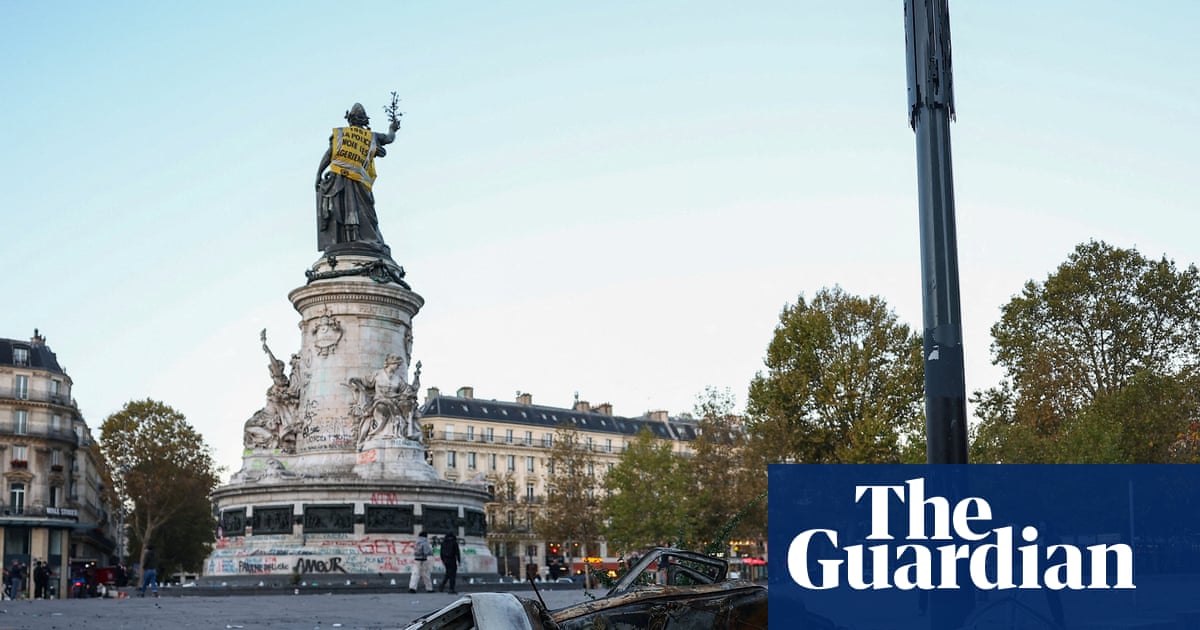
The decision to deploy such extensive forces comes after officials admitted they lost control during widespread rioting earlier in the week. While initial demonstrations were largely peaceful, they were hijacked by groups of determined rioters who engaged in rampant violence and looting in major cities including Paris, Marseille, and Lyon. In Limoges, the town hall was set on fire and partially destroyed. Nuñez emphasized that security forces would be uncompromising toward rioters and looters, utilizing resources such as water cannons, armored vehicles, mounted police, helicopters, and drones to maintain order.
In response to the threat of unrest, major cultural institutions in Paris have closed their doors for the day. The Louvre, Orsay Museum, Picasso Museum, and Grand Palais are all shut, with the latter canceling its weekend program for a major Cézanne exhibit. Art Basel, one of the world’s most prestigious contemporary art fairs, opened to the public on Friday but canceled its weekend schedule due to security concerns. Shopkeepers in Paris have been barricading their stores throughout the week, with wooden panels installed over businesses near Place de la République, a hotspot for previous violence.
Authorities have imposed strict restrictions on protest routes and banned demonstrations in several cities to protect public buildings and commercial areas. In Paris, only a union march along a limited route between the Places de la Bastille and Nation has been authorized, avoiding the city center. Requests for rallies by the main student union, UNEF, and the gilets jaunes movement were refused, although UNEF stated it would proceed regardless. In Marseille, all protests were initially banned, but a single union-organized demonstration was permitted on an exceptional basis.
These restrictions have drawn sharp criticism from union leaders and opposition politicians. Marylise Léon of the CFDT union federation accused President Emmanuel Macron of abusing authority, arguing that banning protests is counterproductive given the widespread anger and demand to be heard. La France Insoumise, a radical left party, claimed the government had crossed the line into authoritarianism, warning that the bans would only generate more chaos. Legal challenges to the protest bans are underway in several cities.
The unrest in France is part of a broader continent-wide wave of discontent triggered by declining public services, housing affordability issues, public sector budget cuts, and spiraling living costs. Demonstrations are expected this weekend in multiple European countries, including Italy, Austria, Spain, Portugal, Ireland, and Albania. This coordinated expression of grievance highlights the shared economic pressures facing citizens across Europe, adding a transnational dimension to the domestic political challenges in France.
The situation poses a significant challenge for President Macron and his government, which appear caught off guard by the scale of the unrest. With presidential elections scheduled for next spring to choose Macron’s successor, the instability threatens to dominate the political agenda. The far-right leader Marine Le Pen, currently the frontrunner in polls, is set to host her National Rally party congress in Orléans this weekend. This event is expected to draw thousands of supporters as well as leftwing and anti-racist opponents, further complicating the security landscape.
Interior Minister Nuñez visited Orléans on Friday to inspect security arrangements at the request of the prime minister, underscoring the high stakes involved in maintaining order during this politically sensitive period. The convergence of widespread social unrest, strict government measures, and upcoming electoral politics creates a volatile environment. As authorities prepare for potential clashes, the effectiveness of the massive police deployment and the response of protesters will likely determine the immediate trajectory of civil stability in France.
Sources behind this briefing
Go to the original reporting
- The Guardian World↗France to deploy 70,000 police on Saturday to prevent civil unrest