The short version
- Tobias Rausch of the far-right AfD was elected speaker of the Saxony-Anhalt parliament, a first for any post-war German political party with such ideological leanings.
- The election relied on support from hard-left BSW members and potentially conservative CDU legislators who had previously pledged not to back the AfD.
- Protesters gathered outside the legislature demanding that historical lessons be remembered, while opposition leaders warned of a dangerous shift in regional governance.
A significant breach in Germany’s long-standing political consensus occurred this week when Tobias Rausch, a candidate from the far-right Alternative for Germany (AfD), was elected speaker of the state parliament in Saxony-Anhalt. This development marks the first time since World War II that a party with such ideological positioning has secured the role of parliamentary speaker in any German region. The election took place during the inaugural session of the newly formed legislature, following the AfD’s decisive victory in last month’s regional elections, where it emerged as the largest party but fell short of an absolute majority.
Rausch, a 35-year-old trained estate agent and ten-year parliament member, won the vote with ease. His election was bolstered by support from nine lawmakers outside his own party ranks. While five members of the hard-left BSW party provided crucial backing, uncertainty remains regarding four additional votes cast in his favor. These unidentified supporters have sparked immediate speculation among political commentators, particularly concerning whether members of Chancellor Friedrich Merz’s conservative CDU broke their public pledges to abstain or oppose AfD candidates. Prior to the vote, all fifteen CDU representatives present had ruled out supporting Rausch, yet only five abstained as planned, leaving the source of the remaining support unconfirmed.
The role of parliament speaker is largely symbolic in nature, involving duties such as chairing debates, controlling access to the legislative building, and representing the body at official functions. However, its significance lies in the precedent it sets for political cooperation. Rausch’s victory signals a potential erosion of the ‘firewall’ that has historically prevented mainstream parties from collaborating with the AfD. After securing the position, Rausch declared that the era of such political barriers should end, explicitly rejecting the post-war consensus that isolates far-right movements from institutional power.
Opposition figures reacted with alarm to the outcome. Susan Sziborra-Seidlitz, leader of the regional Greens, described the event as a watershed moment where a critical line had been crossed. She emphasized that her party would not remain passive in the face of potential rights curtailments, vowing to resist intimidation and defend democratic values both within the state and for its residents. The AfD’s platform includes policies that are widely viewed as anti-immigrant, pro-Russian, and intolerant toward the LGBT community, including proposals to segregate child refugees in schools. These positions have led domestic intelligence agencies to classify the party as right-wing extremist within Saxony-Anhalt, a label that party leadership firmly rejects.
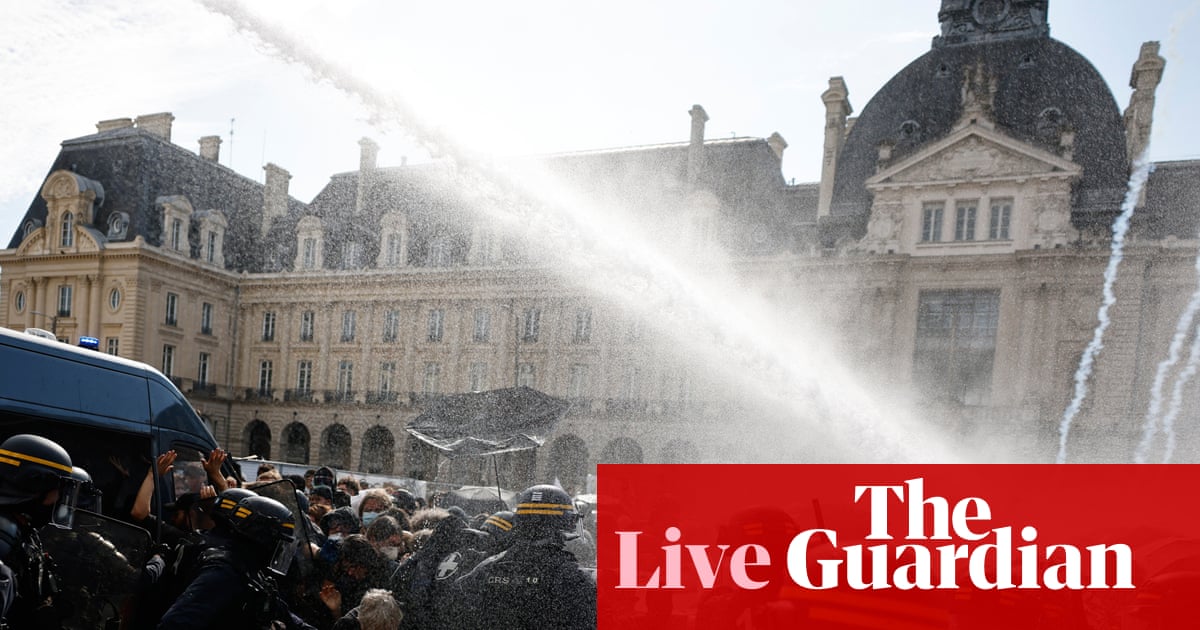
Public reaction was immediate and vocal. More than 300 protesters gathered outside the parliament building in Magdeburg, holding banners with slogans such as ‘Never again is now.’ The demonstrators expressed anger at the AfD’s growing influence and crowded around Ulrich Siegmund, a charismatic local AfD leader, as he addressed reporters. Siegmund is currently seeking to become the state premier, a position that requires the backing of 42 out of 83 legislators. His path to power remains uncertain, as the BSW has refused to form a coalition with the AfD and indicated it would instead support a non-partisan candidate while abstaining in December’s vote.
The seating arrangement within the parliament also reflects the shifting dynamics. Historically, AfD members sat on the right fringe of the chamber, but ahead of Tuesday’s session, they successfully argued for a central position. This move underscores their increased political weight and desire to normalize their presence in governance structures. Rausch is seen as a close confidant of Siegmund, suggesting that the speaker’s role may serve to facilitate broader strategic goals for the party in the coming months.
The uncertainty surrounding the four additional votes for Rausch highlights the fragmented nature of the current political landscape in Saxony-Anhalt. If these votes indeed came from CDU members, it would represent a significant departure from Chancellor Merz’s stated policy of ruling out cooperation with the AfD. Such a shift could have national implications, potentially encouraging similar breaks in other regions where the AfD has gained traction. Conversely, if the votes originated from independent or smaller party members, it suggests a more complex web of alliances forming outside traditional party lines.
As Saxony-Anhalt prepares for December’s vote on the state premier, the political atmosphere remains tense. The BSW’s refusal to ally with the AfD creates a stalemate that may prevent either major bloc from securing a stable majority. This situation could lead to prolonged negotiations or the selection of a compromise candidate, further complicating the governance structure. The events in Magdeburg serve as a stark reminder of the challenges facing German democracy as it navigates the rise of far-right politics and the erosion of established norms.
International observers are closely watching these developments, noting that the election of Rausch could set a precedent for other European nations grappling with similar political shifts. The ability of mainstream parties to maintain distance from extremist groups is being tested, and the outcome in Saxony-Anhalt may influence strategies elsewhere. For now, the focus remains on how local politicians will navigate the immediate future, balancing electoral mandates with democratic responsibilities.
The coming weeks will be critical in determining whether this breach in political norms leads to broader changes or remains an isolated incident. The reactions from both supporters and opponents of the AfD indicate deep divisions within German society. As debates continue and new alliances form, the stability of regional governance in eastern Germany hangs in the balance, with significant implications for the country’s overall political trajectory.
Sources behind this briefing
Go to the original reporting
- BBC World↗AfD candidate elected speaker of German regional parliament for first time