The short version
- At least 139 migrants, including 15 children, died and dozens remain missing after a boat overloaded with over 300 people capsized near Djibouti.
- All known survivors are Ethiopian nationals seeking work in Gulf states, while the death toll may rise as authorities struggle to verify bodies buried without identification.
- The tragedy underscores the extreme risks of the eastern migration route, which has seen increased fatalities and movement despite ongoing war in Yemen.
A catastrophic maritime disaster off the coast of Djibouti has resulted in the deaths of at least 139 migrants, with dozens more still unaccounted for. The International Organization for Migration confirmed that a vessel carrying approximately 305 people capsized near the port town of Obock during the night of October 8 or early morning of October 9. The boat was attempting to cross the Bab el-Mandeb Strait from Djibouti toward Yemen, a journey undertaken by thousands annually in search of economic opportunity and safety.
The death toll includes at least 15 children, according to United Nations officials. Alexandre Coissac, the IOM chief of mission in Djibouti, described the event as one of the deadliest incidents recorded on this specific migration corridor. The agency revised its initial count upward after additional bodies were recovered by local authorities. However, the final number is likely to increase, as many victims were buried immediately by fellow migrants or local communities without proper identification, making verification difficult.
Coissac noted that the burials occurred in a manner reminiscent of wartime casualties, with individuals placed in common graves lacking names or records. This lack of documentation means families may never receive confirmation of their relatives' fates. The overwhelming number of bodies washing ashore strained local emergency response capabilities, even as authorities worked to manage the crisis.
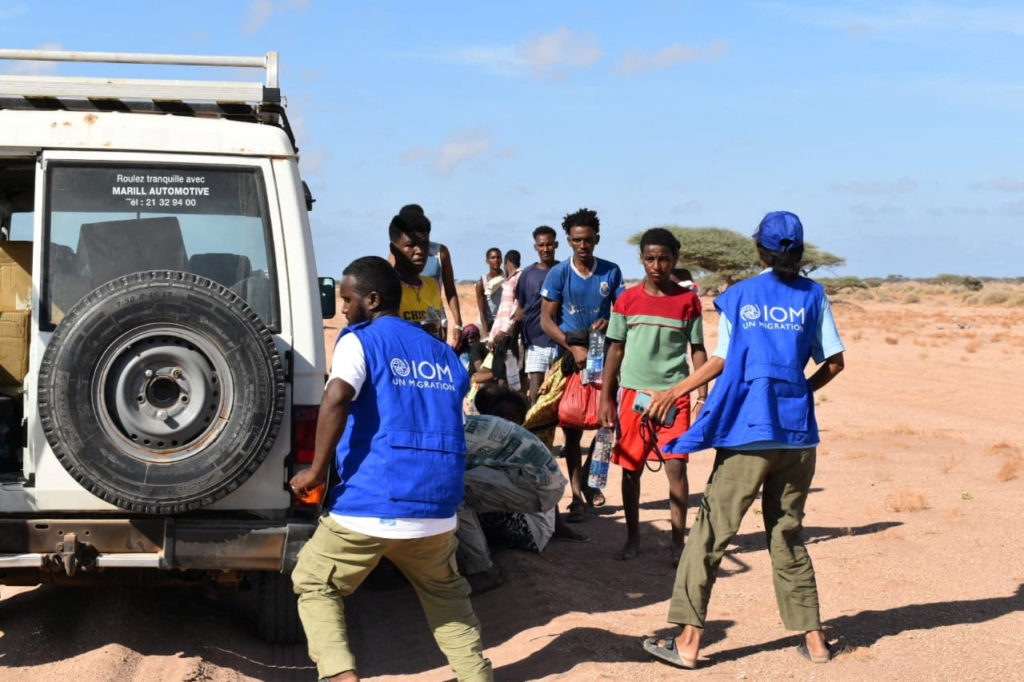
Of those who survived the capsizing, 82 individuals were rescued and identified exclusively as Ethiopian nationals. Sixty-four survivors have been transferred to an IOM response center in Obock, where they are receiving medical treatment for issues such as saltwater ingestion and psychological support for trauma. Many remain in a state of shock, with some learning of family losses only after arriving at the facility. Others have been provided access to communication devices to contact loved ones back home.
The eastern migration route, connecting the Horn of Africa to the Arabian Peninsula, remains one of the most dangerous pathways globally. Migrants primarily travel from Ethiopia and Somalia, aiming for Gulf states like Saudi Arabia where they hope to find employment. The journey involves significant risks, including exposure to extreme heat during overland segments and the threat of drowning on overcrowded vessels operated by smugglers.
This incident occurred against a backdrop of intensifying conflict in Yemen. Fighting between Houthi rebels and Saudi-backed government forces has displaced thousands within Yemen, with some fleeing to Djibouti for protection. Despite this instability and the inherent dangers of the sea crossing, migration flows have not ceased. In fact, data indicates an 18 percent increase in people attempting this journey in 2025 compared to previous years.
The IOM’s Missing Migrants Project recorded more than 900 deaths or disappearances along this route last year alone. A similar capsizing in March of this year resulted in nine confirmed deaths and 45 missing persons. The current tragedy serves as a stark reminder of the lethal conditions faced by those with limited alternatives for safe passage.
International migration advocates are urging governments to address the root causes of these dangerous journeys. Amy Pope, director-general of the IOM, emphasized that treating such deaths as inevitable is unacceptable. She called for the expansion of safe and legal migration pathways to prevent further loss of life on the seas.
Local authorities in Djibouti continue search and rescue operations while coordinating with international agencies to provide aid. The incident has drawn attention to the broader humanitarian crisis in the region, where poverty, insecurity, and climate impacts drive tens of thousands to risk their lives annually. As investigations proceed, the focus remains on supporting survivors and assisting families affected by this devastating loss.
The scale of the disaster highlights the limitations of current border management and rescue efforts in the area. With no immediate changes to migration policies or increased enforcement visible, experts warn that similar tragedies may occur unless systemic solutions are implemented. The international community faces pressure to act before the next vessel meets a similar fate.
Sources behind this briefing
Go to the original reporting
- PBS NewsHour↗At least 139 migrants dead, dozens missing after boat capsizes off Djibouti coast
- BBC World↗Children among 139 dead after boat capsizes off Djibouti, UN says
- The Guardian US↗At least 139 dead including children after migrant boat capsizes off Djibouti