The short version
- Leaders of the Cockroach Janata Party were released from custody after being detained during protests against a massive removal of voters from official rolls.
- Authorities in New Delhi suspended internet services and canceled train lines while detaining thousands of demonstrators, including opposition lawmakers.
- The movement, which originated as an online satire campaign, continues to demand the resignation of the Chief Election Commissioner despite government denials of political bias.
Key organizers of a prominent youth protest movement in India were released from detention on Sunday, pledging to continue their demonstrations against what they describe as a politically motivated purge of voter lists. The release comes after a significant security crackdown in the capital, where police detained more than two thousand individuals, including several opposition lawmakers, following days of unrest. The protests have intensified scrutiny on the Election Commission’s decision to remove over 130 million names from the electoral roll since last year, a move that critics argue undermines democratic integrity.
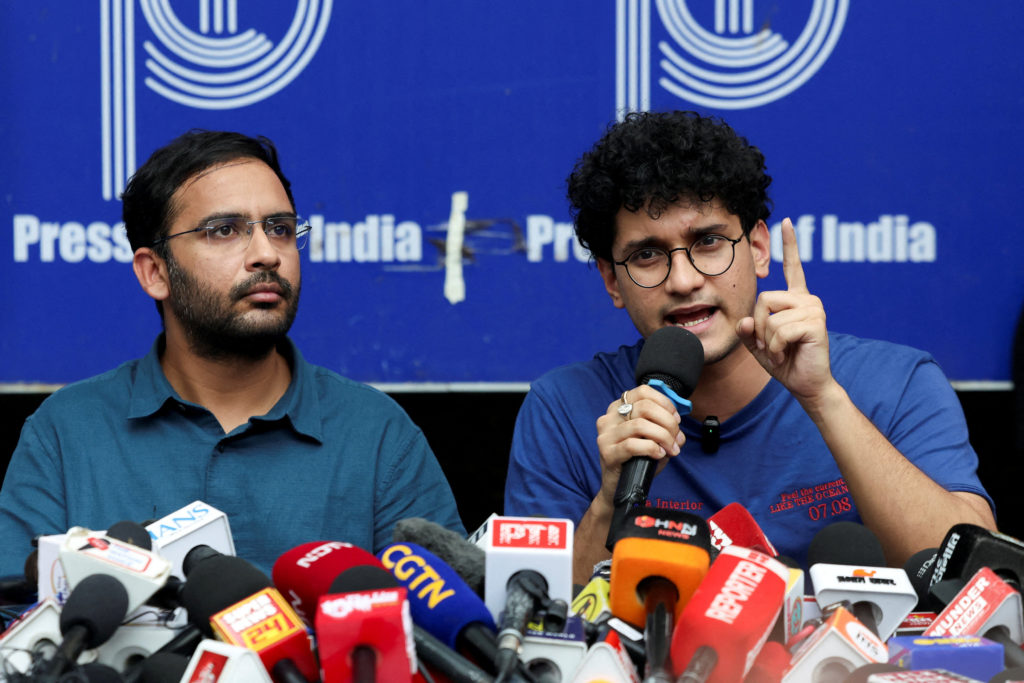
The three central figures of the Cockroach Janata Party—Abhijeet Dipke, Saurav Das, and Ashutosh Ranka—were taken into custody on Saturday after their flight from Mumbai landed in New Delhi. Police boarded the aircraft as the leaders prepared to head to a demonstration site in the capital. Their detention marked a sharp escalation in tensions between the state and the movement, which has gained widespread support among young Indians frustrated with economic conditions and perceived government overreach.
According to Ratna Singh, the legal director for the movement, the leaders were freed on the condition that they commit no breach of peace for one year. The precise implications of this restriction remain unclear, particularly regarding whether it will legally hinder their ability to participate in future public demonstrations. Despite these conditions, the leaders have signaled their intent to maintain pressure on the government. Dipke used social media to criticize Prime Minister Narendra Modi, describing him as a coward and an embarrassment to the nation.
The security response in New Delhi was extensive and disruptive. Authorities canceled train services leading into the capital, closed metro stations, and suspended mobile internet access in various parts of the city to curb coordination among protesters. Most of those detained during the initial crackdown were released late Saturday, but small groups continued to stage marches on Sunday. Police quickly dispersed these gatherings, resulting in further arrests. The heavy-handed approach has drawn criticism from human rights advocates who argue that the state is engaging in a conflict with its own citizens.
At the heart of the dispute is the demand for the resignation of Gyanesh Kumar, the Chief Election Commissioner. Protesters contend that the massive reduction in registered voters is an attempt to manipulate electoral outcomes in favor of Prime Minister Modi’s ruling Bharatiya Janata Party. The government and the Election Commission have firmly denied these allegations, stating that the revision process is necessary to eliminate duplicate entries and ineligible names from the database. They argue that maintaining an accurate voter list is essential for the integrity of future elections.
The Cockroach movement began earlier this year as a satirical online campaign. It gained traction after India’s chief justice compared unemployed young people to parasites, a remark that many youths found insulting. Rather than rejecting the comparison, they embraced the cockroach as a symbol of resilience and survival in the face of adversity. This reclamation of the insult transformed a derogatory label into a powerful political identity, uniting diverse groups under a common banner of dissent.
The movement has already achieved notable political successes. In July, sustained protests led by the group forced the resignation of Modi’s education minister, marking a rare setback for the prime minister who has held power for more than twelve years. This victory demonstrated the potential impact of coordinated youth activism in challenging established political structures. The current wave of protests represents an escalation of that earlier success, targeting the core mechanisms of electoral governance rather than individual cabinet members.
As the situation unfolds, uncertainty remains regarding the long-term trajectory of the movement and the government’s response. While the immediate detention of leaders has ended, the underlying grievances regarding voter eligibility and democratic representation persist. The coming weeks will likely see continued tension between protesters demanding accountability and authorities seeking to restore order. The outcome of this standoff could have significant implications for India’s democratic institutions and the role of youth activism in national politics.
Observers note that the government’s denial of manipulation allegations contrasts sharply with the scale of the voter removals. With over 130 million names deleted, the statistical anomaly alone fuels suspicion among critics. Whether these concerns are validated by independent audits or dismissed as partisan rhetoric remains to be seen. The release of the protest leaders does not resolve the fundamental disagreement over the legitimacy of the election commission’s actions.
The broader context includes a growing disconnect between the ruling party and segments of the younger population. Economic stagnation and limited job opportunities have created a fertile ground for dissent. The Cockroach movement has effectively channeled this frustration into organized political action. As protests continue, the challenge for authorities will be balancing public order with the right to peaceful assembly, while addressing the substantive concerns raised by millions of affected voters.
Sources behind this briefing
Go to the original reporting
- PBS NewsHour↗Leaders from India's 'Cockroach' movement released from detention, pledge to hold more protests