The short version
- Curiosity has reached a record elevation of one kilometer on Mount Sharp, marking a significant step in its long-term ascent.
- New panoramic imagery reveals distant yardangs with unusual coloration and layering that scientists hope to investigate directly by 2027.
- The rover is currently traversing sulfate-rich layers, providing data on the planet's transition from wet to arid conditions.
NASA’s Curiosity rover has achieved a new altitude record during its ongoing exploration of Mount Sharp, reaching an elevation of one kilometer above the surrounding valley floor. This milestone marks the highest point any Mars rover has ever climbed, signaling a critical phase in the mission’s extended study of the mountain’s geological history. The vehicle captured this progress while continuing its slow ascent up the slopes of Gale Crater, where it has been operating since 2014.
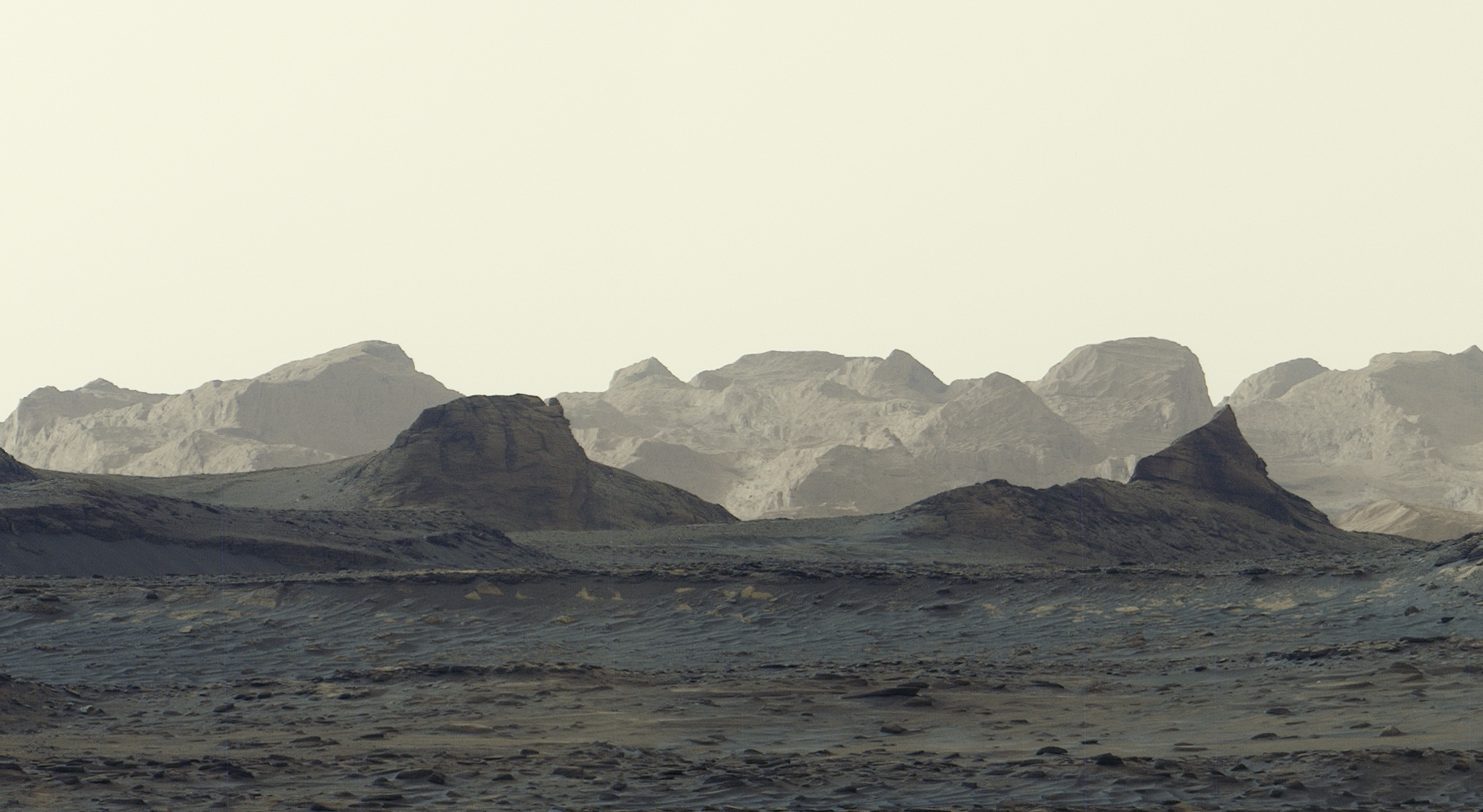
To mark the occasion, mission controllers released a detailed panorama taken by the rover’s Mastcam instrument on August 11. This image set, comprising six stitched photographs, offers the clearest view yet of distant wind-carved formations known as yardangs. Unlike previous images that were color-corrected for scientific analysis, this panorama was processed without white balancing to preserve the natural hues of the early morning light. The result is a striking scene featuring blue tones in the foreground and illuminated crags on the horizon.
The yardangs themselves present a geological puzzle for researchers. Stretching approximately 16 kilometers across the northwestern flank of Mount Sharp, these features appear distinct from the surrounding rock layers. Ashwin Vasavada, the project scientist at NASA’s Jet Propulsion Laboratory, noted that the layer looks out of place due to its unusual color and the odd angle at which it tilts. It almost appears as if it were plastered onto the mountain rather than formed through standard sedimentary processes.
Scientists have several theories regarding the origin of these mysterious cliffs. One leading hypothesis suggests that the material may be ash deposited by ancient volcanic eruptions, which would provide new insights into Mars’ volcanic history. Another possibility is that wind erosion stripped away softer materials after water had dried up, leaving behind resistant layers. The uncertainty surrounding their formation makes them a high-priority target for future investigation.
Mount Sharp serves as a geological archive of Martian history, with each layer recording different periods of the planet’s past. By analyzing these strata, researchers have previously identified evidence of ancient lakes and streams that once covered this region billions of years ago. As water evaporated, it left behind salty minerals, creating the diverse chemical signatures found in the mountain’s lower sections. The rover’s current position allows for continued study of these transitional environments.
Curiosity is currently in its second year of a fifth extended mission phase, which began with an exploration of spiderweb-like boxwork ridges. For the coming year, the rover will focus on driving through layers enriched with sulfates and carbonates. These minerals are key indicators of ancient drying processes on the surface, helping scientists understand how Mars transitioned from a wetter world to the arid planet seen today.
The ultimate goal for this leg of the journey is to reach the base of the yardangs sometime in 2027. Once there, Curiosity will use its robotic arm to collect samples and data directly from these enigmatic features. This close-up analysis could finally resolve questions about how the cliffs were created and what they reveal about Mars’ atmospheric and volcanic history.
The mission continues to be led by NASA’s Jet Propulsion Laboratory in Pasadena, California, on behalf of the agency’s Science Mission Directorate. Malin Space Science Systems in San Diego provides operational support for the Mastcam instrument. As Curiosity pushes higher up Mount Sharp, it remains a vital tool for understanding the Red Planet’s evolution and the potential for past habitability.
Sources behind this briefing
Go to the original reporting
- NASA↗NASA’s Curiosity Rover Catches Stunning Martian Dawn