The short version
- The MBTA will lease seven four-car battery trains from Stadler for $765 million to serve the Fairmount Line starting in 2030.
- The project aims to increase service frequency from every thirty minutes to every twenty minutes and eliminate diesel emissions on the route.
- Advocates and experts view the initiative as a critical test of battery technology for medium-ridership lines, though concerns remain about scalability and reliability.
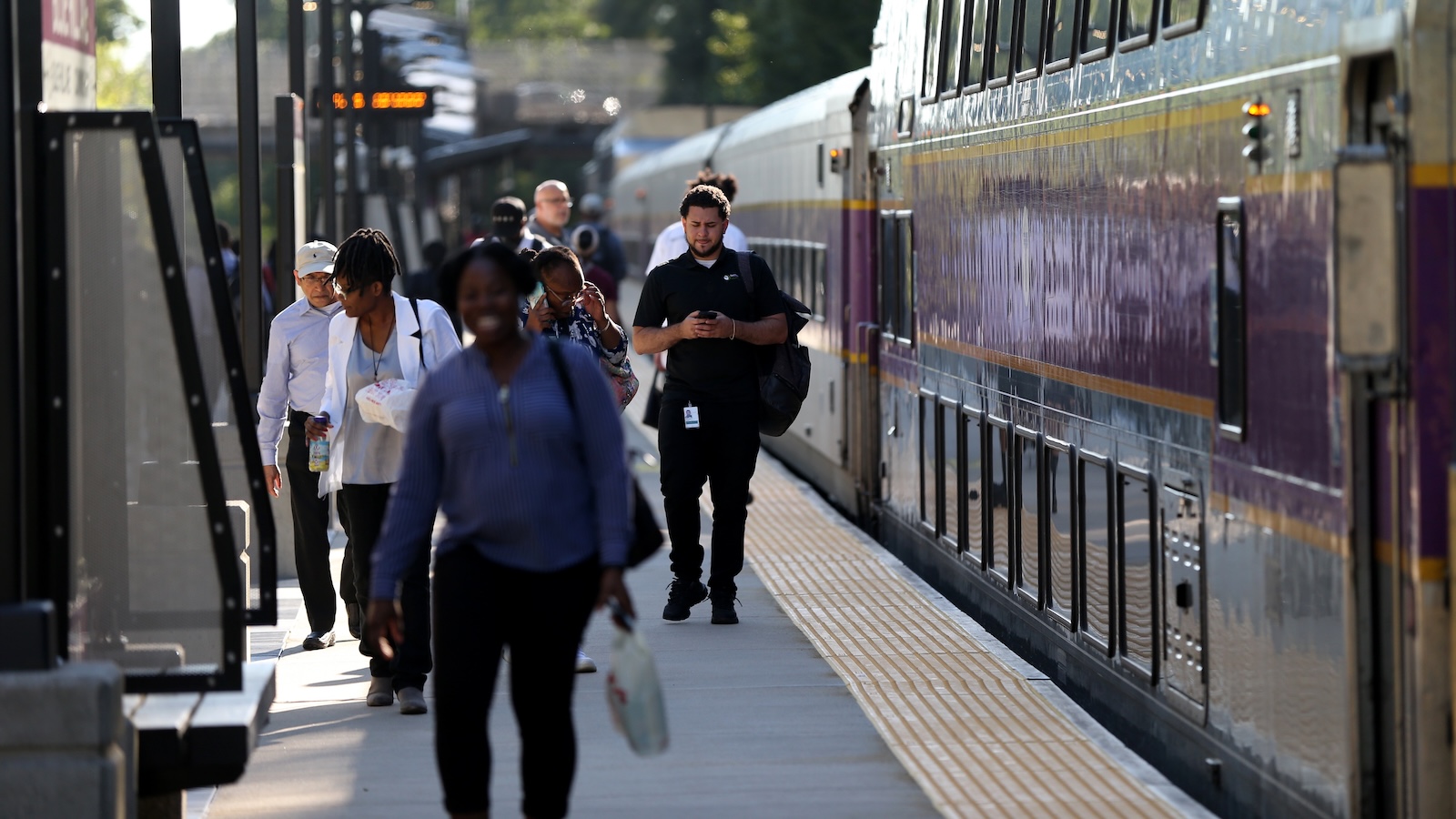
A significant shift in regional rail strategy is emerging in Boston, where the Massachusetts Bay Transportation Authority intends to replace diesel locomotives with battery-powered trains on the Fairmount Line. This initiative represents a practical application of electrification technology that avoids the high costs and logistical complexities of installing overhead power lines. The agency plans to lease seven four-car trains from the Swiss manufacturer Stadler under a fifteen-year agreement valued at approximately $765 million. These vehicles are scheduled to enter service in 2030, marking a pivotal moment for transit agencies seeking to reduce carbon footprints without relying solely on traditional infrastructure upgrades.
The decision follows decades of community advocacy rooted in equity concerns. Marvin Martin, who recently retired as head of the transit advocacy group Action For Equity, recalled observing commuter trains passing through Dorchester without stopping, leaving residents of color dependent on crowded buses while wealthier passengers traveled comfortably downtown. This disparity spurred a long campaign that resulted in the addition of three stops in Dorchester between 2012 and 2013, followed by a fourth stop in Mattapan in 2019. Martin’s efforts also extended to pushing for cleaner technology, arguing that trains should not emit toxic particulates into neighborhood air.
The Fairmount Line serves as a logical testing ground for this new technology because it is the shortest commuter route in the MBTA system. Chris Friend, interim executive director of TransitMatters, noted that the line’s characteristics make it suitable for initial deployment. The transition is expected to improve service reliability and frequency, increasing stops from every thirty minutes to every twenty minutes. According to agency projections, the switch will save 17,700 tons of carbon dioxide emissions annually compared to the diesel engines currently in use. This reduction aligns with broader environmental goals while addressing local air quality issues.
Battery-electric trains offer a distinct advantage by allowing agencies to electrify routes without constructing catenary systems, which involve overhead wires and significant capital investment. However, the technology remains largely unproven on lines with ridership levels comparable to those in Boston. While battery trains are operating successfully on a fifty-mile route in Germany that carries two million passengers annually, experts caution that scaling this solution to busier American corridors presents unknown challenges. The MBTA’s approach allows it to gain operational experience before committing to wider adoption across its network.
Similar projects are underway elsewhere in the United States, suggesting a growing interest in this technology among transit authorities. Caltrain in the San Francisco Bay Area plans to introduce battery-powered trains by 2028, and Chicago’s Metra has established a comparable timeline for implementation. These parallel efforts could provide valuable data on how well battery systems perform under varying conditions and ridership demands. The success or failure of these initiatives will likely influence future decisions regarding rail electrification nationwide.
Historical context underscores the significance of this shift. Boston has a long tradition of electric transit, having launched its first electric streetcar in 1889 and opening the Tremont Street Subway, the first electric subway in North America, shortly thereafter. Albert Churella, a history professor at Kennesaw State University, noted that urban systems transitioned from horse-drawn vehicles to electric streetcars in the late nineteenth century, while steam railroads facilitated suburban growth. Although some commuter lines electrified early in the twentieth century, many never made the switch, leaving diesel as the dominant power source for regional travel.
Industry representatives acknowledge that battery technology is currently best suited for medium-ridership routes. Dani Simons, vice president of communications at Alstom, a French manufacturer of battery trains, emphasized that rising fuel costs make electrification increasingly attractive. The average price of diesel has increased significantly over the past year, adding financial pressure on transit agencies to explore alternative energy sources. Simons suggested that agencies should pursue diverse electrification strategies, including hybrids and overhead lines, rather than relying on a single solution.
The MBTA is adopting a diversified approach, with plans to deploy both battery and catenary trains on the Providence Line. This strategy reflects a cautious optimism about new technologies while recognizing their limitations. Skeptics worry that unproven systems could lead to operational difficulties similar to past transit failures. Friend questioned whether this represents a genuine advancement or another potential quagmire involving immature technology. The coming years will reveal whether battery-electric trains can reliably serve thousands of passengers daily and justify the substantial investment required for their deployment.
As the Fairmount Line prepares for its transformation, the project serves as a microcosm of broader challenges facing public transportation. Balancing environmental goals, equity concerns, and technological feasibility requires careful planning and sustained community engagement. The outcome of this experiment will inform not only Boston’s transit future but also the trajectory of rail electrification across the country. If successful, it could pave the way for cleaner, more efficient commuter services in other cities grappling with similar issues.
Sources behind this briefing
Go to the original reporting
- Grist↗The future of commuter rail could be taking shape in Boston