The short version
- Surging enrollment in traditional painting programs signals a shift away from digital consumption toward tactile, slow creative practices.
- Social media influencers are popularizing outdoor painting as a meditative tool to combat the anxiety associated with rapid technological change.
- Historians draw parallels between this modern retreat to nature and the Arts and Crafts movement’s reaction against industrial mass production.
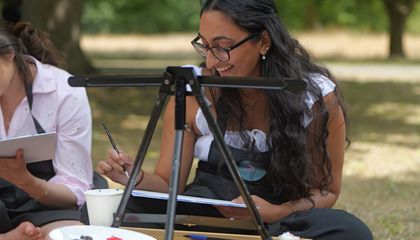
A quiet but significant cultural shift is unfolding in parks across London, New York, and beyond, where young adults are trading digital devices for wooden easels. In places like Hyde Park, participants kick off their sneakers and set up picnic rugs to engage in plein air painting, a nineteenth-century practice of creating art outdoors. This resurgence represents more than a hobby; it is a deliberate move by Generation Z and millennials to seek simplicity and meaningful connection with nature at a time when artificial intelligence can generate finished images instantly.
The demand for traditional artistic training has intensified alongside this outdoor trend. Art institutions in major cities are reporting substantial increases in interest. For instance, the Parsons School of Design saw its application numbers rise by sixty-four percent between 2016 and recent years, while the Pratt Institute established a waitlist for its painting and drawing courses. This surge suggests that prospective students are increasingly prioritizing hands-on fine arts education over purely digital or theoretical studies, seeking skills that require physical presence and manual dexterity.
Social media platforms, particularly TikTok, have become central to this movement’s visibility. Creators share timelapse videos of their outdoor sessions, offering tutorials on constructing makeshift easels from plywood or using upcycled materials like mint tins as palettes. Remington Robinson, an artist based in Ohio, has amassed millions of likes by documenting his process of painting street scenes and landscapes while traveling. His content emphasizes the meditative quality of the practice, framing each session as a waking-state meditation that requires direct observation of the subject matter rather than reliance on digital references.
Proponents of this style argue that being physically present in an environment offers sensory experiences that cameras and screens cannot replicate. Robinson notes that the human eye detects color nuances and subtle environmental vibrations better than digital sensors. The unpredictability of outdoor conditions, such as shifting light, insects, or passing pedestrians, forces artists to develop patience and adaptability. These challenges are viewed not as obstacles but as essential components of a grounding experience that anchors the creator in the present moment.
Art historians observe striking similarities between this contemporary trend and historical reactions to technological disruption. During the height of industrialization in the nineteenth century, the Arts and Crafts movement emerged as a protest against soulless, mass-produced goods. Clare Willsdon, an art historian at the University of Glasgow, suggests that today’s anxiety over artificial intelligence mirrors the uncertainty felt during the Industrial Revolution. The tightly organized yet unpredictable nature of AI-generated content drives people toward activities that emphasize human rhythm and natural cycles.
Kim Tay, co-founder of the Artling gallery in Singapore, reinforces this comparison by highlighting the public’s lack of control over emerging technologies. He argues that when society faces automation that shapes futures without clear support structures, individuals naturally gravitate toward practices that highlight unique human qualities. Creating something with one’s own hands becomes a way to reclaim agency and affirm individual identity in an era where digital outputs can be replicated infinitely and instantly.
For many participants, the appeal lies in the contrast between the slow pace of painting and the rapid acceleration of modern life. Gabi Sprout, a content creator known for embracing a slower lifestyle, described her experience with plein air art as a way to hold onto the past amidst an uncertain future. She expressed concern about an AI takeover lacking adequate social safety nets, suggesting that traditional arts provide a psychological anchor. This sentiment reflects a broader desire among young adults to find stability through tangible, time-intensive creative processes.
The movement continues to expand beyond formal art schools into community-based events and mobile workshops. Organizers like Patrice-Rose McLean of Ambient Art London report increased participation from young adults seeking experiences that feel authentic and connected to the natural world. As these groups grow, they offer a space for social interaction that is free from the pressures of digital performance. The trend underscores a growing preference for real-world engagement over virtual consumption, positioning traditional art as a vital tool for mental well-being in the age of automation.
Looking ahead, the sustainability of this trend remains to be seen, but its current momentum indicates a deep-seated need for tactile creativity. Whether driven by nostalgia, anxiety, or a simple desire for mindfulness, the return to plein air painting highlights a fundamental human urge to create meaning through physical effort. As technology continues to evolve, these outdoor studios may serve as important sanctuaries where individuals can disconnect from screens and reconnect with their surroundings through the slow, deliberate act of making art by hand.
Sources behind this briefing
Go to the original reporting
- Smithsonian Magazine↗Why Gen Z Is Learning to Paint Like 19th-Century Artists