The short version
- Researchers used non-invasive scanning to identify the correct dial sequence of a brass lock found on a Welsh beach.
- The artifact originated from the Ann Francis, a merchant vessel that sank in 1583 after being driven off course by a storm.
- The successful opening provides rare insight into Elizabethan security mechanisms and the personal effects carried aboard early modern ships.
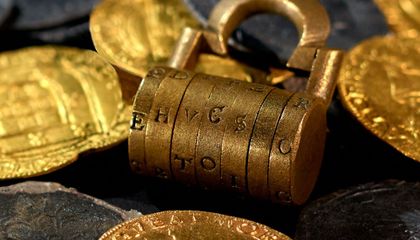
A brass combination lock recovered from a sixteenth-century shipwreck has been opened for the first time in more than four centuries. The device, which features four rotating dials with six letters each, was discovered on Margam Beach in Wales by metal detectorist Peter Hughes in 1999. For two decades, Hughes attempted to solve the puzzle manually, testing various sequences among the 1,296 possible combinations without success. The breakthrough came only after researchers at Cardiff University applied micro-CT scanning technology to peer inside the mechanism without causing damage.
The lock is an artifact from the Ann Francis, a merchant ship traveling from Spain to England when it was swept off course by a severe storm on December 28, 1583. The vessel wrecked off the coast of southern Wales, resulting in the loss of at least fourteen sailors according to parish records from the period. Historical documents from the time attributed the disaster to supernatural causes, blaming the incident on the work of a witch. Following the wreck, looters descended upon the site, leading to legal disputes over ownership of the recovered treasures. Francis Shaxton, the ship's owner, eventually claimed some items, but many artifacts remained buried in the sand for centuries.
Hughes made numerous discoveries between 1996 and 2017, aided by natural erosion from storms and dredging activities that shifted the beach sediment. He found the combination lock near coin weights and Spanish silver coins, suggesting it may have secured a chest containing valuable goods. Museum Wales recently acquired Hughes' collection of artifacts, including the lock. Curators noted the exceptional condition of the device, with clear lettering and intact working parts. They sought assistance from engineers to determine the correct code, hoping to understand how the mechanism functioned.
David Williams, a biomechanical engineer at Cardiff University, led the technical investigation. His team typically uses micro-CT scanners to study biological structures such as bones on a microscopic scale. Applying this technology to a four-hundred-year-old padlock was an experimental approach. Initial scans were inconclusive, but subsequent imaging allowed researchers to visualize the internal alignment of notches on the dials with the teeth of the key mechanism inside. The third scan proved most revealing, indicating that the correct sequence was ANCE.
After confirming the code through digital analysis, museum conservators carefully manipulated the dials to match the sequence. The rings felt looser when aligned correctly, signaling that the internal tumblers had engaged properly. Conservators then cleaned out accumulated grit and corrosion from the mechanism. With the obstruction removed, the lock clicked open, a moment described by Hughes as comparable to opening a sacred relic. The successful operation validated the non-invasive scanning method and preserved the artifact's integrity.
The Ann Francis carried significant cargo, including compasses, cannonballs, and gold coins dating to the reign of Ferdinand and Isabella. A sixteenth-century inventory of recovered items listed at least three chests aboard the ship. These chests had broken locks and were found empty, raising questions about whether the combination lock secured one of these containers or a different type of storage vessel. The presence of such a sophisticated security device on a merchant ship highlights the value of the goods being transported across the Atlantic during this period.
Elizabethan combination locks are known to exist in Britain, but few survive in such pristine condition. This particular artifact is unique because it is associated with a dated wreck site, providing a clear historical context for its use. The stationary letters on the outer edges of the lock remain unexplained, adding another layer of mystery to the object's design and function. Researchers continue to wonder if the code ANCE held personal significance for the original owner or was simply a random selection.
The lock is now part of the Tides of Treasure exhibition at the National Waterfront Museum in Swansea. The display features other artifacts from the Ann Francis, including a boatswain's whistle and various coins. The successful decoding of the lock demonstrates how modern scientific techniques can unlock historical secrets without compromising archaeological integrity. It also offers a tangible connection to the daily lives and security concerns of people living four centuries ago.
The collaboration between historians, curators, and engineers underscores the interdisciplinary nature of contemporary archaeology. While the immediate mystery of the combination has been solved, broader questions about the ship's final moments and the fate of its crew remain. The parish records that blamed a witch for the storm reflect the superstitions prevalent in late sixteenth-century Wales. As more artifacts from the site are studied, they may provide further insights into maritime trade routes and the technological capabilities of the era.
This event marks a significant moment in the preservation and understanding of early modern material culture. The ability to open the lock without physical intrusion sets a precedent for handling fragile historical objects. It also engages the public with history in a dynamic way, transforming a static artifact into an active puzzle that has finally been resolved. The story of the Ann Francis and its treasures continues to captivate interest in Welsh maritime heritage.
Sources behind this briefing
Go to the original reporting
- Smithsonian Magazine↗This Mysterious Combination Lock Sank in a 1583 Shipwreck. When Engineers Cracked the Code, It Clicked Open for the First Time in More Than 400 Years