The short version
- The replica Oval Office at The People’s House has been updated with gold accents and historical portraits to match the current president's interior design choices.
- Visitors expressed mixed reactions to the opulent changes, with some praising the grandeur while others noted the departure from previous administrations' simpler styles.
- Museum officials used advanced scanning technology and specialized materials to ensure accuracy while protecting the exhibit from visitor wear.
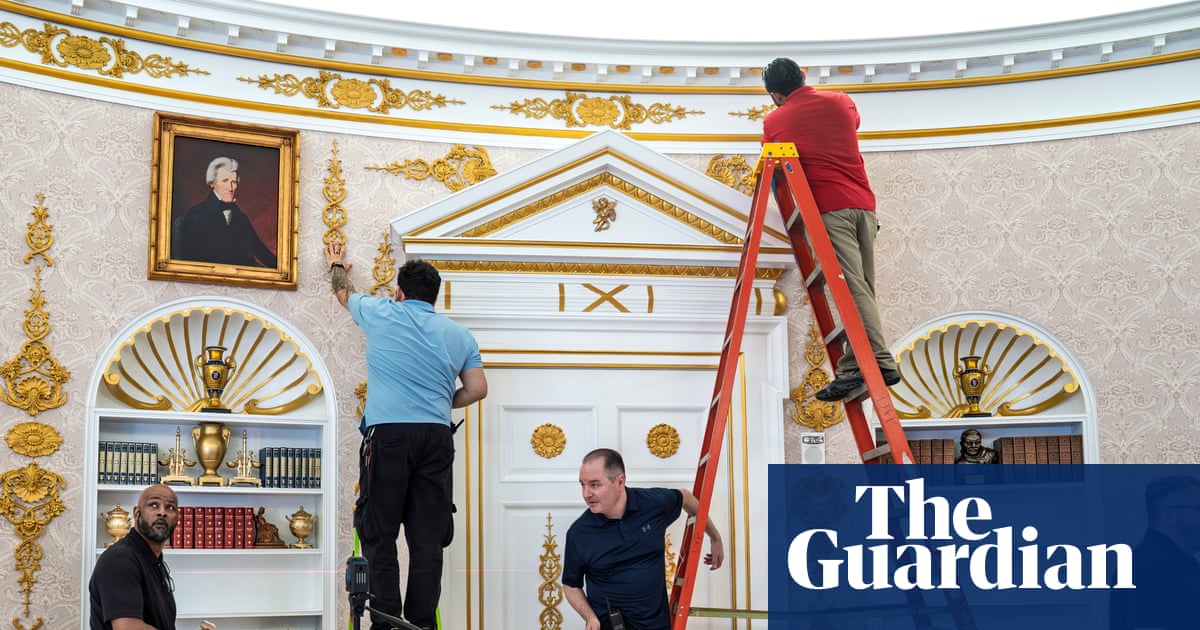
The White House Historical Association has completed a significant renovation of its interactive museum exhibit, updating the full-scale replica of the Oval Office to reflect the interior design preferences of President Donald Trump’s second term. Located at The People’s House: A White House Experience on Pennsylvania Avenue, just a short distance from the actual executive residence, the attraction now features an elaborate array of gold accents, heavy carved frames, and numerous historical portraits. This transformation marks a sharp departure from the understated decor associated with President Joe Biden and his predecessors, replacing plain walls with what some observers have described as a dense, ornate aesthetic.
The updated space is crowded with decorative items, including two dozen portraits of historical figures such as George Washington, Andrew Jackson, and Benjamin Franklin. Ronald Reagan appears twice in the collection, while former First Lady Jacqueline Kennedy remains the only woman depicted among the displayed images. A bust of Theodore Roosevelt sits prominently on a bookshelf alongside bound volumes of his works, Hawthorne’s writings, and texts related to George Washington. The room also features gleaming brass vases, swirling wall onlays, and decorative knickknacks that occupy nearly every available surface, creating a visually dense environment that contrasts with the minimalism of recent past administrations.
The renovation process was executed with precision and speed by a team of specialized designers who visited the actual Oval Office while the president was away. Using 3D scanning technology in Indianapolis, the team captured detailed measurements to ensure authenticity. Hand-carved gold frames were crafted in California, while replicas of vases and other tabletop pieces were produced in Canada and Virginia. The physical transition of the exhibit took one week, involving more than 25 crew members who used laser levels and temporary adhesives to position items accurately before securing them to the walls. This meticulous approach aimed to replicate the specific arrangement and visual impact of the real office.
Despite the high level of detail, the museum made one practical deviation from the original design. While the actual Oval Office utilizes gilded gold leaf, the replica employs a specialized gold paint solution. This decision was made to protect the exhibit from chipping or other damage caused by frequent visitor interaction. The choice underscores the balance between historical fidelity and the practical demands of maintaining a public attraction that sees steady foot traffic from tourists seeking a glimpse into presidential life.
Visitor reactions to the new aesthetic have been varied, reflecting broader cultural divides regarding political style and symbolism. Some guests expressed admiration for the grandeur of the space. Drew Wright, a firefighter from Georgia who supported Trump in two elections, described the additions as paying homage to the nation’s founders and dismissed criticism of the gold accents as coming from detractors. He characterized the look as classic rather than excessive. Similarly, Cheri Lujan Hamilton, a state senate clerk from New Mexico, noted her awe at the display, though she admitted the gold around the doors felt slightly overwhelming.
Other visitors found the changes appealing without endorsing every element. Pedro Robles, a police officer from Tennessee, called the replica cool and rejected the notion that the gilding was tacky. For many tourists, including nine-year-old Sydney Wright, who posed behind the Resolute Desk, the experience offered a tangible connection to the seat of power. The interactive nature of the museum, which includes an orientation film narrated by actor Martin Sheen, allows guests to engage with history in a way that static displays cannot replicate.
The timing of this update coincides with extensive demolition and construction work at the actual White House, limiting public access to the real Oval Office. For many capital visitors, the museum replica serves as the closest available alternative to witnessing the current president’s workspace. The transformation highlights an ongoing effort by the Trump administration to reshape Washington’s visual landscape, extending beyond policy into the physical environment of governance. Matthew Costello, chief education officer at the association, stated that the evolving replica aims to inspire visitors to learn more about White House history and see themselves within its narrative.
The project illustrates how presidential transitions extend beyond personnel changes to include the curation of historical memory and public perception. By mirroring the current administration’s interior choices, the museum provides a snapshot of contemporary political aesthetics. Whether viewed as a tribute to tradition or an example of excess, the updated Oval Office replica offers a window into the personal tastes of the current occupant of 1600 Pennsylvania Avenue. As the White House undergoes physical changes, the museum’s adaptation ensures that the public can still engage with the evolving story of the executive branch.
This renovation is part of a broader pattern where each president leaves a distinct mark on the Oval Office, reflecting their individual style and priorities. The historical association’s commitment to updating the replica underscores the dynamic nature of presidential history. By capturing these changes in real time, the museum preserves a record of how the space has been used and decorated across different administrations. The result is an exhibit that is both educational and reflective of current political realities, offering visitors a nuanced view of power and presentation in modern America.
Sources behind this briefing
Go to the original reporting
- The Guardian US Politics↗A replica of Donald Trump’s Oval Office goes for the gold in Washington DC