The short version
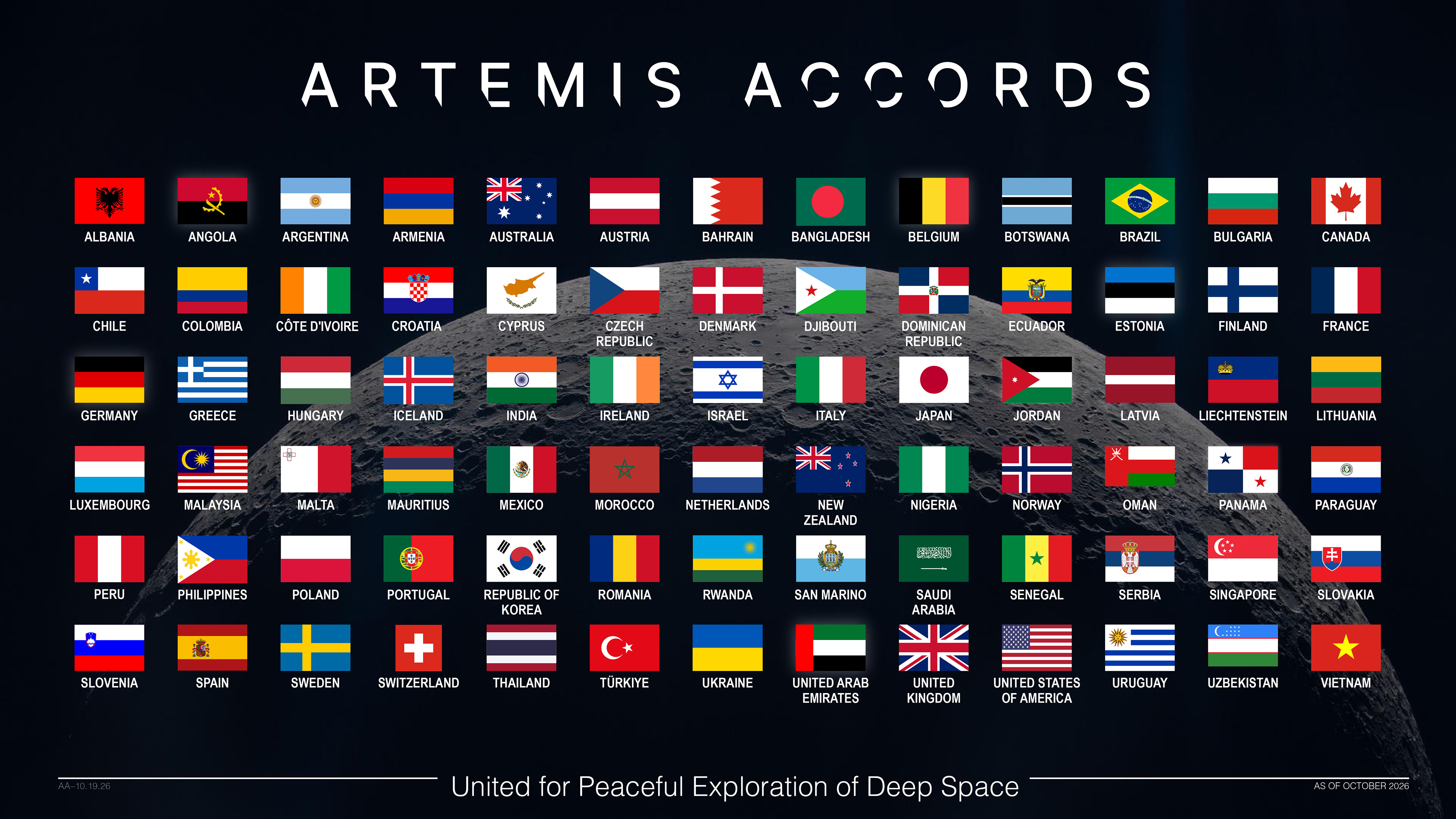
- Vietnam has officially signed the Artemis Accords, becoming the 78th nation to join the coalition dedicated to peaceful and transparent space exploration.
- The agreement extends the existing Comprehensive Strategic Partnership between Washington and Hanoi into the aerospace sector, building on decades of cooperation in defense and technology.
- Hanoi is currently developing its own satellite capabilities and Earth observation systems, which align with the practical principles established by the Accords for lunar and planetary missions.
The Socialist Republic of Vietnam has formally entered the Artemis Accords, marking a significant expansion in international cooperation regarding space exploration. As the seventy-eighth nation to sign the framework, Hanoi joins a growing group of countries committed to establishing norms for peaceful and transparent activities beyond Earth’s atmosphere. The signing ceremony took place during the Vietnam International Digital Week in Ha Long, underscoring the intersection of digital innovation and aerospace policy in the region.
This development represents a natural extension of the Comprehensive Strategic Partnership that Washington and Hanoi have cultivated over more than three decades. While previous cooperation has focused heavily on defense, economic stability, law enforcement, and addressing war legacies, this new agreement introduces space technology as a distinct pillar of bilateral relations. U.S. officials view the move as an opportunity to align on shared principles while fostering prosperity in a free and open Indo-Pacific.
NASA Deputy Administrator Matt Anderson highlighted the timing of Vietnam’s entry, noting that it coincides with a period of rapid growth for Hanoi’s domestic space program. He emphasized that the two nations have already built momentum in areas such as satellite innovation, land-use research, and radar-based Earth observation. By formalizing their alignment through the Accords, both agencies aim to build upon this existing foundation rather than starting from scratch.
The Artemis Accords were originally established in 2020 by NASA and the U.S. State Department alongside seven founding nations. They were designed to address the increasing interest in lunar activities from both government entities and private companies. The framework provides a set of practical principles intended to enhance safety and coordination among participating nations as they explore the Moon, Mars, and other celestial bodies.
For Vietnam, signing the Accords means committing to specific operational standards. These include exploring space peaceably and transparently, rendering aid to astronauts in need, and ensuring that scientific data remains accessible for the benefit of all humanity. Participants also agree to ensure their activities do not interfere with those of others and to preserve historically significant sites and artifacts through best practices in space exploration.
Hanoi’s domestic capabilities are currently expanding to support these international commitments. The country recently inaugurated its National Space Center in Hanoi and is actively developing satellite capabilities through the LOTUSat program. This initiative focuses on Earth observation, weather monitoring, and disaster response, areas that directly benefit from the technical expertise and data-sharing norms promoted by the Accords.
Recent collaborations between NASA and Vietnamese institutions illustrate the practical application of these ties. Earlier this year, NASA partnered with the Vietnamese-German University to support the Soil Moisture Active Passive mission. This project measures surface-soil water worldwide, providing critical data for agricultural and environmental management. Such partnerships demonstrate how the principles of the Accords translate into tangible scientific cooperation.
The presence of U.S. Ambassador Jennifer Wicks at the signing event in Ha Long signaled high-level diplomatic support for the agreement. Her participation reinforced the view that space cooperation is now a central component of broader strategic relations between the two countries. As more nations are expected to join the Accords in the coming months and years, Vietnam’s entry adds another voice to the coalition shaping the future of space governance.
While the Accords provide a framework for cooperation, they do not dictate specific mission plans or financial contributions. Instead, they offer a common language for coordination and safety. For Vietnam, this allows its nascent space program to integrate into global standards while maintaining sovereignty over its technological development. The agreement opens new chapters in bilateral relations without requiring immediate joint missions.
Looking ahead, the integration of Vietnam into the Artemis community may influence how other nations in Southeast Asia approach space policy. As regional powers seek to balance relationships with major global actors, participation in neutral, principle-based frameworks like the Accords offers a pathway for engagement. The focus remains on practical benefits, including disaster response and environmental monitoring, which resonate strongly with local priorities.
Sources behind this briefing
Go to the original reporting
- NASA↗NASA Welcomes Vietnam as Newest Artemis Accords Signatory