The short version
- Cavan Sullivan became the youngest goal scorer in USMNT history with a long-range chip against Mexico, following closely on the heels of Mathis Albert’s previous record.
- The team secured a decisive victory over Mexico and strong results against Peru and Chile, demonstrating that young players can perform under pressure rather than just in friendly matches.
- Coach Mauricio Pochettino views these high-stakes friendlies as essential for building resilience and experience ahead of the rigorous World Cup qualification campaign.
The United States men’s national team is undergoing a significant generational shift, characterized by the immediate impact of teenage players who are rewriting historical records. This youth movement, which began gaining momentum after the previous World Cup cycle, has produced tangible results in recent international windows. The squad’s performance against traditional rivals suggests that these young athletes are not merely participating but are driving the team’s success with confidence and skill.
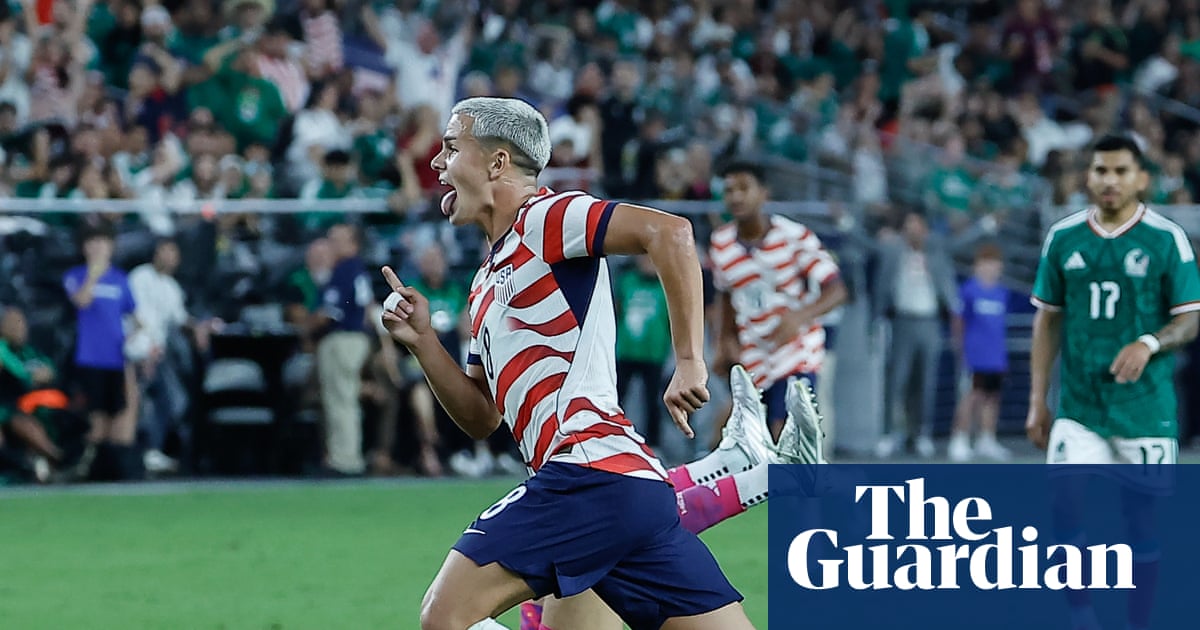
Cavan Sullivan’s emergence marks a pivotal moment in this transition. At seventeen years old, Sullivan started against Mexico and scored a goal that made him the youngest scorer in the program’s history. His achievement came just days after eighteen-year-old Mathis Albert had broken Christian Pulisic’s long-standing record for the same distinction. Sullivan described his preparation as involving visualization techniques, noting that he imagined scoring and celebrating with a knee slide. Although the actual goal involved a chip from thirty-five yards after intercepting a poor pass from the goalkeeper, the celebration matched his mental rehearsal.
The rapid succession of records highlights the depth of talent available to coach Mauricio Pochettino. Julian Hall, another teenager, has scored in all three of his appearances for the national team. This influx of young scorers provides alternatives to established forwards like Folarin Balogun and Ricardo Pepi. The competition is fierce, with players vying for positions that were previously held by veterans or older prospects. This internal rivalry appears to be raising the overall standard of play within the squad.
The opponents faced during this window were not pushovers, adding weight to the young players’ achievements. Peru and Chile, both of whom missed the previous World Cup, presented significant challenges. The US team struggled defensively against these sides but compensated with an aggressive attacking strategy, scoring four goals in each friendly. These matches served as a testing ground for the new generation, forcing them to adapt to high-pressure situations rather than easing into international football through low-stakes games.
The victory over Mexico further demonstrated the squad’s resilience. For much of the first half, the US team struggled to create chances against a Mexican side that employed strict man-marking tactics. The crowd heavily favored the visitors, creating an intimidating atmosphere. However, the young American players endured the pressure without conceding until their own breakthrough goal changed the dynamic of the match. Pochettino emphasized the importance of experiencing such adversity to prepare for the stress of World Cup qualifying matches.
Positional versatility and depth have also improved with the integration of new faces. Diego Kochen has emerged as a standout among the selected goalkeepers, showing greater confidence in commanding his area compared to peers like Chris Brady and Matt Freese. Sullivan’s ability to affect play on the right wing offers an alternative to Sergiño Dest, who held that role during the World Cup summer. Other players, including Justin Ellis and Mathis Albert, provide dynamic options in transition, while Neil Pierre and Adri Mehmeti offer potential reinforcements in defense and midfield.
This current wave of debuts differs from the previous major influx of young talent following the failure to qualify for the 2018 World Cup. That earlier group, which included Tyler Adams, Weston McKennie, Antonee Robinson, and Tim Weah, entered a team with few senior leaders. The current generation benefits from a more balanced lineup, surrounded by experienced players who can guide them. This structure allows the teenagers to gain international experience without bearing the full burden of rebuilding the program.
The upcoming match against Canada will serve as another critical test for this evolving squad. Both teams are looking to establish dominance in the region ahead of qualification campaigns. The competition for spots remains intense, with veterans like Chris Richards noting the hunger and confidence displayed by the younger players. This competitive environment ensures that no position is secure, driving continuous improvement across the roster.
Pochettino’s strategy appears focused on building mental toughness alongside technical skill. By exposing young players to difficult opponents and high-pressure environments, the coaching staff aims to inoculate them against the stress of future tournaments. The success of this approach will be measured not just by results in friendlies but by how well these players perform when the stakes are highest during official qualification matches.
The transformation of the USMNT is evident in both statistics and style. The team has moved from a period of uncertainty to one defined by youthful energy and tactical flexibility. While challenges remain, particularly in defensive consistency, the offensive firepower provided by the new generation offers a promising outlook for the future of American soccer.
Sources behind this briefing
Go to the original reporting
- The Guardian US↗The USMNT’s kids are thriving, and ‘they have a bit of swag to them’