The short version
- Neither Luiz Inácio Lula da Silva nor Flávio Bolsonaro secured the majority required to win outright in Sunday's presidential vote, triggering a runoff on October 25.
- The upcoming contest will determine whether Brazil maintains its current diplomatic distance from Washington or shifts toward closer alignment with the United States under a potential Bolsonaro victory.
- Both candidates face significant challenges in mobilizing moderate voters and overcoming widespread public disapproval of their respective political factions.
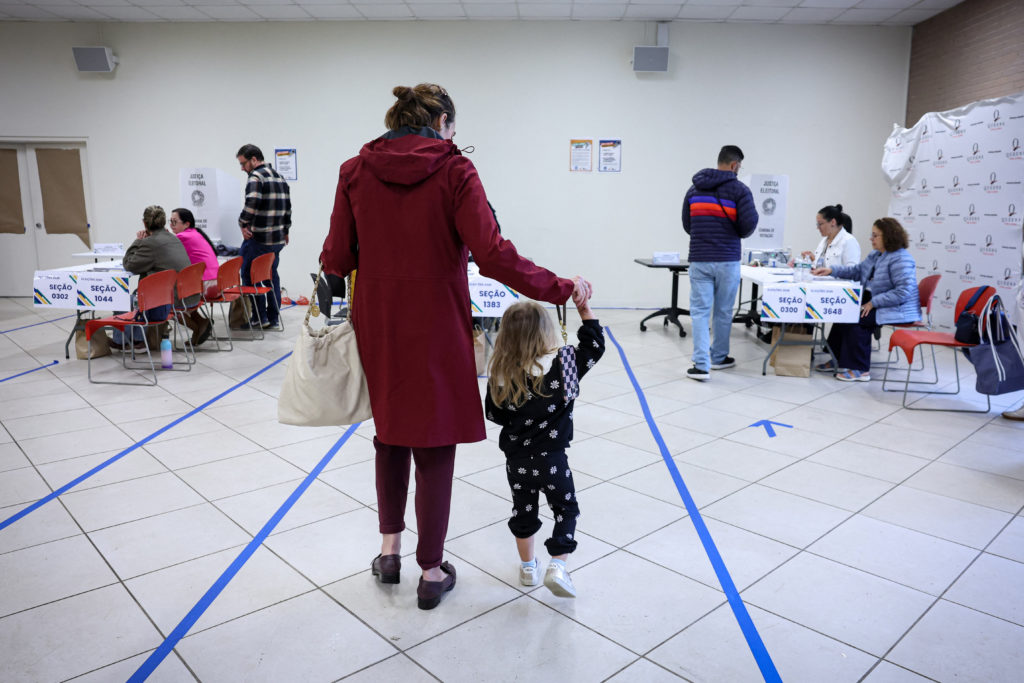
Brazil’s presidential race has moved to a decisive second round after neither incumbent President Luiz Inácio Lula da Silva nor Senator Flávio Bolsonaro secured the majority of votes needed for an outright victory in Sunday’s election. The country’s electoral court confirmed that with nearly all ballots counted, Bolsonaro held a narrow lead with just over 56 million votes compared to Lula’s 53.7 million. This result sets up a confrontation on October 25 between the 80-year-old leader seeking his fourth non-consecutive term and the 45-year-old son of former President Jair Bolsonaro.
The stakes extend beyond domestic politics, as the winner will govern Latin America’s largest economy and a population exceeding 214 million. The outcome carries significant geopolitical weight regarding Brazil’s international partnerships. A victory for Flávio Bolsonaro is widely viewed as likely to increase United States influence in the region, given his stated desire to strike better deals with the Trump administration. Conversely, a win for Lula would signal a continuation of Brazil’s current trajectory, maintaining distance from Washington while deepening economic and diplomatic ties with China.
In the immediate aftermath, both candidates offered contrasting interpretations of the first-round results. Flávio Bolsonaro addressed supporters outside his residence in Brasilia, declaring that the vote signaled a desire for change and marked the end of the Workers’ Party era. He framed the result as a mandate for new leadership. Lula, acknowledging the unexpected nature of the runoff, adopted a more cautious tone. He described the outcome as surprising but expressed confidence in his ability to compete in the final stage, noting his historical success in knockout rounds of political contests.
The three-week campaign period ahead will focus heavily on persuading moderate voters who did not support either frontrunner in the initial vote. Third-place candidates, including writer Augusto Cury and others with smaller vote shares, have indicated they will not endorse either contender. This lack of endorsement leaves Lula and Bolsonaro to independently court the center. Political analysts suggest that Lula must work to reduce voter abstention and capture support from those who backed minor candidates, while Bolsonaro aims to consolidate his base and expand his appeal among conservatives.
Lula’s campaign strategy is expected to leverage the popularity of his social programs, which have improved living standards for millions of Brazilians. However, he faces headwinds from a declining approval rating during his third term, driven by an affordability crisis and a corruption scandal involving the justice official who previously investigated Jair Bolsonaro. These issues provide ammunition for his opponent, who is likely to emphasize economic hardship and link the incumbent to graft.
Flávio Bolsonaro’s platform centers on cracking down on criminal groups and renegotiating trade agreements with the United States, particularly in the rare minerals sector where Brazil holds significant reserves second only to China. He has also campaigned on promises to secure his father’s release from prison and return him to political life. Despite these policy positions, both candidates contend with substantial image problems. Polling data indicates that roughly half of the Brazilian population disapproves of the Bolsonaro family, while a similar proportion holds negative views of Lula’s Workers’ Party.
Public reaction in major cities reflected the deep polarization characterizing this election cycle. In Rio de Janeiro, supporters of both sides gathered in separate venues to watch the results unfold. Some Lula backers expressed sadness but remained hopeful, attributing the runoff to conservative organizing efforts by neo-Pentecostal churches. Conversely, Bolsonaro supporters cited religious freedom and a desire for political change as key motivators. Concerns about discrimination and social safety were voiced by some voters who feared a return to the policies of Jair Bolsonaro’s previous administration.
The next term is scheduled to begin on January 5, leaving little time for resolution after the October runoff. The contest represents a rematch of sorts from four years ago, when Lula defeated Jair Bolsonaro by approximately 2.1 million votes. However, the current dynamic involves a different opponent and a shifted political landscape. As both campaigns prepare for the final stretch, the focus remains on mobilizing undecided voters and addressing the economic anxieties that have defined the current political climate in Brazil.
Experts note that while Bolsonaro’s first-round performance was strong, the election is not yet decided. The ability to convert moderate voters and mitigate the impact of widespread disapproval will be critical. Both candidates must navigate a complex electorate divided along ideological lines, with significant portions of the population skeptical of both major political options. The coming weeks will test their capacity to unify their bases while reaching out to those who have remained on the sidelines.
Sources behind this briefing
Go to the original reporting
- PBS NewsHour↗Bolsonaro and Lula head to a runoff in Brazil's presidential election

