The short version
- Approximately nine hectares of nationally significant maritime heathland were destroyed by a fire that began in late July.
- Subterranean peat combustion complicated suppression efforts, requiring eighty firefighters and aerial support over several days.
- Ecologists warn that vegetation recovery could take three to four years, with immediate losses reported among nesting birds and reptiles.
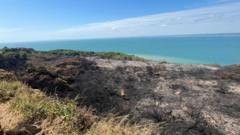
A significant wildfire on the Isle of Wight has resulted in the destruction of approximately nine hectares of protected heathland at Headon Warren. The blaze, which originated around midday on July 23, persisted for five days before crews declared it under control. Firefighters recently addressed a small residual flare-up at the site, marking the conclusion of an intense operational period that involved substantial resources from both local and mainland emergency services.
The complexity of the incident stemmed largely from the nature of the fuel source. According to the Hampshire & Isle of Wight Fire and Rescue Service, the fire involved peat burning beneath the surface. This type of combustion can smolder for extended periods when heat becomes trapped underground, making it difficult to extinguish completely. The terrain further complicated suppression efforts; the site features steep slopes and a proximity to cliff edges, limiting access for ground crews and heavy machinery.
At the height of the emergency, eighty firefighters were deployed to manage the situation. Support came from across the region, with engines and personnel ferried over from the mainland to assist Isle of Wight crews. A helicopter was also utilized to drop seawater directly onto the flames, helping to contain the spread in areas that were otherwise inaccessible. Local farmers played a critical role in the response by creating fire breaks to prevent the blaze from expanding further into surrounding habitats.
Investigations at the scene revealed remains of a campfire, which is believed to be the ignition source for the wider wildfire. The discovery has drawn criticism regarding visitor behavior in sensitive ecological zones. Headon Warren is managed by the National Trust and is recognized as a nationally important site for maritime heathland and rare limestone grassland. Approximately thirty hectares of this area are farmed under a partnership with Natural England aimed at restoring these specific habitats.
The ecological toll of the fire appears severe. Paul Davies, the countryside manager for the National Trust on the island, indicated that a large number of nesting birds likely perished in the blaze. Additionally, reptiles, small mammals, and amphibians inhabiting the area are expected to have suffered significant losses. Before the incident, the remote nature of the location meant there was minimal disturbance from walkers and dogs, allowing wildlife populations to thrive in relative isolation.
Recovery prospects for the damaged land are cautious. The National Trust estimates that it could take three to four years for vegetation to return to its previous state. Davies noted that there is limited capacity to accelerate this natural process, as the ecosystem must regenerate on its own timeline. The landscape currently appears bleak, with visible scarring across the nine hectares that were wiped out by the flames.
While footpaths in the area have reopened to the public, authorities are urging visitors to avoid burnt sections of the land. This precaution is intended to protect recovering wildlife and prevent further damage to fragile soil structures. The incident highlights the vulnerability of coastal habitats to human error and the challenges posed by subterranean fires in peat-rich environments.
The response effort was described as a collaborative success involving businesses, farmers, and the Rapid Relief Team working alongside emergency services. Despite the extensive damage, the coordinated approach prevented the fire from spreading beyond the initial nine-hectare zone. The incident serves as a stark reminder of the risks associated with open flames in dry, heathland environments during peak summer months.
Looking ahead, monitoring will continue to ensure no further underground smoldering occurs. The National Trust and local authorities are likely to review safety measures and visitor guidelines for Headon Warren. The long-term impact on biodiversity in this rare habitat will be assessed over the coming years as vegetation slowly begins to reclaim the burnt areas.
Sources behind this briefing
Go to the original reporting
- BBC Science & Environment↗Peat burning underground sparks heathland fire

