The short version
- Ukrainian and American officials held meetings in Norway aimed at repairing strained relations following recent public criticism from the Trump administration regarding Ukraine’s military conduct.
- Disputes over withheld air defense interceptors and technical failures in early warning systems were addressed, with both sides claiming progress toward restoring full operational support.
- The diplomatic outreach occurs just before U.S. envoy Steve Witkoff meets Russian President Vladimir Putin, raising concerns among European allies about the balance of pressure applied to each side.
Ukrainian President Volodomyr Zelenskyy engaged in high-level discussions with U.S. special envoy Steve Witkoff and several European leaders in Norway this week. The gathering was organized to address a significant deterioration in diplomatic relations between Kyiv and Washington. Over the previous seven days, President Donald Trump had issued sharp public rebukes of Zelenskyy, criticizing Ukraine’s military strategy for inflicting substantial losses on Russian forces. The meeting in the Nordic capital served as an attempt to stabilize the alliance before Witkoff departed for Russia to hold separate negotiations with Vladimir Putin.
Tensions had escalated due to conflicting accounts regarding military support and intelligence sharing. Ukrainian officials accused the United States of withholding critical air defense missiles and restricting access to data essential for their air alert systems. Conversely, U.S. representatives attributed disruptions in the early warning network to technical malfunctions rather than deliberate policy shifts. During the talks, Zelenskyy confirmed that the early warning system was fully operational again, expressing gratitude to American counterparts for resolving the issue. He emphasized the importance of reliable alerts for detecting incoming ballistic threats.
European leaders present at the meeting expressed cautious optimism about the outcome. Norwegian Prime Minister Jonas Gahr Store and Finnish President Alexander Stubb both indicated that the discussions yielded tangible progress. Store noted that the group managed to clarify several outstanding issues and agreed on a forward-looking approach. Stubb added that significant advancements had been made quietly in recent weeks, suggesting that the diplomatic process was returning to a more stable trajectory. Their presence underscored the broader European interest in maintaining a cohesive front regarding support for Ukraine.
Despite the reported improvements, underlying disagreements regarding military aid persist. U.S. Defense Secretary Pete Hegseth stated that American policy toward Ukraine had not fundamentally changed. However, he highlighted constraints on the supply of air defense interceptors, noting that the United States must prioritize its own personnel’s safety and equipment needs. Multiple European officials confirmed that the mechanism for selling weapons to Europe for transfer to Ukraine remains active. Nevertheless, they acknowledged a shortage of available interceptors, indicating that demand currently exceeds supply across allied nations.
The timing of these diplomatic efforts coincides with Witkoff’s scheduled trip to Moscow. This movement has sparked anxiety among Ukrainian and European officials who fear the Trump administration is increasingly viewing Putin as a viable partner for peace and business deals. Critics worry that this shift may reduce pressure on Russia while intensifying demands on Ukraine. President Trump reiterated his stance during the period, asserting that Russia was willing to conclude the conflict but that Ukraine needed to demonstrate a stronger desire to settle. He criticized Kyiv for failing to provide adequate returns on American investments in the war effort.
Trump’s comments included specific grievances about economic impacts, such as rising diesel prices, which he linked indirectly to the ongoing conflict and related regional tensions involving Iran and Israel. Zelenskyy responded by emphasizing that all parties, including the United States and Europe, share a common interest in achieving peace. He acknowledged the human cost of the war, noting that while Ukraine is not losing militarily, it is suffering significant casualties due to continuous Russian attacks. The president stressed that time and lives are being lost because of ongoing bombardments.
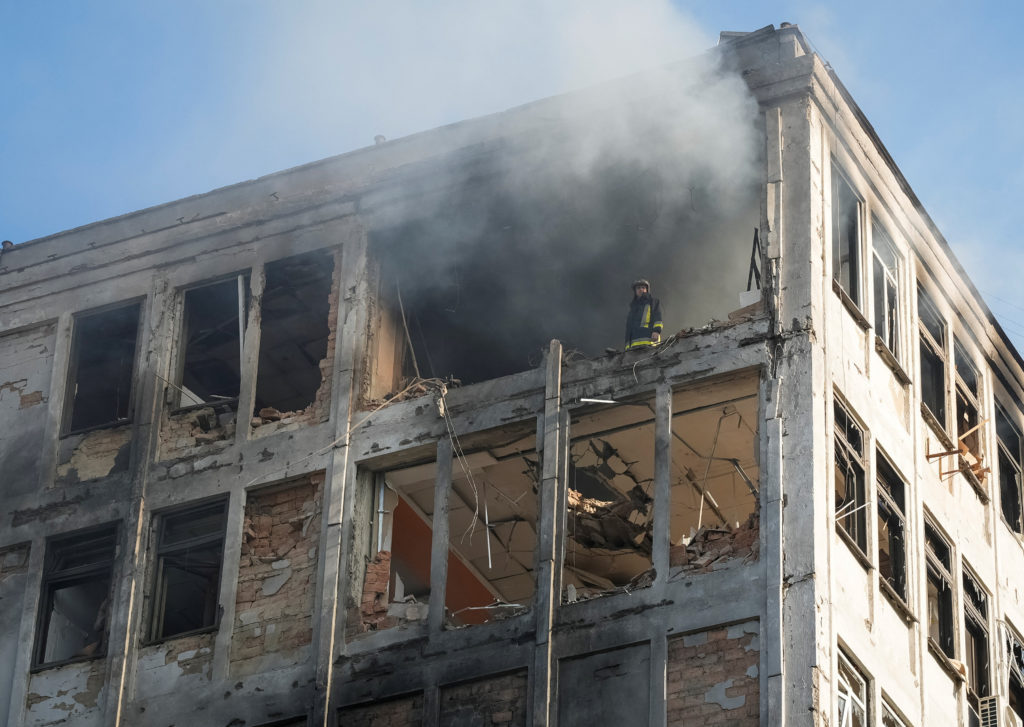
On the ground in Ukraine, the reality of the conflict remains stark. Recent overnight attacks by Russian missiles and drones resulted in at least four deaths and dozens of injuries, including children. Bombardments continued during daylight hours, targeting infrastructure such as main highways during peak traffic times. Local residents expressed frustration not only with the Russian aggression but also with what they perceive as insufficient support from Western allies. One business owner noted that if political will existed, defensive weapons would have been provided earlier to protect critical utilities like power and heating plants.
As winter approaches, concerns about energy security and civilian survival intensify. With freezing temperatures expected within a month, the lack of adequate air defense capabilities poses a severe threat to Ukraine’s infrastructure and population. The diplomatic meetings in Norway represent a critical juncture in determining whether U.S. support will be reinforced or further constrained. The outcome of Witkoff’s upcoming meeting with Putin will likely influence the trajectory of negotiations and the level of military assistance Ukraine receives in the coming months.
The situation highlights the complex interplay between diplomatic maneuvering and battlefield realities. While officials seek to mend ties and clarify positions, the war continues to exact a heavy toll on Ukrainian society. The balance between maintaining alliance cohesion and addressing domestic political pressures in the United States remains delicate. Observers will closely monitor whether the reported progress translates into sustained military support or if further restrictions will be imposed as negotiations with Russia proceed.
Ultimately, the success of these diplomatic efforts depends on aligning the interests of multiple stakeholders. Ukraine seeks reliable defense capabilities and consistent intelligence sharing. The United States aims to manage its involvement while pursuing a negotiated settlement. European partners strive to maintain unity and support for Kyiv without overextending their own resources. The coming days will reveal whether the thaw in relations is genuine or merely a temporary pause in a broader strategic realignment.
Sources behind this briefing
Go to the original reporting
- PBS NewsHour↗Zelenskyy seeks to mend ties with Trump ahead of Witkoff-Putin meeting