The short version
- The partial solar eclipse will reach maximum obscuration in the evening of August 12, with Cornwall and the Isles of Scilly seeing the highest coverage.
- Astronomers emphasize that viewing locations must offer an unobstructed western horizon due to the sun's low position during the event.
- Safety protocols require certified eye protection or indirect viewing methods, as the next total eclipse visible from the UK is not expected until 2090.
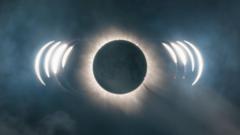
A significant celestial event is approaching for observers in the United Kingdom, with a partial solar eclipse scheduled to occur on August 12. This astronomical phenomenon will represent the most dramatic solar obscuration visible from British soil since August 1999. While the path of totality—the narrow band where the moon completely blocks the sun—will traverse regions including Northern Russia, Greenland, Iceland, Spain, and Northern Portugal, viewers in the UK will still experience substantial coverage.
The intensity of the eclipse varies by location within the country. Residents in Cornwall and the Isles of Scilly are positioned to see approximately 95% of the sun’s disk covered by the moon. Inland areas such as Bristol, Somerset, Gloucestershire, and Wiltshire can expect around 90% obscuration. This degree of coverage is rare for the region, making it a notable occurrence for both amateur astronomers and the general public who have not witnessed such an event in nearly thirty years.
Timing plays a critical role in visibility because the eclipse will take place during the evening hours. According to data from Royal Museums Greenwich, the partial phase begins at 18:17 BST. The maximum point of obscuration is projected for 19:12 BST, with the event concluding at 20:06 BST. Because the sun will be descending toward the horizon during these times, atmospheric conditions and local geography will heavily influence what observers can actually see.
Experts stress that a clear view of the western horizon is essential for optimal viewing. Simon Holbeche, chair of the Bath Astronomers, noted that aside from weather patterns, the primary requirement is an unobstructed line of sight to the west. He suggested that individuals might consider moving to upper floors of west-facing buildings or ascending local hills without tree cover to improve their vantage point. Locations such as Roundhill, Twerton, and Little Solsbury Hill in Bath were cited as potential spots for better visibility.
Various astronomical societies have identified specific viewing sites across the West Country. In Bristol, groups plan to gather at The Downs Sea Walls Viewpoint, Victoria Park, Brandon Hill, and Cabot Tower. Other recommended locations include Cardiff, the Gower Peninsula, Swansea, and Rest Bay Beach in Porthcawl. Further inland, enthusiasts may head to Warminster Town Park, Cley Hill, Avebury Stone Circle, and Barbury Castle. In Gloucestershire, Cleeve Hill, Robinswood Hill, and Chosen Hill are also highlighted as suitable vantage points.
Additional sites have been recommended for those in other parts of the region. Wells Cathedral Green and Beckford Tower in Bath offer opportunities for organized viewing. In Devon and Exmoor, locations such as the Norman Lockyer Observatory, Sidmouth, and The Poltimore Inn in North Molton are expected to host events. Plymouth’s Lowery Cross Car Park, Penzance, and Sennen near Lands End are also listed as key spots. For those in the Isles of Scilly, St Mary's Island, Hugh Town, west-facing beaches, and the Community Observatory at St Martins provide potential viewing areas.
Preparation for the event involves more than just selecting a location. Holbeche advised enthusiasts to scout their chosen spot beforehand using a simple hand gesture to estimate the sun’s position. By extending an arm with the thumb and little finger spread wide, observers can gauge the angle of the sun relative to the horizon at the start and end of the eclipse. This method helps determine if buildings or terrain will obstruct the view during the critical phases of the event.
Safety remains a paramount concern for anyone planning to observe the eclipse directly. The Royal Observatory Greenwich has issued strict guidance, mandating the use of certified eclipse glasses that meet ISO 12312-2 standards. Alternatively, viewers can use solar telescopes available through local astronomical society events or create pinhole projectors to view an indirect image of the sun. Live streaming services offered by the Royal Observatory Greenwich provide a safe remote option for those unable to secure proper equipment or suitable viewing conditions.
The rarity of this event underscores its significance for UK residents. The next total solar eclipse visible from the United Kingdom is not anticipated until September 23, 2090. This long interval highlights the importance of the upcoming August event as a once-in-a-generation opportunity. While a partial eclipse occurred in March 2025 with only 34% coverage in parts of Bristol, the upcoming event will offer a far more profound experience, drawing attention from communities across the West Country and beyond.
As the date approaches, local organizations are coordinating efforts to ensure public safety and enhance the viewing experience. The combination of high obscuration percentages, evening timing, and the historical context of this being the best eclipse in decades creates a unique convergence of factors. Whether through organized gatherings at designated viewpoints or private observation from elevated western-facing locations, the event promises to be a memorable astronomical occurrence for those who prepare adequately.
Sources behind this briefing
Go to the original reporting
- BBC Science & Environment↗Where to see the biggest solar eclipse since 1999

