The short version
- Fire crews responded to roughly double the number of outdoor fires in July compared to the previous year, with many incidents deemed deliberate.
- Ecologists emphasize that while nature can eventually regenerate, the loss of specific food plants and rare species creates long-term gaps in local ecosystems.
- Restoration efforts are shifting toward creating fire-resilient landscapes through wetland restoration and native tree planting to mitigate future risks.
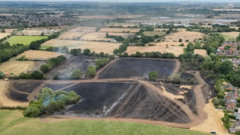
A significant increase in outdoor fires across the United Kingdom has left conservationists grappling with extensive damage to protected habitats, farmland, and nature reserves. Emergency services reported attending approximately six hundred outdoor fires in Staffordshire alone during July, a figure that represents roughly double the volume recorded during the same month last year. Authorities have determined that at least one major blaze, which originated on land near Fradley, was started deliberately. This surge in ignitions has forced land managers to confront the difficult reality of restoring ecosystems that were carefully cultivated over many years.
The ecological toll is immediate and severe. When flames consume grasses, wildflowers, and trees, they eliminate the foundational food sources for invertebrates such as bees and butterflies. This loss creates a cascading effect up the food chain, depriving birds and mammals of essential nutrition. At Portway Hill in the West Midlands, firefighters battled a blaze that destroyed a meadow home to scarce flora including pyramidal and bee orchids. The site also supported a rare colony of marbled white butterflies, which depended on common knapweed and red fescue for survival. Trust officials indicated that restoring these specific plant communities will require years of dedicated effort.
The scale of destruction extends beyond local reserves to nationally significant landscapes. In Suffolk, a fire consumed approximately three hundred seventy-one acres of lowland heath at Dunwich Heath, an area described by the National Trust as suffering devastating losses. Similarly, in Scotland, a wildfire within Cairngorms National Park burned roughly ten square miles of moorland and forestry. This blaze damaged the Loch Garten reserve, which hosts thousands of species, resulting in the death of various insects, reptiles, trees, lichens, and mosses. The proximity of the fire to historic structures like Ryvoan Bothy highlighted the vulnerability of these remote areas.
Conservation experts caution that recovery is not a rapid process. Jeff Sim, head of nature reserves at Staffordshire Wildlife Trust, noted that each new fire threatens to erase decades of careful restoration work. He emphasized that even with intensive intervention, land can take decades to fully recover from such thermal damage. The destruction of green spaces in an instant stands in stark contrast to the slow, methodical pace required to rebuild biodiversity. This disparity between the speed of destruction and the slowness of repair is a central concern for environmental managers across the region.
Despite the bleak outlook, some evidence suggests that natural systems possess inherent resilience if given sufficient time and protection. At Wild Ken Hill in Norfolk, a project devastated by fire in 2022 has shown signs of regeneration. Founder Dominic Buscall observed that vegetation returned quickly and wildlife steadily recolonized the scorched areas. This experience offers a counter-narrative to pure loss, suggesting that with opportunity, ecosystems can be remarkably robust. However, this resilience is not automatic; it requires active management and the preservation of surviving pockets of life.
Strategies for future mitigation are evolving in response to these events. Conservationists are increasingly focusing on protecting unburnt habitats, which serve as refuges for surviving animals and seeds. Dr. Kate Ashbrook, a conservation ecologist at the University of Worcester, stressed that safeguarding these areas is critical for restoring the broader landscape. Additionally, long-term planning involves altering the physical environment to reduce flammability. Planting native broadleaf trees can create cooler, shadier woodlands that are less prone to ignition. Restoring rivers and wetlands helps retain moisture in the soil, keeping surrounding land damp and less susceptible to rapid fire spread.
The practical implications of these fires extend beyond wildlife conservation to agricultural and public spaces. Farmers have reported ruined fields and crops, while parks and beauty spots have seen deliberate fires grow out of control. The Staffordshire Fire and Rescue Service attended multiple incidents at Cannock Chase, a protected area known for its lowland heath and forest. These events resulted in the death of local wildlife, including adders and toads. The frequency of such incidents underscores the need for both immediate emergency response and long-term landscape management strategies.
Looking ahead, the focus remains on balancing restoration with prevention. While seeding meadows and planting trees are viable methods for habitat recovery, they require careful management and significant time investment. The recent fires highlight the fragility of restored ecosystems in a hotter, drier climate. As land managers work to rebuild what was lost, the emphasis is shifting toward creating landscapes that are not only biodiverse but also inherently more resistant to ignition. This dual approach aims to protect existing natural assets while preparing for the environmental challenges of the coming years.
Sources behind this briefing
Go to the original reporting
- BBC Science & Environment↗How can landscape recover after devastating fires?

