The short version
- The UK government has formally attributed responsibility for the RAF Fairford incident to Iran’s Islamic Revolutionary Guard Corps, signaling a hardening stance on Tehran’s covert operations in Europe.
- Despite the high-level political attribution, police investigations have not resulted in criminal charges against the five men detained at the scene, leaving the specific mechanics of the threat unresolved.
- The episode has prompted immediate security adjustments by US forces and is part of a broader pattern of alleged Iranian-linked activities targeting Western interests across the continent.
The United Kingdom government has moved to formally attribute responsibility for the recent security breach at RAF Fairford to Iran’s Islamic Revolutionary Guard Corps, marking a significant escalation in diplomatic rhetoric. Prime Minister Andy Burnham addressed Parliament on Monday, stating that it is highly likely the incident was coordinated within Iran and almost certainly directed by the IRGC. This represents the firmest public assessment of culpability issued by British officials since the event occurred late last month, shifting from earlier language that cited only strong indications of Iranian involvement.
The incident in question unfolded shortly after midnight on September 27, when five men from London arrived at Whelford, a village adjacent to the airbase, traveling in three white vans. RAF Fairford serves as a critical hub for United States Air Force operations in Europe. Upon arrival, the individuals were detained by police. A day later, they were released on bail after investigators found no bombs or explosives in their possession. The absence of physical weaponry has complicated the legal response, and despite more than two weeks of active investigation, no criminal charges have been filed against those initially detained.
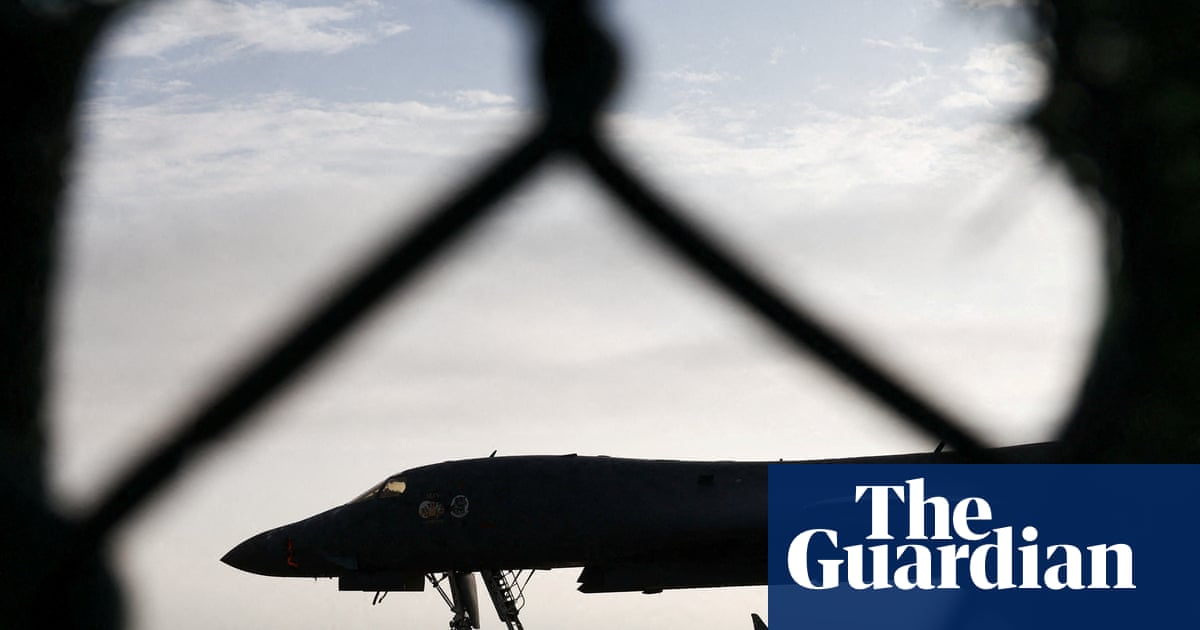
Although the immediate threat appears to have been neutralized without violence, the strategic impact was substantial. One week after the incident, twelve B-1 bombers were withdrawn from the base. Reports indicate that US military commanders expressed concern regarding the potential for drone attacks, particularly given the base’s role in supporting operations against Iran during the Middle East conflict earlier in the year. The withdrawal underscores the vulnerability of forward-deployed assets and the psychological weight of even ambiguous threats.
Burnham’s parliamentary remarks were accompanied by a joint statement from the UK, the US, and other European allies. The Foreign Office released this document to emphasize that the event demonstrates the IRGC’s continued willingness to project hostile activity beyond its borders through covert networks and proxy actors. The government announced that further sanctions would be imposed against Tehran and the IRGC in response. This coordinated diplomatic effort aims to isolate Iran financially and politically, framing the Fairford incident not as an isolated anomaly but as part of a sustained campaign.
Despite the clarity of the political attribution, significant uncertainty remains regarding what actually transpired at the airbase. British intelligence sources have repeatedly maintained that Iran lacks the technical capability to launch a sophisticated drone attack against such a target from within Europe. Some security experts have speculated that the incident may have been a feint, designed primarily to demonstrate that Iran could theoretically reach and disrupt relatively open sites in Western Europe. The lack of explosives suggests the goal may have been intimidation rather than destruction.
The Fairford episode is occurring against a backdrop of heightened tensions involving Iranian-linked groups across the continent. The joint statement referenced a recent campaign of attacks targeting Jewish communities, Iranian journalists, and US interests. These activities have been claimed by Harakat Ashab al-Yamin al-Islamiya, a group accused of operating under Iranian direction. While the United States has detained and indicted Mohammad Baqer Saad Dawood al-Saadi, whom it accuses of leading HAYI, evidence suggests that attacks linked to Iran have continued unabated.
In a related development highlighting the ongoing security concerns, two Iranian nationals were charged with terror offenses last week. Salam Ahmadyan from Liverpool and Rahman Salehi from Salford are accused of attempting to target the Jewish community in Manchester using a homemade chlorine powder bomb. Prosecutors allege that the pair maintained contact with a third party believed to be located in Iran, who provided instructions on preparing explosive devices. A trial at the Old Bailey has been scheduled for these defendants.
The convergence of these events illustrates a complex security landscape where political attribution and legal prosecution operate on different timelines. While the UK government is confident in its assessment of Iranian state sponsorship, the judicial process requires concrete evidence of criminal intent and action. The release of the initial five suspects without charge reflects this gap. As new sanctions take effect and US forces adjust their posture, the incident at RAF Fairford will likely serve as a focal point for debates on European security architecture and the efficacy of deterrence against non-state actors backed by foreign powers.
Looking ahead, the focus shifts to the implementation of the announced sanctions and their potential impact on Iran’s ability to fund covert operations. The withdrawal of US bombers signals a temporary recalibration of military presence in Europe, but long-term strategies remain under review. For British authorities, the challenge lies in balancing robust counter-terrorism measures with civil liberties, particularly as investigations into alleged proxy networks continue. The coming months will test whether diplomatic pressure and legal actions can effectively disrupt the covert channels identified in the joint statement.
The situation remains fluid, with no single narrative fully capturing the complexity of the threat environment. While the UK has drawn a line connecting the Fairford incident to Iranian state actors, the operational details remain opaque. The absence of charges against the initial suspects leaves questions about the depth of penetration and the nature of the network involved. As trials proceed in Manchester and diplomatic efforts intensify, the full scope of this campaign may become clearer, but for now, uncertainty persists alongside heightened vigilance.
Sources behind this briefing
Go to the original reporting
- The Guardian World↗Iran’s Revolutionary Guards ‘almost certainly’ behind RAF Fairford threats, says Burnham