The short version
- The United Kingdom is developing a mission to remove two inactive satellites from orbit using a spacecraft equipped with robotic grappling mechanisms.
- The project, led by ClearSpace U.K., is scheduled for launch in 2029 and aims to demonstrate the feasibility of multi-target debris removal.
- Orbital clutter has increased dramatically, with nearly 17,000 active satellites currently circling Earth, raising concerns about collision risks.
The United Kingdom is advancing a pioneering effort to address the escalating problem of space debris by developing a mission designed to capture and remove defunct satellites from Earth's orbit. This initiative represents a shift toward active management of the orbital environment, aiming to mitigate the risks posed by human-made junk that clutters the skies above the planet. The project seeks to establish a precedent for long-term strategies in maintaining the safety and sustainability of space operations.
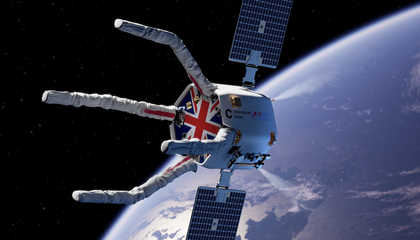
Central to this effort is the Active Debris Removal mission, which plans to deploy a refuelable spacecraft equipped with large robotic claws. These mechanical appendages are engineered to grasp inactive satellites and guide them into Earth's atmosphere, where intense friction and pressure will cause them to burn up completely. The spacecraft is designed to be highly maneuverable, allowing it to match the movement of tumbling or drifting objects before securing a hold.
ClearSpace U.K., a division of an in-orbit servicing company, is responsible for building the vehicle. Robert Atchison, the managing director of the U.K. branch, noted that the claw design provides versatility in targeting spacecraft of various shapes and sizes. The ability to adapt to different movements ensures that the mission can effectively grapple with objects that are not stationary or predictable in their trajectory.
The mission is scheduled to launch from Scotland in 2029, with completion expected by 2032. It carries an estimated budget of $80 million and aims to prove that a single spacecraft can successfully dispose of more than one dead satellite. Demonstrating this capability could make future debris removal missions more practical and cost-effective, potentially influencing how other nations and private entities approach orbital cleanup.
U.K. Space Minister Liz Lloyd emphasized the importance of protecting satellites that support modern life, including communications, weather forecasting, and national security. By backing this world-first mission, the government aims to safeguard these critical assets from the growing threat of space junk. The initiative underscores a recognition that the current passive approach to debris management is insufficient for the increasing density of objects in orbit.
The urgency of the situation is highlighted by recent data on satellite proliferation. While approximately 1,000 working satellites orbited Earth in 2019, the number has surged to nearly 17,000 active units as of late October. A significant portion of these belongs to Starlink, a satellite internet service operated by SpaceX, which accounts for about 66 percent of active satellites. This rapid expansion has intensified concerns about congestion and collision risks.
Beyond active satellites, there are almost 32,000 trackable objects larger than four inches in orbit, with roughly half classified as space debris. This includes spent rocket stages, defunct satellites, and smaller fragments like paint chips. Some of this material dates back to the Cold War era, having remained in orbit for decades. Objects that do not re-enter the atmosphere promptly pose a collision threat to operational spacecraft and stations such as the International Space Station.
A single collision can generate additional debris, potentially triggering a chain reaction known as the Kessler syndrome. This scenario involves cascading impacts that could render certain orbits unusable. While the U.K. mission targets specific large objects, it does not address all aspects of space debris management. For instance, some materials survive atmospheric re-entry, as seen with rocket stages that have landed on Earth in recent years.
Experts warn that uncontrolled re-entries pose risks to people on the ground. In 2024, around 124 rocket stages re-entered the atmosphere without guidance. If this trend continues over the next decade, the probability of a fatality caused by falling rocket debris could reach 33 percent. The U.K. mission is part of a broader effort to reduce these dangers and ensure the long-term viability of space exploration.
The public has been invited to participate in naming the mission through a competition organized by the U.K. Space Agency. Suggestions are accepted until December 10, 2026. This engagement reflects an attempt to raise awareness about the issue of space debris and involve citizens in the solution. As the launch date approaches, the success of this mission will be closely watched by the global space community.
Sources behind this briefing
Go to the original reporting
- Smithsonian Magazine↗The United Kingdom Is Launching Giant Claws Into Orbit to Clean Up Space Junk. You Can Help Name the First-of-Its-Kind Mission