The short version
- Türkiye officially signed the Artemis Accords during a ceremony at NASA headquarters in Washington, becoming the 71st nation to join the coalition.
- The agreement aligns with Türkiye’s growing space capabilities, including recent astronaut missions and an upcoming independent lunar probe launch.
- NASA Administrator Jared Isaacman emphasized that signatories are invited to contribute hardware and technology to future Artemis missions aimed at establishing a permanent lunar presence.
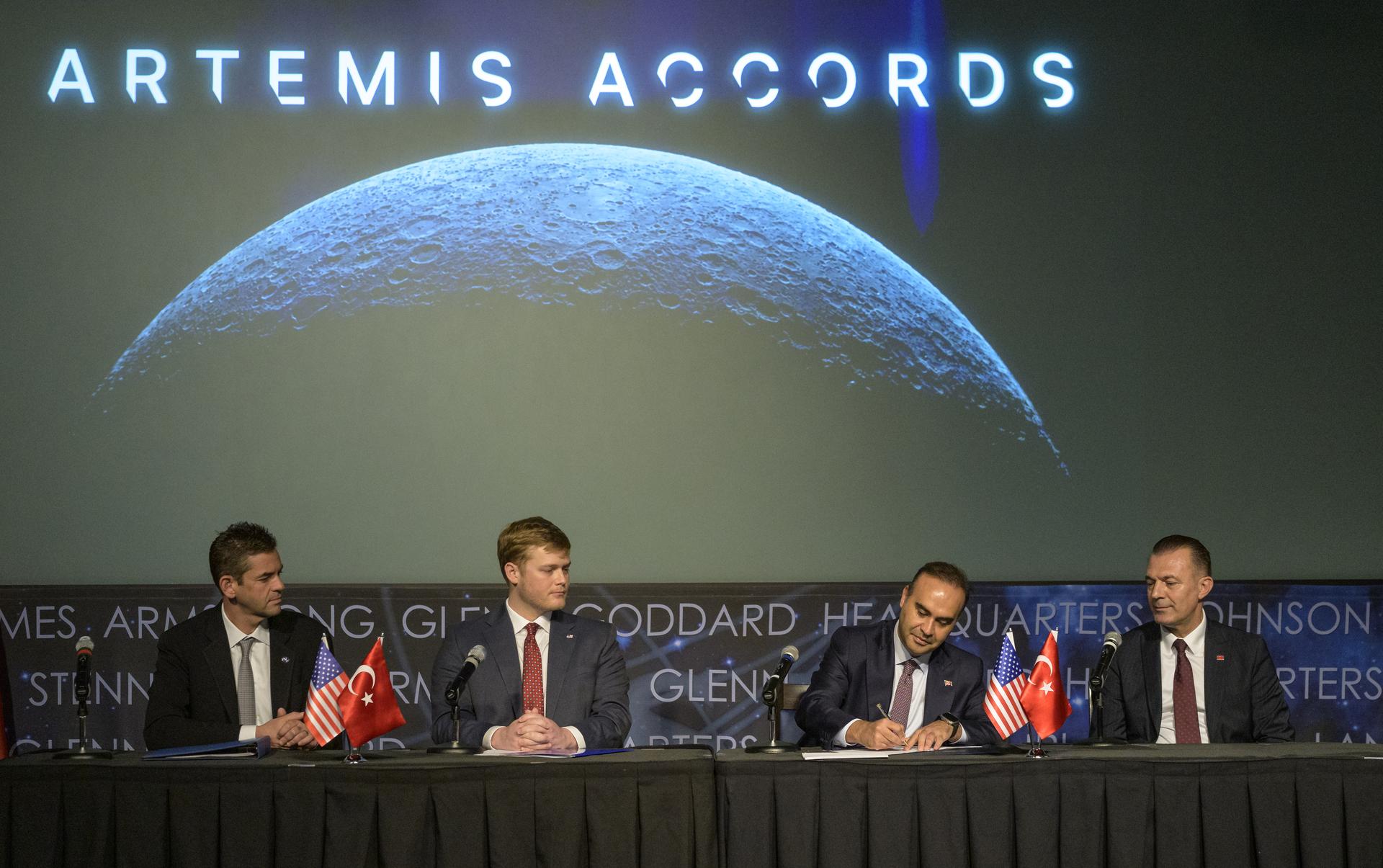
The Republic of Türkiye has officially joined the Artemis Accords, marking a significant expansion in the international coalition dedicated to peaceful and transparent space exploration. The signing ceremony took place on Monday at NASA headquarters in Washington, where Turkish Minister of Industry and Technology Mehmet Fatih Kacır affixed his signature to the agreement. This move brings the total number of participating nations to 71, reinforcing the framework’s role as a central pillar for coordinating global lunar activities.
NASA Administrator Jared Isaacman presided over the event, welcoming Türkiye as the newest member of the group. He highlighted that the agency does not pursue its ambitious goals in isolation, noting that the Artemis Accords provide a practical foundation for international cooperation. Under the current administration’s directive to accelerate the return to the lunar surface and establish an enduring presence, NASA is actively seeking contributions from signatory nations. These contributions can range from major hardware components and scientific payloads to technology demonstrations and CubeSats intended for future Artemis missions.
The decision to join the accords coincides with a period of heightened activity in Türkiye’s domestic space program. The nation has recently demonstrated its commitment to human spaceflight through two distinct missions in 2024. Alper Gezervaci, the country’s first astronaut, traveled to the International Space Station aboard Axiom Mission 3, where he conducted scientific research alongside NASA crew members. Later that same year, Tuva Atasever flew on a Virgin Galactic suborbital mission, focusing on experiments and physiology research. These achievements underscore Türkiye’s growing technical capacity and interest in participating in broader space exploration efforts.
Beyond human spaceflight, Türkiye is preparing to launch its first lunar mission, designated AYAP-1. This upcoming endeavor places the country among a small but expanding group of nations capable of building and launching their own satellites to the Moon. The Artemis Accords, established in 2020 by NASA, the U.S. State Department, and seven founding nations, were designed to address the increasing interest in lunar activities from both government entities and private companies. The principles outlined in the agreement aim to enhance safety and coordination among nations exploring the Moon, Mars, and other celestial bodies.
The signing ceremony was attended by key figures from both the Turkish and U.S. space communities, including Yusuf Kıraç, President of the Turkish Space Agency, and Connor Tomlinson, U.S. Deputy Assistant Secretary of State for Space and Environment. Their presence signaled a strong diplomatic alignment between the two nations regarding space policy. The Artemis Accords serve as a set of practical guidelines that commit signatories to peaceful exploration, transparency, and the sharing of scientific data. By adhering to these principles, participating countries help shape what NASA describes as a new golden age of space innovation.
Türkiye’s entry into the coalition also arrives on the heels of its preparation to host the International Astronautical Congress in Antalya this October. Dozens of existing Artemis Accords signatories are expected to attend the conference, providing a platform for discussions on the future of peaceful and transparent space exploration. The event offers an opportunity for Türkiye to engage directly with other member nations, potentially fostering further collaboration on upcoming missions and technological developments.
The broader context of the Artemis program involves establishing a sustainable human presence on the Moon as a stepping stone for eventual manned exploration of Mars. NASA has invited every signatory to take part in this endeavor, creating opportunities for nations to contribute specific capabilities to future missions. This collaborative approach allows countries like Türkiye to integrate their growing space infrastructure into a larger international framework, ensuring that their contributions are aligned with shared safety and operational standards.
As the coalition continues to grow, the Artemis Accords remain a critical tool for managing the complexities of modern space exploration. The agreement helps mitigate potential conflicts by establishing clear norms for behavior in space, including the designation of safety zones around lunar landing sites. For Türkiye, joining this group represents not only a diplomatic milestone but also a strategic step toward deeper involvement in the global space economy and scientific community.
The integration of new members like Türkiye reflects the evolving nature of space exploration, which is increasingly characterized by international partnerships rather than unilateral efforts. By committing to the principles of the Artemis Accords, Türkiye positions itself as a responsible actor in the global space arena. This alignment supports its national goals of advancing technological capabilities while contributing to the collective knowledge and safety of space operations.
Looking ahead, the participation of 71 nations in the Artemis Accords suggests a robust framework for coordinating future lunar activities. As NASA moves forward with its plans to establish a Moon Base, the contributions from signatory countries will play a vital role in realizing these objectives. The recent signing by Türkiye adds another layer of diversity and capability to the coalition, strengthening the international effort to explore and utilize space resources for peaceful purposes.
Sources behind this briefing
Go to the original reporting
- NASA↗NASA Welcomes Türkiye as Newest Artemis Accords Signatory

