The short version
- President Trump signed an executive order requiring all US government policy documents to use 'Super Intelligence' instead of 'artificial intelligence'.
- The administration argues the term 'artificial' is misleading and akin to 'fake news,' while emphasizing the technology's power and potential for good.
- Tech leaders including Elon Musk and Jensen Huang attended the announcement, which also highlighted plans for self-regulation and community support for data centers.
The United States executive branch has officially ceased acknowledging the existence of 'artificial intelligence' in its formal communications. Under a new executive order signed by President Donald Trump, all official policy websites, documents, and press releases are now required to refer exclusively to 'Super Intelligence.' The directive represents a significant semantic shift in federal terminology, aiming to replace the broader statutory definition of AI with a term that the administration believes more accurately reflects the technology's capabilities.
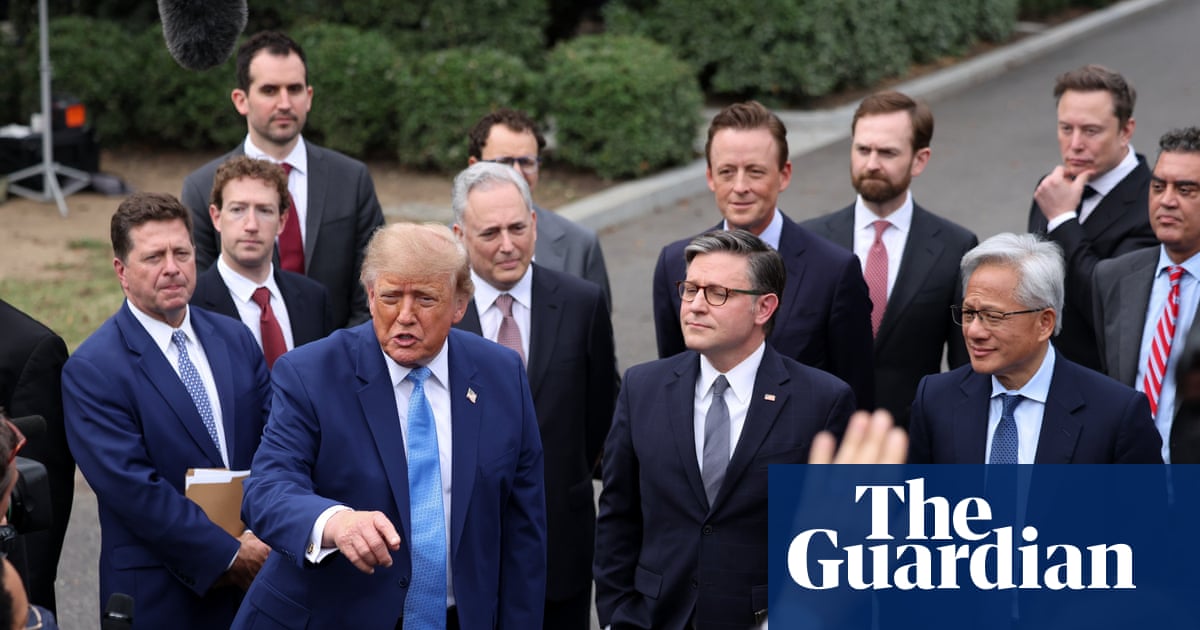
Trump announced the change during an event launching America.gov on Tuesday. He described 'super' as 'the best word of all' and 'the simplest,' arguing that the label 'artificial' is inappropriate because the technology is 'very powerful' and 'very brilliant.' The President compared the term 'artificial' to 'fake news,' suggesting it carries negative connotations that do not align with his view of the technology's potential. He stated that the rebranding is intended to ensure the technology is put to good use while stopping bad applications.
The President noted that Chinese President Xi Jinping, who visited the White House the previous week, also appreciates the term 'Super Intelligence.' Trump first introduced the concept during a speech at the United Nations General Assembly last week. At that time, he framed the rebranding as an effort to quell public fears regarding the rapid advancement of AI and the associated safety risks. By changing the terminology, the administration seeks to alter the narrative surrounding the technology's development and deployment.
While executive agencies are not required to retroactively change past regulations or documents, the new order establishes a clear expectation for future communications. US officials will be expected to avoid using the terms 'artificial intelligence' or 'AI' in relevant settings. This move distinguishes the administration's approach from industry standards, where 'superintelligence' typically refers to particularly powerful versions of AI rather than the entire field. The executive order effectively elevates this specific industry term to a replacement for the general statutory definition.
The signing ceremony took place after a luncheon hosted by Trump at the White House, attended by tech CEOs and government officials. Flanked by Nvidia CEO Jensen Huang and Tesla and SpaceX CEO Elon Musk, among others, Trump described the meeting as 'very productive' and 'extremely friendly.' The presence of these key industry figures underscores the administration's close ties with major technology companies during this policy shift.
During his remarks, Trump emphasized a belief in 'tremendous self-regulation' within the tech sector. He suggested that existing oversight mechanisms, including the Department of Justice and the FBI, provide sufficient automatic regulation. This stance aligns with a broader deregulatory approach favored by the administration, which views industry-led standards as preferable to heavy-handed government intervention.
The executive order also addressed local concerns regarding the construction of massive data centers required to run these services. Trump stated that tech firms will 'work to make the community happy' by providing necessary resources and economic support. He expressed confidence that data centers would become 'very popular,' suggesting that the rebranding effort is part of a larger strategy to facilitate infrastructure growth while managing public perception.
The shift in terminology marks a distinct departure from previous federal approaches to AI governance. By rejecting the term 'artificial,' the administration aims to reshape how the technology is perceived by the public and policymakers alike. Whether this semantic change will influence actual regulatory outcomes or public sentiment remains to be seen, but it signals a strong preference for framing AI as an empowering force rather than a synthetic imitation.
Critics and observers may note that 'superintelligence' already carries specific meanings within technical and academic circles, often associated with hypothetical systems surpassing human cognitive abilities. The administration's broad application of the term could create confusion or dilute its technical precision. However, the executive order makes clear that the priority is political messaging and regulatory framing over technical accuracy.
As federal agencies begin to implement the new terminology, the impact on ongoing policy discussions will likely become apparent. The move may influence how safety risks are communicated and how public engagement with AI issues is structured. For now, the directive stands as a bold attempt to redefine the conversation around one of the most transformative technologies of the modern era.
Sources behind this briefing
Go to the original reporting
- The Verge↗Trump orders US government to call AI ‘Super Intelligence’
- The Independent↗Trump wants to redefine AI, but his ‘superintelligence’ already exists — and it has a sinister meaning
- economy.ac↗Trump Champions “Superintelligence,” Redefining AI’s Value Through Its Potential to Expand Human Capabilities