The short version
- President Trump announced via social media that restoration work on the East Potomac golf course will commence on November 15, ignoring a federal judge’s order to pause activities.
- Judge Ana Reyes has halted tree removals and ordered the government to clarify its legal stance, while the administration seeks to transfer the case due to alleged judicial bias.
- Critics argue the renovation threatens the affordability and historic character of the public park, leading to multiple lawsuits alleging violations of environmental and preservation laws.
President Donald Trump announced on Sunday that restoration work on a historic public golf course in Washington, D.C., will begin on November 15, directly contradicting a recent federal court order halting construction activities. The declaration was made through a post on Truth Social, where the president stated the facility would reopen in approximately fifteen months and be transformed into one of the most spectacular courses globally. This announcement comes amid an ongoing legal battle over the renovation plans for the East Potomac Park golf course, which has been the subject of multiple emergency hearings this year.
U.S. District Judge Ana Reyes had previously ruled that the federal government must provide notice before any substantive construction could proceed. Last week, she issued an order stopping the removal of trees at the site, describing the actions as inexcusable. The judge took immediate notice of Trump’s online message and ordered the government to notify her by 8 p.m. Eastern Time on Sunday whether its position had changed from a Friday court filing. That filing claimed the project remained at a preliminary conceptual stage with no final agency action taken.
The White House did not immediately respond to requests for comment regarding whether the president’s announcement conflicts with Judge Reyes’s directives. The discrepancy between the administration’s legal filings and the president’s public statements has intensified scrutiny of the project’s procedural compliance. Legal experts note that such contradictions can complicate judicial proceedings, particularly when a judge is already monitoring the government’s adherence to court orders.
The East Potomac Park golf course, which is 106 years old, has long been accessible to Washingtonians across various income levels. Opponents of the renovation argue that transforming it into a high-end facility will alter the character of the space and reduce its affordability for the general public. Democracy Forward, representing plaintiffs challenging the plans, emphasized that the course is part of a national park and recreation facility intended for everyone. Skye Perryman, the group’s president and CEO, stated that their litigation aims to protect this community jewel from unlawful and harmful intrusion.
The DC Preservation League filed a lawsuit in February seeking to halt the administration’s takeover of the golf course. The suit alleged that the renovation would violate environmental laws and irreparably destroy a priceless piece of American history. These concerns have been central to the legal challenges, with critics pointing to the potential loss of historic features and ecological damage caused by extensive construction and tree removal.
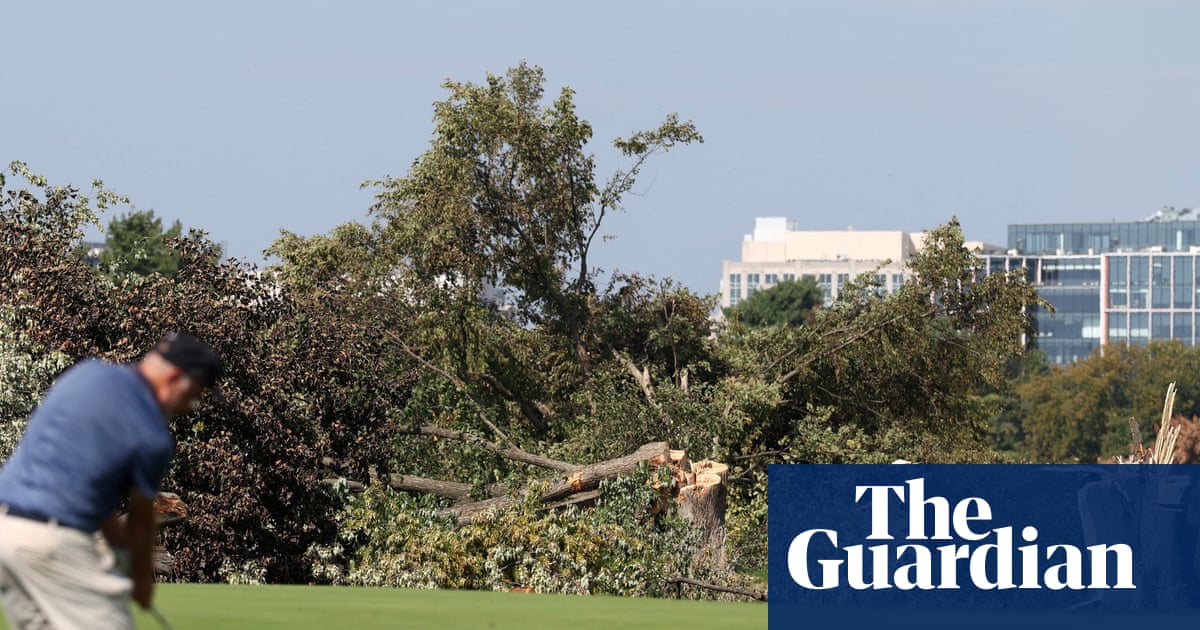
In an October 9 court filing, the Trump administration asked Judge Reyes to dismiss the litigation, arguing that it was premature because the proposed project remained at an early and conceptual stage. However, the following day, the government removed approximately 500 trees from the site. Officials claimed this action would improve safety at the park and restore its original design, noting it was part of a 2019 plan that predates Trump’s ambitions for the course. Judge Reyes ordered an immediate halt to these removals.
Judge Reyes has also ordered key members of the Republican administration to testify regarding the recent tree-cutting and whether those actions are tied to the president’s plans for the historical public links. This move underscores the judge’s concern about the disconnect between official statements and on-the-ground activities. The testimony is expected to provide clarity on the extent of pre-announced work and its alignment with legal requirements.
On Friday, the government filed a motion to disqualify Judge Reyes and move the case to another district judge. According to court records, the administration argued that her actions had shown deep-seated and unequivocal antipathy and open hostility toward the Trump administration. The plaintiffs in the case oppose this motion, maintaining that the current judge is capable of impartial adjudication. Judge Reyes was appointed to the federal bench by President Joe Biden in 2023.
This renovation is part of a broader series of projects Trump has pursued to reshape the White House and other Washington landmarks. Many of these initiatives, including plans for a large ballroom at the White House, the installation of his name on the Kennedy Center, and the construction of a massive arch, have faced legal challenges. The pattern of litigation suggests a persistent conflict between the administration’s development goals and regulatory or preservationist constraints.
As the November 15 start date approaches, the outcome of these legal maneuvers will determine whether construction proceeds as announced or remains paused pending further judicial review. The situation highlights the tension between executive ambitions for historic sites and the legal frameworks designed to protect them. Stakeholders await clarification on how the administration intends to reconcile its public commitments with court-ordered restrictions.
Sources behind this briefing
Go to the original reporting
- The Guardian World↗Trump says DC golf course ‘restoration’ to start despite judge’s order to pause plans