The short version
- A total solar eclipse occurred on August 12, 2026, affecting parts of northern Russia, Greenland, Iceland, Spain, and Portugal.
- Millions of people experienced totality or partial phases, with significant public engagement and media coverage across Europe.
- The event provided valuable opportunities for scientific observation and public education about solar phenomena.
On August 12, 2026, a total solar eclipse swept across parts of Europe, casting darkness over regions including northern Russia, Greenland, Iceland, Spain, and a small portion of Portugal. This celestial event marked the first time since April 2024 that totality bathed a significant portion of the Earth in ethereal dusk. More than 15 million people lived within the path of totality, while nearly one billion residents across Europe, Africa, Asia, and North America witnessed at least a partial eclipse.
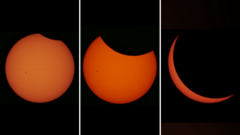
The eclipse was described as the best solar event visible from the UK since 1999. In Suffolk, builder Simon Wallace captured photographs and livestreamed the event to over 1,500 viewers on YouTube. Wallace, who built an observatory in his backyard, noted the clarity of the sky and the special nature of the eclipse, which covered more than 90% of the sun at its peak shortly after 19:00 BST. His experience highlights the growing accessibility of astrophotography and public engagement with astronomical events.
Scientifically, total solar eclipses offer a unique opportunity to observe the sun's corona, its wispy outer atmosphere usually obscured by the star's brightness. NASA describes this alignment as a 'cosmic coincidence,' where the moon's distance and size relative to the sun allow it to perfectly cover the solar disk. Just before totality, phenomena such as Baily’s beads and the diamond ring effect occur, providing dramatic visual cues for observers.
Public reactions varied across the affected regions. In Iceland, birds were reported screaming as if at dusk, while crowds in Greenland's fjords fell into stunned silence. In Mallorca, viewers applauded as boats honked their horns from offshore. These responses underscore the profound impact of eclipses on human behavior and perception, transforming daytime into a twilight-like atmosphere that evokes awe and wonder.
The event drew millions of travelers to optimal viewing locations, boosting local economies and fostering community engagement. Media coverage was extensive, with outlets like BBC Science & Environment and Smithsonian Magazine highlighting both the scientific significance and the human element of the eclipse. Photos shared online showcased the sun's beauty and the collective experience of skywatching.
Preparation for the eclipse involved significant logistical efforts. Organizations provided guidance on safe viewing practices, emphasizing the importance of using proper eye protection. Educational initiatives accompanied the event, aiming to increase public understanding of solar phenomena and astronomy. This educational aspect is crucial for fostering long-term interest in science among diverse audiences.
The eclipse also served as a reminder of the rarity of such events. Total solar eclipses are infrequent in any given location, making this occurrence particularly special for residents of northern Europe. The combination of scientific value and public spectacle made it a landmark event in 2026, bridging the gap between professional astronomy and amateur observation.
As the moon moved across the sky, temperatures dropped and shadows shifted, creating an otherworldly atmosphere. These physical changes were accompanied by emotional responses from viewers, many of whom described the experience as life-changing. The shared nature of the event fostered a sense of global connection, as people around the world watched the same celestial dance.
Looking ahead, the data collected during the eclipse will contribute to ongoing research on solar activity and its effects on Earth's atmosphere. Scientists will analyze observations from various instruments and citizen scientists to refine models of solar behavior. The event also sets the stage for future eclipses, encouraging continued public interest and scientific inquiry into our solar system.
Sources behind this briefing
Go to the original reporting
- BBC Science & Environment↗Builder with own observatory captures solar eclipse
- Smithsonian Magazine↗See Magnificent Photos of the Total Solar Eclipse Over Europe That Showcase the Sun's Beauty and the Wonder of Skywatching
- France 24↗Parts of Spain plunged into darkness as eclipse moves across Europe
- San Diego Union-Tribune↗Eclipse excitement sweeps Spain as millions prepare to watch the skies

