The short version
- A tornado damaged approximately three hundred homes in Pomas, injuring forty-one people and requiring hospitalization for fifteen individuals.
- Extreme weather conditions have triggered an orange alert, resulting in power failures for nearly three thousand residences across ten villages.
- The Vuelta a Espana cycling race was halted due to hail, while airports in several major cities experienced significant flight delays and cancellations.
A powerful tornado swept through the village of Pomas in southwestern France on Monday, causing extensive structural damage and injuring dozens of residents. Local emergency services reported that forty-one people were hurt in the incident, with fifteen requiring transport to medical facilities for treatment. Among those hospitalized was a pregnant woman who sustained injuries when her home collapsed around her. The severity of the event prompted the deployment of more than one hundred twenty emergency workers to the scene to assist with rescue operations and assess the extent of the destruction.
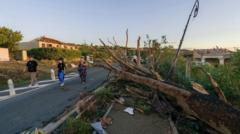
The storm produced winds reaching speeds of 117 kilometers per hour, which were strong enough to rip roofs from houses and uproot trees throughout the area. Visual evidence from the region shows a swirling vortex looming over the landscape, while images from Pomas reveal scattered debris, damaged vehicles, and rubble from destroyed structures. Authorities estimate that approximately three hundred homes sustained damage during the outbreak. The village of Pomas appears to have been the most severely affected location within the broader storm system.
Beyond the immediate impact on Pomas, the extreme weather has disrupted infrastructure across a wider area in the Aude department. French officials issued an orange alert for thunderstorms covering large portions of the southwest, a region already grappling with the aftermath of recent severe weather events. The electrical grid has been significantly impacted, leaving roughly 2,800 homes without power across ten different villages. These outages have compounded difficulties for residents who are still recovering from earlier disruptions caused by heatwaves and wildfires.
The volatile atmospheric conditions also forced the cancellation of the third stage of the Vuelta a Espana cycling race. Organizers made the decision after a hailstorm in the French Pyrenees compelled riders to seek shelter, prioritizing safety over competition. This interruption highlights the broader challenges posed by the unstable weather patterns affecting southern Europe. The race cancellation underscores how extreme meteorological events can disrupt major international sporting events and local economic activities alike.
Transportation networks across France have faced significant strain due to the storm system. Transport Minister Philippe Tabarot confirmed that flight delays and cancellations occurred at airports in Bordeaux, Marseille, Nice, Toulouse, and locations north of Paris. These disruptions affect both domestic and international travel, adding to the logistical challenges posed by the weather emergency. The widespread nature of the transport issues suggests that the storm system is larger than the localized tornado event in Pomas.
This incident occurs against a backdrop of an exceptionally harsh summer for Europe, characterized by unprecedented heatwaves and extensive wildfires. France has recorded 2,025 excess deaths during the peak of the recent heatwave, according to official data. The southwestern region has been particularly hard hit, with one of the largest forest fires since World War Two burning through an area of 42,000 hectares. Satellite imagery has captured the scorched landscapes, illustrating the scale of environmental damage sustained across the continent.
While tornadoes are not uncommon in France, with the national weather service Météo-France reporting several dozen occurrences annually, the intensity and timing of this event raise concerns about increasing climate volatility. The combination of high winds, hail, and severe thunderstorms represents a multifaceted threat to public safety and infrastructure. Emergency responders continue to work through the aftermath, focusing on restoring power and repairing damaged properties.
Authorities are monitoring the situation closely as the orange alert remains in effect for parts of the southwest. Residents in affected areas are advised to stay indoors and avoid unnecessary travel until conditions improve. The incident serves as a stark reminder of the dangers posed by extreme weather events, particularly in regions already stressed by prolonged heat and fire risks. Further updates on recovery efforts and long-term impacts are expected as assessments continue.
The convergence of these weather phenomena highlights the complex challenges facing European nations in adapting to changing climate patterns. From the immediate human toll in Pomas to the broader economic and logistical disruptions, the event underscores the need for robust emergency preparedness. As investigations into the storm's path and intensity proceed, officials will likely review response protocols to better handle similar future incidents.
In the coming days, attention will shift toward rebuilding efforts and supporting those displaced or injured by the tornado. The financial cost of repairing hundreds of homes and restoring electrical infrastructure is expected to be significant. Meanwhile, meteorologists will continue to track atmospheric conditions to predict any further severe weather developments in the region. The resilience of local communities will be tested as they navigate the recovery process amidst ongoing environmental stresses.
Sources behind this briefing
Go to the original reporting
- BBC Science & Environment↗Tornado tears through French village leaving dozens injured

