The short version
- The Neil Gehrels Swift Observatory is scheduled to re-enter Earth's atmosphere around November 4, marking the end of its twenty-two-year operational career.
- A specialized rescue mission launched in July failed due to technical issues with the salvage craft's orientation control system, leaving the telescope unable to maintain orbit.
- While most of the spacecraft will disintegrate during descent, surviving debris may fall into oceans or land on continents including Africa, Australia, and parts of Asia and the Americas.
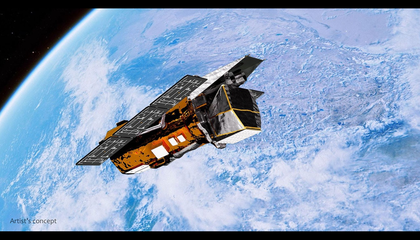
The Neil Gehrels Swift Observatory, a cornerstone of NASA’s high-energy astrophysics program, is expected to conclude its mission this week with a fiery re-entry into Earth’s atmosphere. The U.S. Space Force estimates that the spacecraft will descend around November 4, bringing an end to more than two decades of continuous sky watching. This event marks the final chapter for an instrument that was originally designed for a brief two-year deployment but instead became one of the agency’s most productive and enduring assets.
The timeline for Swift’s demise accelerated earlier this year due to unexpected environmental factors. Unusually intense solar activity in late 2024 increased atmospheric drag on the aging satellite, causing it to lose altitude faster than models had predicted. In response, NASA initiated a last-ditch effort to extend the telescope’s life by contracting Katalyst Space Technologies, an Arizona-based firm, to build a robotic rescue vehicle. The plan involved using mechanical arms to capture Swift and boost it back into a stable, higher orbit.
That salvage mission, which launched on July 3, ultimately failed. The rescue spacecraft encountered significant problems with its orientation control system and other technical issues, preventing it from successfully retrieving the observatory. With the rescue attempt unsuccessful and fuel reserves depleted, NASA engineers made the decision to shut down Swift in late October. The agency determined that the telescope had become too unsteady to operate safely or effectively, leaving no viable option other than allowing natural orbital decay to take its course.
Swift’s operational history far exceeded its initial design parameters. Launched in November 2004, the observatory was tasked with studying gamma-ray bursts, which are among the most powerful explosions in the universe and often signal the collapse of massive stars or the formation of black holes. Over its twenty-two-year lifespan, Swift detected more than 2,000 such bursts, along with approximately 1,400 supernova explosions. It also monitored stars being torn apart by black holes, tracked asteroids and comets, and observed countless other cosmic phenomena.
The telescope served as a critical first-responder in the astronomical community. By providing rapid alerts about transient events, Swift enabled other major instruments, such as the Hubble Space Telescope and the James Webb Space Telescope, to target these fleeting occurrences for deeper investigation. Its data was made quickly accessible to researchers worldwide, contributing to roughly 7,000 scientific papers by the end of its career. Notable discoveries include detecting signs of a neutron star merger in 2017 and helping trace a high-energy neutrino particle to its source.
Scientists express concern over the loss of Swift’s unique capabilities. Judith Racusin, an astrophysicist at NASA’s Goddard Space Flight Center, noted that the observatory’s absence will impact the study of both common and rare cosmic events. Rare phenomena often provide the most significant scientific insights, and without Swift’s rapid detection system, researchers may miss opportunities to observe unusual occurrences before they fade from view.
As Swift descends, experts are monitoring the re-entry process for both safety and scientific reasons. While the majority of the 3,200-pound observatory is expected to burn up in the atmosphere, some internal components may survive the heat. Darren McKnight of LeoLabs indicated that surviving debris could fall into the ocean or land on continents within the re-entry zone, which includes parts of Africa, Australia, India, Southeast Asia, and Central and South America.
The descent also offers a valuable opportunity to study the environmental impact of spacecraft re-entries. Jonathan McDowell, an astrophysicist from the Center for Astrophysics at Harvard & Smithsonian, highlighted emerging concerns about how melted satellite materials affect upper-atmosphere chemistry. Understanding these effects is crucial as space traffic increases and potential impacts on climate and the ozone layer become more pressing issues.
Despite the physical end of the hardware, Swift’s scientific legacy will endure. Caryl Gronwall, an astronomer at Penn State and member of the Swift science team, emphasized that a massive archive of data remains available for researchers to mine. This repository continues to support new discoveries, ensuring that the observatory’s contributions to astrophysics will influence the field long after the spacecraft has disintegrated.
The conclusion of Swift’s mission underscores the challenges of maintaining aging infrastructure in space. As solar activity fluctuates and orbital mechanics shift, even robust instruments face inevitable decline. The failed rescue attempt highlights the technical difficulties of on-orbit servicing, while the successful two-decade operation demonstrates the value of flexible, long-term scientific missions. The data collected by Swift will remain a vital resource for understanding the dynamic universe.
Sources behind this briefing
Go to the original reporting
- Smithsonian Magazine↗After Observing the Sky for 22 Years, a Beloved NASA Space Telescope Is Expected to Meet a Fiery Death This Week