The short version
- A pond in Surrey has reached its lowest recorded level in nearly twenty years due to extended dry conditions.
- Local wildlife officials report visible stress on vegetation and trees as the region endures its fifth heatwave of the year.
- Conservationists are exploring the reintroduction of beavers to help manage water retention in vulnerable habitats.
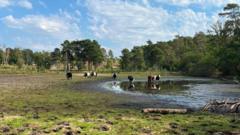
A pond located at Pond Farm on Wisley Common in Surrey has dropped to its lowest level in almost two decades, serving as a stark indicator of the severe drought conditions affecting the region. James Herd, who has served as the director of reserves management for the Surrey Wildlife Trust for seventeen years, stated that he has never witnessed such low water levels during his tenure. The drying of this specific body of water highlights the intensity of the current weather patterns and their direct impact on local ecosystems.
Meteorological data from Wisley confirms that the area has gone without any recorded rainfall for more than fifty days. This extended dry spell coincides with the United Kingdom experiencing its fifth heatwave of the year. Although forecasts suggested a temporary cooling trend over the weekend, the cumulative effects of the high temperatures and lack of precipitation remain evident across the landscape. The persistence of these conditions has created a challenging environment for both flora and fauna in the area.
The visual impact of the drought is immediate and concerning for local conservationists. Herd described the situation as an obvious sign of the drought's scale, noting that plants and trees near the pond are showing clear signs of struggle. In some habitats, trees have begun shedding their leaves prematurely, a phenomenon resembling early autumn. This leaf drop is identified as a self-protective mechanism employed by the trees to conserve moisture during periods of extreme water scarcity.
Pond Farm sits on lowland heathland, a rare and ecologically significant habitat characterized by acidic and nutrient-poor soils. These environments are particularly sensitive to changes in water availability. The current dry conditions threaten the delicate balance of this ecosystem, prompting experts to reconsider long-term strategies for water management. The focus is shifting toward methods that can help retain moisture in the soil, especially during the typically dry summer months.
One proposed solution involves the reintroduction of beavers to the area. Herd suggested that these animals could perform essential rewetting work, helping to hold more water on the land through their natural dam-building behaviors. This approach aligns with a broader strategy of using nature-based solutions to enhance resilience against climate extremes. The idea is to leverage the ecological engineering capabilities of beavers to mitigate the impacts of future droughts.
The Surrey Wildlife Trust has been considering this option for some time. Last year, it was confirmed that the organization was exploring the possibility of obtaining a license to release beavers into the county. Beavers were previously hunted to extinction in the region approximately four hundred years ago, making their return a significant ecological shift. While no official release has occurred yet, Herd indicated that discussions with Natural England are ongoing and remain positive.
The situation at Wisley Common underscores a broader concern about the increasing frequency of extreme weather events. Herd emphasized that this summer's conditions should not be viewed as an isolated incident. Data trends suggest that such extremes are becoming more common, necessitating proactive measures to prepare for prolonged periods of dry weather. The response to the current drought is part of a larger effort to adapt local habitats to changing climate realities.
As the region continues to grapple with the aftermath of the heatwave, the focus remains on both immediate mitigation and long-term adaptation. The drying pond serves as a visible reminder of the challenges facing natural spaces in the UK. Conservation efforts are likely to evolve, incorporating more nature-based solutions to ensure the sustainability of rare habitats like lowland heathland in the face of ongoing climate pressures.
Sources behind this briefing
Go to the original reporting
- BBC Science & Environment↗'I have never seen the pond so low in 17 years'

