The short version
- Palestinian parties are projected to secure between seventeen and eighteen seats, a substantial increase from the ten held previously.
- Opposition leader Gadi Eisenkot faces pressure to negotiate with Arab-Israeli factions to form a majority government.
- Failure to reach a coalition agreement could result in a prolonged caretaker period and potential political resurgence for Benjamin Netanyahu.
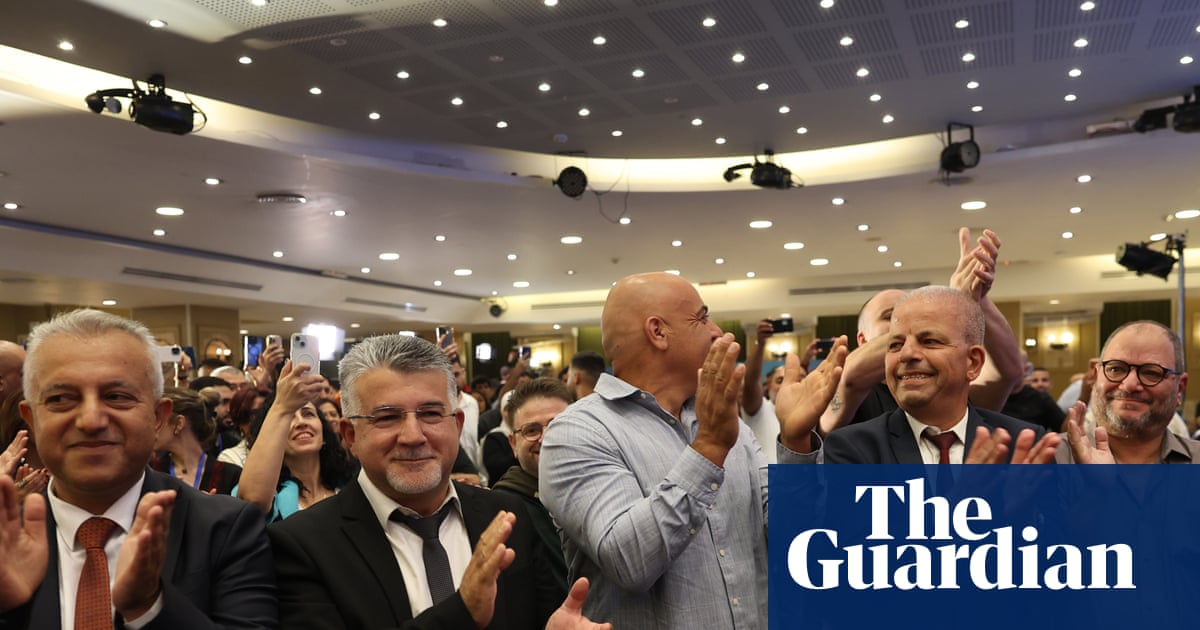
Exit polls from Israel’s general election indicate a significant shift in the country’s parliamentary composition, with Palestinian parties projected to win between seventeen and eighteen seats. This represents a dramatic increase from the ten seats these groups held in the previous Knesset. The surge in representation fundamentally alters the political arithmetic for mainstream opposition leaders, who now face an urgent decision regarding coalition building. The outcome suggests that Arab-Israeli voters will no longer be easily marginalized in post-election negotiations.
Gadi Eisenkot, leader of the opposition bloc, has declared the results a victory for Israel’s Zionist national majority. However, the path to forming a government appears far more intricate than such a declaration implies. While Eisenkot’s bloc holds a narrow lead over Prime Minister Benjamin Netanyahu’s governing coalition and its allies, Likud may still emerge as the single strongest party. This ambiguity grants President Isaac Herzog discretion in determining which leader receives the initial mandate to form a government.
The process of assembling a majority could prove lengthy and unstable. If Eisenkot is tasked with forming a government but fails to secure a majority within six weeks, the responsibility will pass to another candidate. During this interim period, Netanyahu’s current coalition would remain in place as a caretaker administration. This delay provides the incumbent prime minister with additional time to maneuver politically, potentially undermining the opposition’s momentum.
To achieve a governing majority, Eisenkot and his partners in the change bloc must engage with Palestinian political groupings, specifically the Joint List and Ra’am. Ra’am, led by Mansour Abbas, is viewed as a more accessible partner for negotiations. Abbas previously served in a right-leaning government under Naftali Bennett, who is now a junior partner in Eisenkot’s bloc. Abbas has explicitly stated his priority is to remove Netanyahu and his allies from power, signaling a willingness to make political compromises.
Despite this openness, Ra’am is projected to secure only seven seats, which may be insufficient to bridge the gap to a majority even if a pact is reached. The Joint List, with ten or more projected seats, presents a more formidable challenge. Eisenkot has established four preconditions for any coalition talks: recognition of Israel as a Jewish and democratic state, acceptance of the values in the declaration of independence, agreement to conscription for Palestinian citizens currently exempt from service, and denunciation of Hamas as a terrorist organization.
Leaders within the Joint List have rejected these terms as non-negotiable prerequisites. Amjad Shbita, general secretary of Hadash, the largest faction in the Joint List, argued that Eisenkot lacks the leverage to impose conditions. He emphasized that negotiations must occur on equal footing, noting that both sides require each other to form a stable government. This stance highlights the deep ideological divides that complicate potential alliances.
If formal coalition agreements prove unattainable, Eisenkot might attempt to govern as a minority administration, relying on informal, vote-by-vote arrangements to maintain support. Such an approach would likely result in significant instability, increasing the probability of another election. A return to the polls could benefit Netanyahu, allowing him to rally conservative Jewish voters under his campaign slogan linking the right wing with Palestinian issues.
Netanyahu has demonstrated a history of political resilience, staging comebacks after appearing defeated multiple times over three decades. His tactical skill as a dealmaker remains a potent factor in Israeli politics. If he manages to regain power, it may be due to opposition leaders’ inability or unwillingness to bridge the country’s racial and political divides, effectively handing him a lifeline through their own fragmentation.
Sources behind this briefing
Go to the original reporting
- The Guardian World↗Rise of Palestinian parties in Knesset will redraw Israel’s political landscape