The short version
- Researchers have provided the first comprehensive evidence that spiders enter two distinct sleep stages, including one similar to REM sleep in humans.
- Experiments showed that spiders react significantly slower to external stimuli during these rest phases, confirming a state of reduced responsiveness characteristic of sleep.
- The findings suggest that structured sleep may be an ancient trait shared across divergent animal lineages, implying more complex brain states in invertebrates than previously assumed.
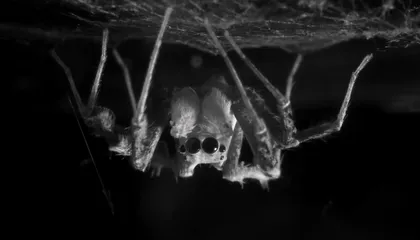
Scientists have confirmed for the first time that spiders engage in structured sleep behavior, characterized by distinct phases of rest and reduced responsiveness to their environment. The study, published in the Proceedings of the National Academy of Sciences, focuses on jumping spiders and reveals that these arachnids cycle through two different states during nighttime hours. One of these stages exhibits physical signs comparable to rapid-eye movement sleep in humans, such as twitching limbs and moving eyes, while the other involves a deeper period of quiescence.
The investigation was led by researchers from the University of Bonn in Germany, including ecologist Daniela Rössler and behavioral ecologist Nadja Geiger. Their work builds on earlier observations made during the pandemic, when Rössler kept local jumping spiders in transparent containers near her window. She noticed the arachnids hanging motionless from silk lines, a behavior that initially suggested a sleep-like state but lacked definitive proof of physiological rest. The new study aimed to rigorously test whether this behavior met the scientific criteria for sleep.
To gather data, the team recorded the nighttime routines of Portia fimbriata spiders using infrared cameras. During daylight hours, the spiders remained stationary but alert, actively scanning their surroundings and adjusting their posture in response to visual cues. As evening approached, their behavior shifted dramatically. They sought out silk platforms, groomed themselves, and eventually entered a period of drooping stillness. This quiescent phase was not uniform; it was interrupted by brief episodes of leg curling and rapid eye movements, indicating a transition into a lighter, more active rest state.
A critical component of the study involved testing the spiders' responsiveness to external stimuli during different phases of their cycle. The researchers played loud noises while the spiders were awake, in the quiescent stage, and during the REM-like phase. Awake spiders reacted to the sound in an average of 1.69 seconds. During the deeper quiescent stage, reaction times slowed to approximately 2.71 seconds. In the REM-like phase, the delay increased further, with spiders taking an average of 4.27 seconds to respond. This graded reduction in alertness supports the classification of these states as true sleep rather than mere inactivity.
The confirmation of structured sleep in spiders has significant implications for understanding the evolutionary history of rest. Spiders and vertebrates diverged from a common ancestor roughly 500 million years ago, developing vastly different brain structures and sensory systems. The presence of similar sleep architectures in such distantly related animals suggests that the fundamental mechanisms of sleep may be ancient and widespread. This challenges previous assumptions that complex sleep patterns are exclusive to animals with centralized brains.
Alex Winsor, a neuroethologist at Columbia University who was not involved in the research, noted that these findings push back against the notion that invertebrates experience a limited sensory world. The ability to enter regulated sleep states implies a level of neural complexity that persists beyond immediate environmental interaction. While it remains unclear whether spiders dream during their REM-like phase, the physical similarities to human sleep cycles hint at shared biological functions that may extend across the animal kingdom.
The study also aligns with recent discoveries in other simple organisms. Earlier this year, researchers reported that jellyfish and sea anemones spend about one-third of their day asleep, despite lacking brains entirely. These findings collectively suggest that sleep may have evolved partly to protect nerve cells from DNA damage or to manage metabolic processes. The convergence of sleep behaviors in animals with such different anatomical structures points to a fundamental biological need for rest.
Looking ahead, the research team plans to expand their investigation to include other spider species and compare laboratory observations with behavior in natural habitats. They aim to understand how environmental factors, such as artificial lighting and habitat disturbance, influence sleep patterns. By examining these variables, scientists hope to gain deeper insights into how anthropogenic changes might affect the well-being of invertebrate populations and the broader ecological systems they inhabit.
This work marks a pivotal shift in how biologists view invertebrate cognition and physiology. By establishing that spiders meet all standard criteria for sleep, including distinct stages and altered responsiveness, the study provides a robust framework for future research. It opens new avenues for exploring the evolutionary origins of consciousness and rest, suggesting that the boundaries between simple and complex animal behavior may be more porous than previously thought.
Sources behind this briefing
Go to the original reporting
- Smithsonian Magazine↗Do Spiders Dream? These Arachnids Twitch, Curl Their Legs and Move Their Eyes When Asleep, Hinting at a Complex Brain State