The short version
- The partial solar eclipse will cover more than ninety percent of the sun for viewers in the Southwest and Channel Islands, marking the darkest such event in the region since 1999.
- Health officials warn that the dimmed sunlight poses a significant risk to eyesight if viewed without proper filtration, citing historical data on vision damage from brief exposure.
- Observers can expect noticeable environmental shifts, including temperature drops and changes in animal behavior, as the moon blocks nearly all direct sunlight for approximately two hours.
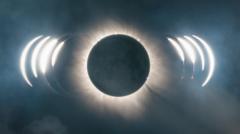
A significant celestial event is set to unfold across the South West of England and the Channel Islands this Wednesday evening, offering residents a rare astronomical spectacle. The partial solar eclipse will begin around 18:20 BST and conclude by 20:10, lasting approximately one hour and fifty minutes. While the path of totality—the narrow band where the sun is completely obscured—will traverse northern Russia, Greenland, Iceland, Spain, and northern Portugal, observers in the UK will witness an exceptionally deep partial eclipse.
According to experts at the National Space Centre, the moon will block more than ninety percent of the sun’s disk from the perspective of the UK. This degree of coverage is substantial enough to create dramatic lighting conditions, even though total darkness will not occur. Chris Cooke, chairman of the Plymouth Astronomical Society, described the upcoming event as the darkest partial solar eclipse visible from the region since 1999. He noted that while it lacks the totality seen elsewhere, the near-complete obstruction of the sun will produce an eerie atmosphere distinct from typical daylight hours.
The mechanics of this alignment involve the moon passing directly between the Earth and the sun, casting two types of shadows on our planet. For those outside the central path, the penumbral shadow creates a partial eclipse. Dr. Jean Dean, a fellow of the Royal Astronomical Society based in Guernsey, explained that the visual progression begins with the first contact, where the moon’s edge touches the sun. This initial phase is followed quickly by the moon appearing to bite into the solar disk, a process that accelerates as maximum coverage approaches.
As the eclipse progresses toward its peak, environmental changes are expected to become apparent. Dr. Dean indicated that observers should notice a slight drop in temperature and a gradual darkening of the sky. These physical changes often trigger biological responses in local wildlife. Birds may fall silent, and certain plants, such as clovers, dandelions, and daisies, which exhibit nyctinastic movements by closing their leaves at night, are likely to shut their petals prematurely. Once the moon moves past its maximum coverage, nature will gradually return to normal, with skies lightening and temperatures rising slightly.
Despite the visual appeal of the event, health authorities have issued strict warnings regarding eye safety. The UK Health Security Agency emphasized that looking directly at the sun without appropriate protection can cause severe and permanent damage to eyesight. The agency noted that because the sun will appear dimmer than usual during the eclipse, it may be tempting for viewers to look at it unprotected. This reduced brightness creates a false sense of safety, increasing the risk of retinal injury.
Historical data underscores the seriousness of these warnings. Following the total solar eclipse in 1999, the Royal College of Ophthalmologists reported approximately seventy cases of vision problems among viewers. Alarmingly, about forty percent of those individuals had looked at the sun for less than one minute before sustaining damage. This statistic highlights that even brief exposure to unfiltered solar radiation can be harmful, particularly when the intensity is masked by the moon’s shadow.
To mitigate these risks, the UK Health Security Agency recommends using certified eclipse glasses or handheld solar viewers. It is crucial that these devices are genuine and meet international safety standards for optical filters. Alternatively, indirect viewing methods are encouraged. These include using a pinhole viewer, projecting the sun’s image through the gaps in a colander, or observing shadows cast by tree leaves. Another safe option involves projecting the sun’s image onto a sheet of paper using a simple pinhole projector, allowing groups to view the event without direct exposure.
For astronomy enthusiasts in the UK, this event offers a unique opportunity before the next full solar eclipse arrives. The next total solar eclipse visible from the UK is not scheduled until September 23, 2090, more than sixty-four years away. Until then, Wednesday’s partial eclipse stands as a significant celestial occurrence. While it does not deliver the dramatic totality seen in other parts of Europe, its depth and the resulting atmospheric changes make it a noteworthy event for both casual observers and dedicated skywatchers.
Preparation is key for those planning to witness the eclipse. Given the specific timing and the necessity for proper equipment, early planning is advised. The combination of scientific interest and public safety concerns makes this a coordinated effort between astronomical societies and health agencies. As the moon begins its transit across the sun, the region will experience a temporary twilight, offering a glimpse into the dynamic relationship between Earth, moon, and sun that defines our solar system.
The event serves as a reminder of the precision required in celestial mechanics for such alignments to occur. While the UK misses out on totality this time, the high percentage of coverage provides a compelling demonstration of solar phenomena. Residents are urged to respect safety guidelines while enjoying the spectacle, ensuring that the experience remains memorable for the right reasons rather than resulting in preventable health issues.
Sources behind this briefing
Go to the original reporting
- BBC Science & Environment↗What can we see during the partial solar eclipse?

