The short version
- Hotel bookings did not spike significantly, indicating most visitors secured accommodation well in advance of the event.
- Local businesses experienced a rapid sell-out of eclipse safety glasses, highlighting high local interest and last-minute preparation.
- The convergence of the partial solar eclipse with major fireworks championships is expected to drive substantial footfall in Plymouth.
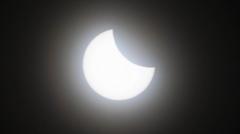
A partial solar eclipse passing over the South West of England and the Channel Islands on Wednesday evening has generated significant public interest, though tourism data suggests a lack of spontaneous travel spikes. The celestial event, which began around 18:20 BST and concluded by 20:10, lasted approximately one hour and fifty minutes. While large crowds gathered in Devon, Cornwall, and the Channel Islands to witness the spectacle, industry leaders noted that the anticipated surge in last-minute hotel reservations did not materialize.
Sarah Gibson, chief executive of the Plymouth Waterfront Partnership, indicated that the combination of the eclipse and the British Fireworks Championships was likely to increase pedestrian traffic in the city. She emphasized that the sunny weather conditions further enhanced the appeal of viewing the event from Plymouth Hoe. Despite the expected crowds, tourism officials clarified that visitor spending appeared lower than usual, even as footfall increased throughout the year.
Sally Everton, general manager of Visit Devon, confirmed that her organization had not observed a significant rise in tourism or additional hotel bookings specifically linked to the eclipse. She suggested that dedicated stargazers and eclipse enthusiasts likely planned their trips well in advance, securing accommodation long before the event date. This pattern aligns with broader trends in astrotourism, which Everton described as an important and growing opportunity for the region.
The absence of a booking surge does not indicate low interest, but rather careful planning by visitors. Everton noted that many local residents also planned to travel to key viewing locations to experience the eclipse. The region boasts excellent stargazing conditions, particularly in Exmoor National Park, an International Dark Sky Reserve, as well as protected landscapes like Dartmoor. Popular high points such as Haytor and Hound Tor, along with coastal areas including Slapton Sands and Saunton Sands, offered open horizons ideal for viewing.
While hotel bookings remained stable, demand for safety equipment saw a sharp increase. Businesses reported a last-minute rush for eclipse safety glasses as people prepared to view the sun safely. Peter Friend, a tourism business leader in Looe, Cornwall, stated that his organization purchased eighty pairs of glasses to distribute to visitors. These were sold out within ten minutes, underscoring the high level of engagement and the need for proper eye protection during the event.
In Plymouth, the timing of the eclipse coincided with the British Firework Championships, creating a unique dual attraction for residents and tourists alike. Gibson noted that the fireworks display is a major annual draw, attracting large crowds around Plymouth Sound. The addition of the eclipse to this existing event calendar was expected to boost visitor numbers significantly, although businesses were advised to ensure safety protocols were followed in accordance with government guidance.
Cornwall also hosted several organized viewing parties and events to accommodate the public's interest. Three air display teams performed a free event over Falmouth Bay starting at 18:00, shortly before the eclipse reached its peak. Additional viewing opportunities were available at Perranporth Beach and other locations across the county. These events provided structured ways for visitors to engage with the phenomenon while ensuring safety and accessibility.
The overall impact of the eclipse on local economies appears nuanced. While there was no dramatic spike in overnight stays, the increased footfall and rapid sale of safety gear suggest a robust level of participation. Tourism leaders view this as evidence of a mature astrotourism market, where enthusiasts plan ahead rather than reacting impulsively. The event highlighted the region's capacity to attract visitors for specialized astronomical events without overwhelming local infrastructure.
Looking forward, tourism officials see the eclipse as a catalyst for promoting long-term interest in stargazing and astronomy in the South West. The successful management of crowds and the positive reception of viewing events suggest that similar initiatives could be viable in the future. The emphasis on safety and advance planning sets a precedent for how communities can engage with rare celestial phenomena while maintaining order and ensuring visitor well-being.
As the eclipse concludes, the focus shifts to evaluating its broader impact on regional tourism strategies. The data collected from this event will inform future planning for astrotourism opportunities in Devon and Cornwall. With established viewing locations and a demonstrated appetite for astronomical events, the region is well-positioned to continue leveraging its natural advantages for educational and recreational purposes.
Sources behind this briefing
Go to the original reporting
- BBC Science & Environment↗No surge in bookings but eclipse 'boosts footfall'

