The short version
- Zadie Smith attributes current social divisions to the decline of welfare systems rather than inherent cultural incompatibilities.
- The novelist suggests that economic insecurity makes demographic differences feel threatening, whereas stability allows for curiosity and tolerance.
- Smith advocates for a selective nostalgia regarding past social democratic structures while rejecting historical prejudices associated with those eras.
British novelist Zadie Smith has drawn a direct line between the deterioration of public infrastructure and the intensification of cultural hostility in modern society. Speaking at the Southbank Centre’s London literature festival, Smith argued that what were once manageable differences between communities have become existential threats due to systemic inequality. She posited that the current political climate regarding immigration and multiculturalism is less about identity itself and more about the structural failures that leave citizens feeling vulnerable and impoverished.
Smith contrasted the social environment of her youth with today’s reality, noting that access to reliable healthcare and decent housing previously allowed people to view cultural distinctions as interesting or occasionally irritating rather than dangerous. In an era where state support was robust, she explained, individuals could interact across demographic lines without fearing for their basic survival. The security provided by a functioning welfare system created a buffer that prevented economic anxiety from morphing into social aggression.
However, the current landscape is defined by crumbling schools, underfunded hospitals, and a severe housing shortage. Smith observed that when fundamental needs are unmet, the natural human response is suspicion toward those perceived as different or competing for scarce resources. She described this shift as an economic and structural phenomenon, where the inability to secure employment or shelter makes every neighbor a potential rival rather than a community member. This dynamic transforms casual diversity into a source of deep-seated fear.
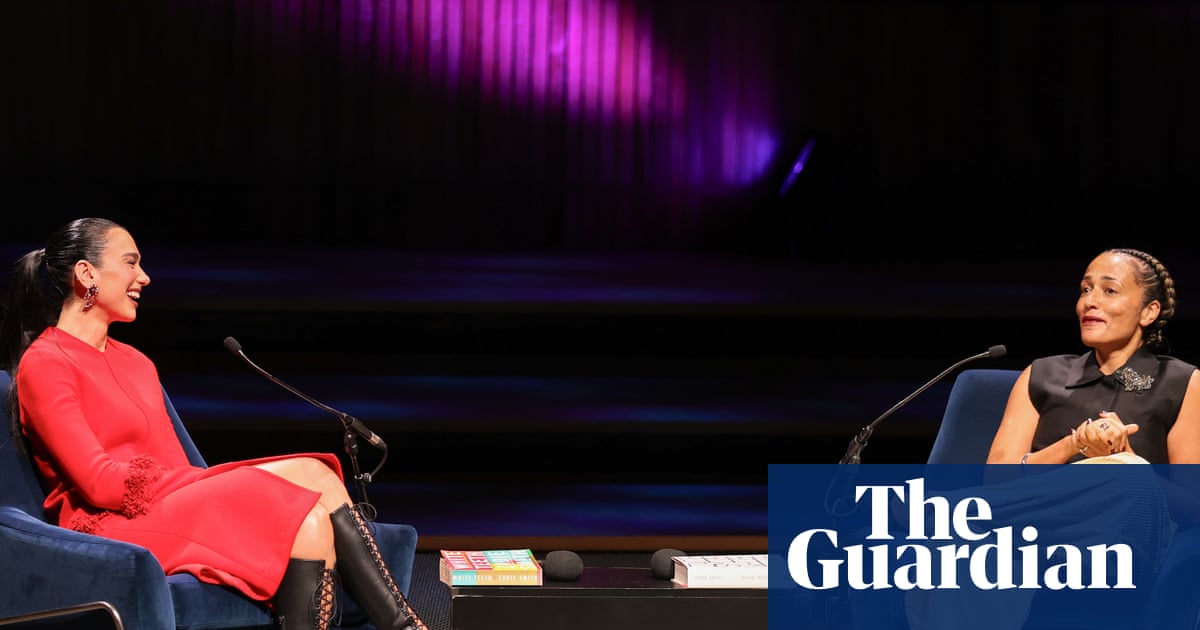
The discussion took place during an interview with musician Dua Lipa, who has curated a series of author conversations through her book club initiative. The two explored how attitudes toward multiculturalism have evolved since the 1980s and 1990s, periods that served as the backdrop for Smith’s debut novel, White Teeth. That work, published in 2000, traced the lives of three families in north-west London, capturing a time when state education and social services were still largely intact. Smith credited her own state schooling with providing her the confidence to navigate various social circles, a privilege she notes is increasingly rare for young people today.
Smith urged audiences to develop a specific type of nostalgia for progressive political movements of the past. She clarified that this does not mean longing for the racial prejudices or outdated LGBTQ+ politics depicted in her earlier work. Instead, she advocated remembering the value of functional social democracy, including universal healthcare and quality education. Her argument suggests that these institutions are worth reclaiming because they provided a foundation of equality that allowed diverse societies to coexist without constant friction.
The conversation also touched on the personal challenges of creative work and public reception. Smith shared anecdotes about writing White Teeth while living with her mother after a breakup, finishing the manuscript just before Valentine’s Day. She reflected on the pressure to conform to social expectations versus the isolation required for deep creative focus. Both Smith and Lipa discussed the difficulty of handling criticism, with Smith emphasizing that well-written reviews, even negative ones, are essential for developing artistic taste and maintaining high standards in cultural discourse.
Smith’s perspective highlights a broader concern about the fragility of social cohesion when economic foundations are removed. By framing cultural clashes as symptoms of deeper structural issues, she challenges narratives that blame immigration or diversity for societal unrest. Instead, she points to policy failures and resource depletion as the primary drivers of division. This view aligns with growing concerns among sociologists and economists about how inequality exacerbates social polarization.
The London literature festival continues through early November, featuring a range of speakers selected by Lipa. The event aims to bridge gaps between different cultural sectors, bringing together figures from music, literature, and activism. Smith’s comments serve as a reminder that artistic expression often reflects underlying societal health, with literature providing a lens through which to examine the consequences of political neglect. Her work remains relevant not just for its narrative content but for its ongoing commentary on the conditions that shape human interaction.
As public services continue to face budgetary constraints and political debate, Smith’s analysis offers a framework for understanding why social tensions are rising. The connection between material security and cultural tolerance suggests that restoring faith in communal institutions may be necessary to heal societal divides. Without addressing the root causes of economic insecurity, efforts to promote multicultural harmony may remain superficial and ineffective.
Smith’s recent essay collection, Dead and Alive, further explores themes of mortality and social change, building on the foundations laid by her earlier novels. Her consistent focus on the intersection of personal experience and public policy underscores the importance of viewing cultural issues through an economic lens. By highlighting the loss of shared resources, she invites readers to reconsider what is at stake in contemporary political debates about identity and belonging.
Sources behind this briefing
Go to the original reporting
- The Guardian World↗Zadie Smith tells Dua Lipa inequality has made culture clashes feel ‘existential’