The short version
- Rocket Factory Augsburg has suspended its five-week test window at SaxaVord Spaceport to investigate a technical issue discovered during recent pad preparations.
- The delay removes anticipated traffic restrictions for the Unst community, though local leaders view the pause as a prudent safety measure rather than a setback.
- While RFA’s timeline remains uncertain, other companies like HyImpulse Technologies continue to pursue launch agreements at the facility, signaling ongoing commercial interest.
SaxaVord Spaceport in Shetland has officially paused its planned rocket test campaign, pushing back a critical milestone for the United Kingdom’s nascent commercial space industry. The facility, located on the island of Unst at the northernmost point of the UK, had scheduled a five-week launch window beginning in early August. However, Rocket Factory Augsburg (RFA), the German aerospace firm responsible for the tests, announced that it encountered an unspecified technical issue during preparations. Consequently, the company has disassembled its rocket to conduct thorough investigations before any further attempts are made.
The decision to halt operations means that temporary traffic restrictions, which were set to be enforced in the event of a flight attempt, will no longer be required for the period between August 10 and September 14. SaxaVord Spaceport confirmed that these orders are on hold until further notice, providing immediate relief to local residents who had been preparing for potential disruptions. The spaceport expressed gratitude to the community for their patience and support during this interim period, acknowledging the impact of such high-profile industrial activities on daily life in a small island setting.
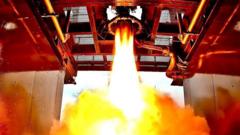
This development follows a series of mixed results for RFA at the site. In August 2024, the company conducted a hot-fire test that ended in an engine explosion, underscoring the volatile nature of rocket propulsion systems. Despite that incident, RFA had proceeded with further testing throughout July, reporting a successful week of pad activities before the current issue arose. The firm stated it would provide updates once confirmed information was available, but the timeline for resuming operations remains unclear. The pause reflects a cautious approach to safety, prioritizing detailed diagnostics over adhering to a rigid schedule.
Local reactions to the delay have been largely measured and supportive. Caroline Hunter, chair of the Unst Community Council, described the decision as a positive step, emphasizing that taking necessary safety precautions is essential in such high-risk environments. She noted that while there are some reservations among residents, the general sentiment remains positive. The community has adapted well to the presence of the spaceport, with daily activities continuing largely uninterrupted even during periods of heightened activity. Hunter observed that the exclusion zones and traffic controls had not significantly disrupted life on the island, suggesting a level of resilience and acceptance within the local population.
Industry experts view the delay as a standard part of the development process for new space infrastructure. Daniel Smith, the Scottish government’s space envoy and founder of AstroAgency, stated that he was not surprised by the setback. He emphasized that the space industry is inherently challenging, often summarized by the adage that 'space is hard.' Smith highlighted the importance of ensuring every component functions correctly before proceeding with launches, particularly when dealing with fragile and high-value equipment. His perspective aligns with a broader industry understanding that setbacks are inevitable but manageable through rigorous testing and iterative problem-solving.
SaxaVord Spaceport holds significant strategic importance as the first fully licensed vertical launch spaceport in the UK. Its location offers unique advantages for small commercial rockets, including a clear trajectory over the North Sea and minimal population density in the flight path. Several companies have expressed interest in using the facility, viewing it as a gateway to European and global markets. The success of RFA’s tests would have marked a pivotal moment for the site, demonstrating its capability to host complex launch operations. While RFA’s plans are now uncertain, the spaceport’s infrastructure and licensing status remain intact, keeping the door open for future missions.
Despite the current pause with RFA, commercial activity at SaxaVord continues to evolve. HyImpulse Technologies GmbH, another aerospace company, has signed an agreement to launch a rocket from Shetland later this year. This mission would represent the second flight of its SR75 suborbital launch vehicle, following a successful lift-off in Australia. The involvement of multiple companies indicates robust interest in the spaceport’s capabilities and suggests that RFA’s delay is unlikely to stall the broader development of the site. HyImpulse’s planned launch could serve as a proof point for the facility’s reliability, potentially attracting further investment and partnerships.
Looking ahead, the focus shifts to resolving the technical issues identified by RFA and determining a new timeline for testing. The spaceport has indicated that residents will have opportunities to access viewing spaces for future test flights, fostering community engagement and transparency. As investigations proceed, stakeholders are balancing the need for speed in a competitive market with the imperative of safety and regulatory compliance. The outcome of this review will not only affect RFA’s immediate plans but also influence perceptions of SaxaVord’s operational readiness among potential clients and investors.
The pause serves as a reminder of the complexities involved in establishing new space launch capabilities. From engineering challenges to community relations, every aspect of the process requires careful management. While the delay may disappoint those eager for progress, it reinforces the commitment to safety and precision that defines responsible space exploration. As RFA works through its issues and other companies prepare their missions, SaxaVord Spaceport remains a focal point for the UK’s ambitions in the commercial space sector, poised to play a central role in the country’s technological future.
Sources behind this briefing
Go to the original reporting
- BBC Science & Environment↗Test rocket launch from Shetland spaceport put on hold

