The short version
- Sgiath, a black Labrador from Scotland, was named Animal of the Year by the International Fund for Animal Welfare for her ability to detect invasive carpet sea squirts.
- The marine organism, which threatens local ecosystems and aquaculture infrastructure, is difficult to identify through traditional methods but can be sniffed out by trained dogs.
- While canine detection is established on land, Sgiath represents a pioneering effort to apply this technique to marine conservation in the United Kingdom.
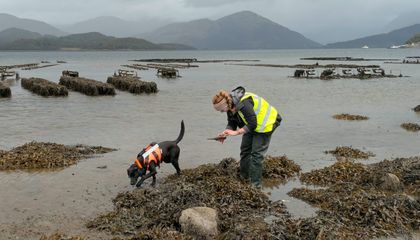
A black Labrador named Sgiath has been awarded Animal of the Year by the International Fund for Animal Welfare, an honor recognizing her specialized role in marine conservation. The six-year-old dog, based in the Scottish Highlands, was selected for her ability to detect carpet sea squirts, an invasive species that poses significant risks to coastal ecosystems and commercial fisheries. This recognition marks a notable development in environmental science, as Sgiath is believed to be the first canine trained specifically for this type of marine detection work.
The carpet sea squirt, scientifically known as Didemnum vexillum, arrived in the United Kingdom around 2008, likely transported on ships from its native region in Japan. Since then, the organism has spread along British coastlines, raising concerns among conservationists about further expansion. The species thrives in warmer water temperatures, a condition that climate change is expected to exacerbate, potentially allowing the invader to colonize new areas more rapidly.
These marine organisms present a dual threat to both natural habitats and human industry. They can smother native species by draining ecosystems of essential nutrients, thereby depriving endemic wildlife of resources. Additionally, they clog aquaculture pens, marine infrastructure, and machinery such as boat propellers. The economic burden of identifying and controlling these invasive populations in Europe runs into the millions of dollars annually, making efficient detection methods a high priority for site managers.
Traditional identification methods for carpet sea squirts are often slow and resource-intensive, typically requiring laboratory analysis and DNA testing. The colonies can be difficult to spot visually because they appear as creamy white, tan, or pale pink slime that clings to algae or seaweed on structures like pontoons and oyster cages. This visual ambiguity makes manual surveys challenging, particularly in complex underwater environments where the organisms blend in with surrounding marine life.
Sgiath’s handler, Texa Sim, a marine ecologist based near Glencoe, Scotland, trained the dog to recognize the specific scent of the invasive species. Originally prepared for mountain rescue work, Sgiath was repurposed for this new task. She operates by walking along beaches and entering the water during low tide to survey potential colonies. According to Sim, the dog has successfully identified hundreds of colonies with high accuracy, even when sniffing through layers of seaweed on tricky structures.
The use of dogs for conservation purposes is not a novel concept. Canines have been employed on land for over a century to track wildlife and detect invasive species, offering a noninvasive alternative to trapping or radio-collaring. Dogs possess more than 220 million odor receptors compared to the five million found in humans, giving them a distinct advantage in scent detection. However, applying this skill set to marine environments presents unique challenges that Sgiath’s training has helped to address.
While Sgiath cannot eradicate the colonies herself, her ability to pinpoint their location early provides conservationists with a critical advantage. Early identification allows site managers to respond before infestations become unmanageable, potentially saving costs and protecting local biodiversity. Sim has since added another Labrador, named Uisge, to the detection team, suggesting an effort to scale this approach. The success of this program may encourage further research into canine-assisted marine conservation strategies.
The broader implications of this work extend beyond a single award. As invasive species continue to spread due to global trade and changing climate conditions, innovative detection methods become increasingly valuable. Sgiath’s story illustrates how traditional animal training techniques can be adapted for modern environmental challenges. By providing faster and more efficient identification, canine detectors offer a practical tool for managing ecological threats that might otherwise go unnoticed until significant damage has occurred.
Sources behind this briefing
Go to the original reporting
- Smithsonian Magazine↗This Dog Learned to Sniff Out a Slimy Marine Invader Called 'Sea Vomit'—a Skill That Earned Her the Animal of the Year Award